


Streamline Multi-Company eSignature Tool for Faster Business Workflow Automation in India: Book Demo
July 8, 2026 | Posted By Admin
Electronic Signature For Business
Summary
Managing signatures across multiple business entities
in India doesn't have to mean managing multiple disconnected processes. The
benefits of a dedicated multi-company eSignature solution give all sizes of
group companies greater control, individual entity agility, and quicker
turnaround. Digital signatures speed up everything from HR onboarding to vendor
contracts to compliance forms by removing delays from paper processes and
piecemeal digital approaches, so each subsidiary can work at the same pace as
the group. EzSignly shows what’s possible when a signing solution handles
running multiple businesses concurrently.
Introduction
Running one company in India comes with its share of
paperwork. Running several under a single group structure multiplies that
paperwork many times over - separate letterheads, separate approval chains,
separate compliance trails, and separate signatories sitting in different
cities. For conglomerates, holding companies, franchise networks, and group
entities, this complexity often becomes the single biggest drag on operational
speed. This is exactly where eSignature software for multi-company in
India changes the equation. Instead of juggling multiple logins,
disconnected tools, or physical courier runs between branch offices, a unified
digital signing platform lets every entity under one umbrella sign, track, and
store documents from a single, centralized dashboard — without losing the
individual identity, branding, or compliance requirements of each subsidiary.
In this blog, we'll look at why multi-entity businesses in India are moving
away from fragmented signing processes, what a truly scalable eSignature
solution should offer, and how platforms like EzSignly are helping group
companies cut turnaround time from days to minutes.
Unified eSignatures for Multi-Entity Businesses
India's corporate landscape is full of group structures — a parent company with several subsidiaries, joint ventures, regional offices, or franchise partners operating semi-independently. Each of these entities generates its contracts: vendor agreements, employment letters, NDAs, lease deeds, and compliance filings. When every subsidiary uses a different process — some still printing and scanning, others using inconsistent tools — the parent organization loses visibility and control.
The solution to this problem is a central eSignature
system, which allows leadership in an organization to see what's happening in
all business units while allowing every subsidiary to still use their
templates, logos, and signature workflows. This balance of control and autonomy
is the real reason multi-company digital signing is so much more than
single-company eSignature software.
Core Features Every Multi-Company Platform Needs
Many e-signature solutions do not support managing a business with several companies. Before committing to a system, check whether it actually provides multi-entity management or whether you need to fit each entity into a single bland account. A few of them are listed below:
- Separate workspaces for each entity - So subsidiaries, franchises, or regional offices can manage their own documents, branding, and users without interference.
- Role-based access control — ensuring that only authorized signatories at each entity can approve specific document types.
- Centralized admin dashboard — providing group management with a consolidated view of signing activity, pending approvals, and audit trails across all companies.
- Bulk and template-based sending is useful for HR onboarding, vendor empanelment, or recurring compliance paperwork across multiple entities at once.
- Legally compliant audit trails are timestamped, tamper-evident records that meet the Indian IT Act requirements for electronic signatures.
As a platform delivers these, your group companies
don't use eSignature as a document management tool; instead, they treat it as a
workflow platform.
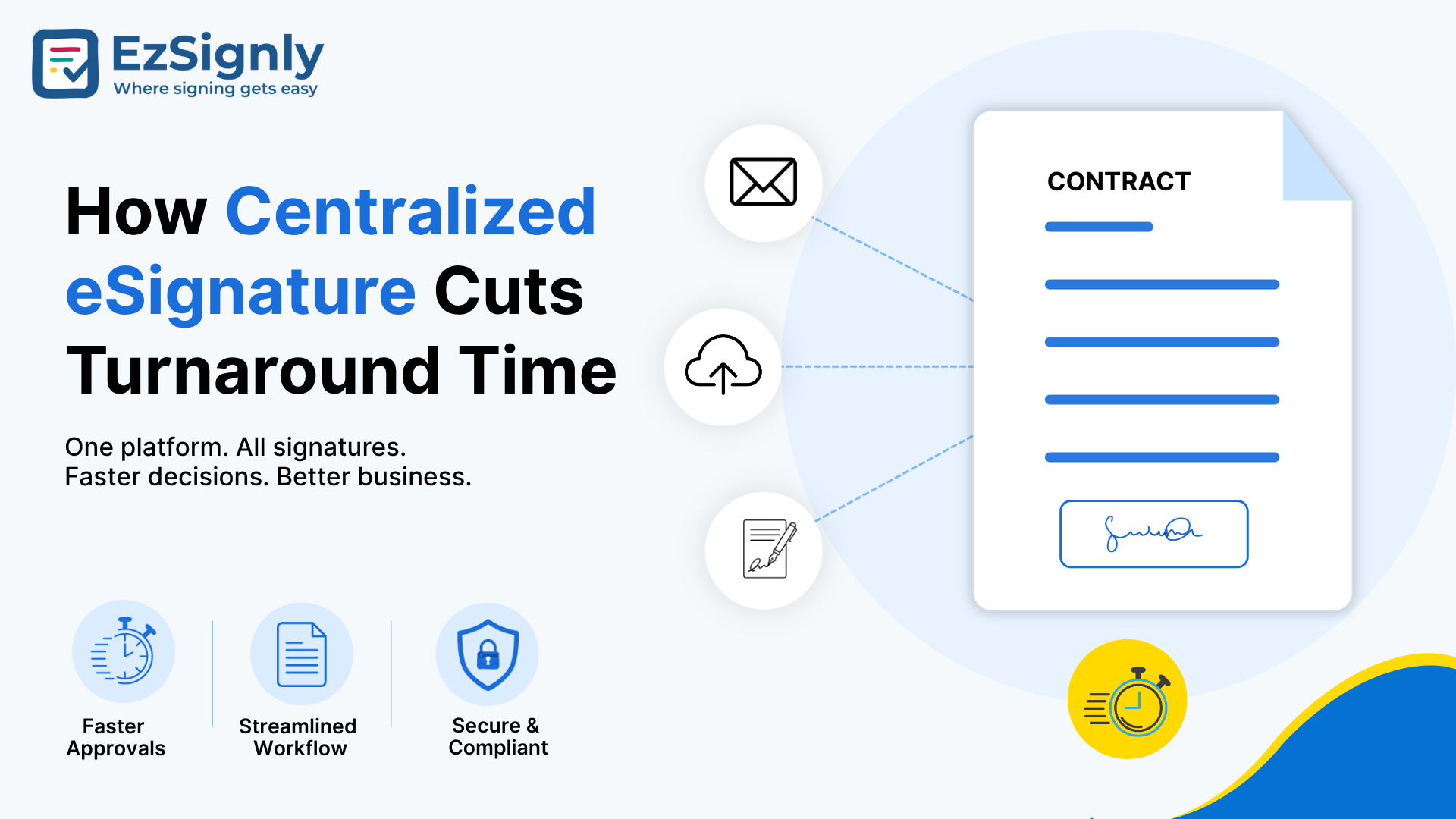
How Centralized eSignature Cuts Turnaround Time
The most immediate benefit multi-company groups notice after switching to a unified signing platform is speed. Consider a typical scenario: a group with five regional entities needs to roll out a revised vendor contract across all locations. With a fragmented, paper-based process, this could mean printing, courier delays, physical signatures, scanning, and refiling often taking one to two weeks per entity.
It's not uncommon for an organization to need to execute the same digital contract across all its entities, with every required signer in each company digitally signing at the same time on the same contract. A centralized digital signing workflow means a contract can be transmitted and tracked across all locations in minutes, with completion achieved in a few hours. Automated reminders eliminate chasing down all parties, and a status dashboard gives everyone the answers to "Is that contract signed yet?" without having to dial five offices. This is workflow automation in its most practical form not a buzzword, but a measurable reduction in the time between "document drafted" and "document executed."
Best eSignature Software
Cost is naturally a factor when evaluating any
group-wide software rollout, and many decision-makers want clarity before
committing budget across multiple entities. Go back and look at eSignature
software pricing in India at the outset, because a per-entity or
per-user model could end up costing a conglomerate with many subsidiaries a
whole lot. With flat and predictable pricing, finance groups won't face
unexpected per-transaction costs when deploying the solution business-wide.
Compliance and Security Across Multiple Entities
Group companies operate under layered compliance obligations — each subsidiary may be registered under different regulatory frameworks, tax jurisdictions, or industry-specific rules. Security & legal validity of documents are therefore "table stakes" for any multi-company e-signing platform.
A robust eSignature platform will also include end-to-end encryption, a signer authentication system (such as two-factor authentication), and a tamper-proof audit log of all signer activities, which records exactly what was signed, as well as when and where it was signed. In India, the Information Technology Act, 2000, legally recognizes electronic signatures as long as the signing process meets certain authentication standards. This is why choosing a platform with a strong compliance foundation is more important for group companies than for standalone businesses, because the risk is multiplied across every entity in the group.
Centralization also helps during audits. No longer
would an audit team ask for five to six documents from 5–6 departments and
offices. A simple dashboard could compile consolidated reports from every
section of the business, saving hours during internal/statutory audits.
Choosing the Right eSignature Partner for Growth
As group companies expand — adding new subsidiaries, entering new states, or onboarding new franchise partners — the signing platform needs to scale without requiring a system overhaul each time. This is where evaluating a solution built for growth becomes important rather than optional.
Businesses looking for eSignature software for
business in India should prioritize platforms that offer flexible
entity management and dedicated support for quickly onboarding new business
units. EzSignly, for instance, has positioned itself around this exact use case
— enabling group companies to add new entities to their account structure
without disrupting workflows already running for existing subsidiaries. And all
this is important because your clients won't stand still; mergers, new areas,
and expanding geographies will all keep happening, and your signing platform
needs to accommodate that growth silently.
Real-World Impact for Group Companies
The practical difference shows up in everyday operations. A manufacturing company with plants in three states can get purchase orders approved on the same day instead of having to wait for physical signatures to move between locations. A retail franchise network can onboard new franchise partners with standardized agreements signed digitally within hours of finalizing terms. A financial services group with multiple licensed entities can maintain separate compliance trails per entity while still giving leadership a unified view of contract status across the group.
None of this requires reinventing internal processes —
it simply requires removing the friction that paper and disconnected tools
create. Platforms like EzSignly are built around this principle: keep each
entity's workflow independent where it needs to be, but connect the reporting
and oversight layer so that nothing is missed between subsidiaries.
Simplifying HR Workflows Across Group Companies
HR is often the department that feels multi-company complexity most acutely. Offer letters, appointment letters, confidentiality agreements, policy acknowledgments, and exit formalities all need signatures — and in a group structure, HR teams frequently manage hiring across several subsidiaries at once, sometimes with employees relocating between entities.
Using one central e-signing tool means HR can apply
consistent templates to everyone in the group while still editing details that
are unique to each entity, such as reporting structure, site, or statutory
benefits. New hires can complete onboarding paperwork remotely, which matters
increasingly as group companies hire talent across different states and cities.
For HR leaders managing recruitment across multiple business units, exploring eSignature software
for HR in India options built specifically for scale can eliminate the
repetitive manual work of chasing signatures, entity by entity, freeing the
team to focus on people rather than paperwork.
Conclusion
For group companies in India, workflow speed and
compliance consistency across entities are no longer optional they're
competitive necessities. A single platform to support eSignature across
multiple companies. From the subsidiary perspective, the platform meets
individual business needs while providing a top-down view. All in all, the
platform saves time for each entity and guarantees legal compliance across the
group. When businesses evolve and grow in structure, an early investment in
eSignature will also save time and effort. Solutions like EzSignly are built to
grow alongside these evolving multi-entity needs.
Have any other questions? EzSignly's team is here to help!
FAQs
1. Can one eSignature account manage multiple subsidiaries separately?
A: Of course. A carefully architected multi-tenant system enables individual companies or departments to maintain their workspaces, templates, and branding and lets central group admins oversee everything in one place.
2. Does every sub-company get its own branding and templates on a single, central platform?
A: Yes. On a typical multi-entity eSignature platform, each sub-company can maintain its own letterheads, document templates, and approval structures - all while being managed by the parent company from a central admin dashboard.
3. How can a multi-entity eSignature solution assist with scalable HR onboarding?
A. It enables HR teams to use uniform templates for policy, agreements, and offer letters and add entity-specific elements - meaning the onboarding of employees for various business units can occur simultaneously and without the need for tracking and chasing entity by entity.
Take a look at the latest blog
How Indian Businesses Save Lakhs Every Year Using eSignature Software
Indian businesses save lakhs yearly using eSignature software by cutting paper, printing, and courier costs while speeding up approvals.
March 26, 2026
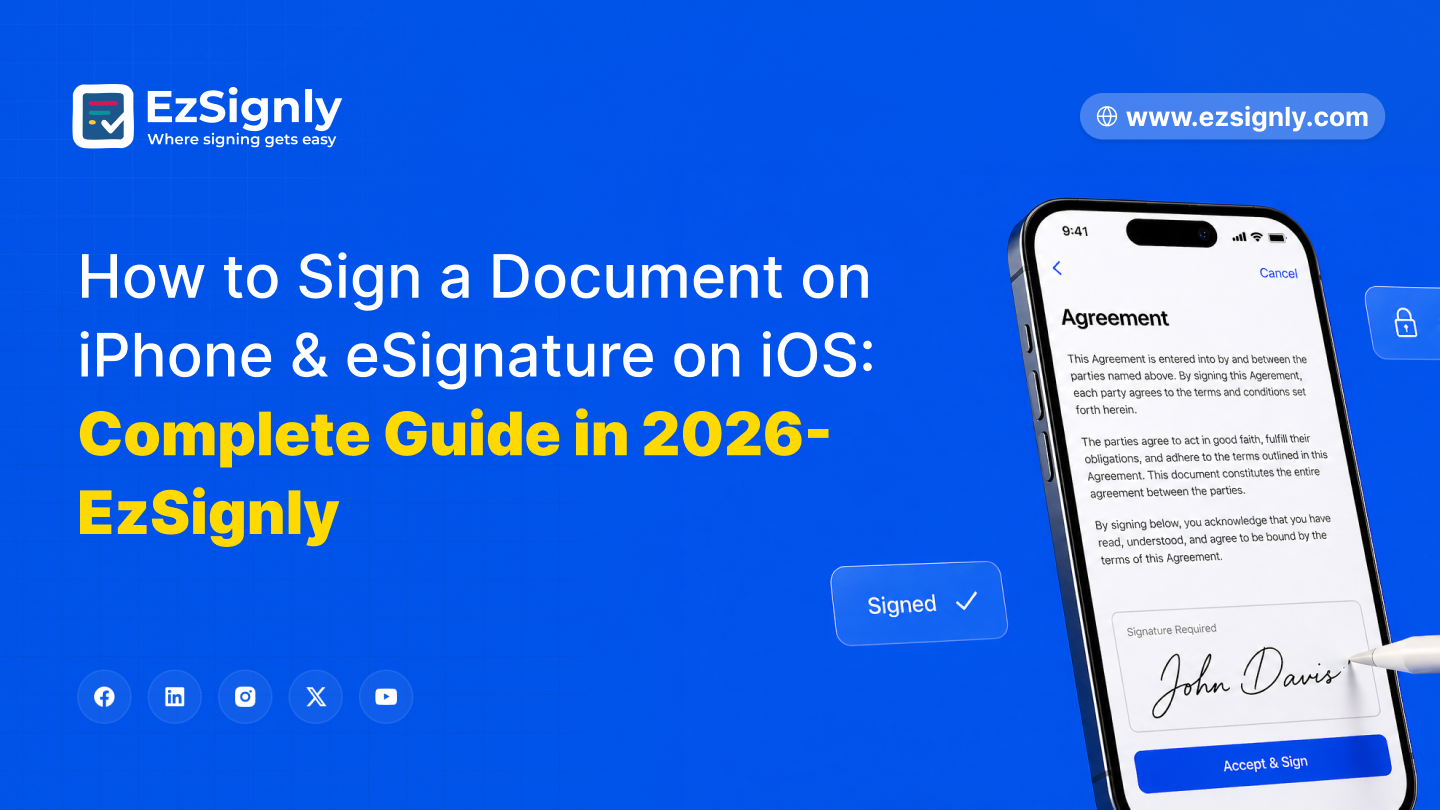
How to Sign a Document on iPhone & eSignature on iOS: Complete Guide in 2026 - EzSignly
Learn how to sign a document on iPhone and use eSignatures on iOS with this complete 2026 guide by EzSignly.
April 28, 2026
Reduce Expenses, Accelerate Approvals & Sign Smarter with EzSignly eSignature Software
Reduce costs, speed approvals, and sign smarter with EzSignly eSignature Software. Secure, simple, and efficient.
April 23, 2026
EzSignly vs DocuSign in India: Get Compliance & Security for Legal Documents: Signup Now
Sign up now to experience secure digital signing with compliance-focused features for legal documents in India.
May 21, 2026
Have any other questions? EzSignly's team is here to help!
© 2026 Copyright EzSignly. All Rights Reserved