


Traditional Signing and eSigning in India: A Compliance-Focused Pros & Cons Guide
May 28, 2026 | Posted By Admin

Electronic Signing Software
Summary
Though familiar and verified physically, traditional
signing in India cannot match e-signature's speed, cost-effectiveness, and
efficiency in document management. It is the slow electronic signature that
will have to change its pace. eSigning also assures effortless approvals,
secure verification and streamlined management of documents as per the Indian
IT Act, thereby being chosen over conventional signing for modern business
transactions.
Introduction
The Indian legal industry is rapidly embracing digital processes, particularly for the purposes of document approval, client on-boarding and contract management. Despite the ongoing importance of paper signing, many firms seeking to increase productivity while following regulations have turned to e-signing as a viable alternative.
Analyzing the benefits of, as well as the shortcomings
of, both signing processes is instrumental in determining whether a traditional
signature or an e-signature workflow will serve law firms, individual lawyers
and legal consultants more effectively. Here we explore the comparison of
traditional signatures vs electronic signature workflows in terms of Indian
practice with regard to compliance, security, accessibility and business
effects on workflow.
Why the Legal Sector in India Is Rethinking Document Signing
Every day, legal professionals in India work with massive volumes of agreements, affidavits, engagement letters, property documents, NDAs, compliance documents, court documents, and more. Previously, almost all of the documents in this category required printing, signing, couriering, and archiving. The growing prevalence of remote meetings, hybrid law practices, and online client onboarding has further accelerated the move.
Today, many attorneys opt for eSign legal
documents in India as a quick method to achieve sign-offs, avoid
bottlenecks and have their audit trails current. Even then, compliance is still
paramount. It's not one step in documentation, verification or data security
that any business cannot afford to miss, and therefore, it is extremely
important for each lawyer to know the advantages and disadvantages of every
method of signature before discarding paper client files completely.
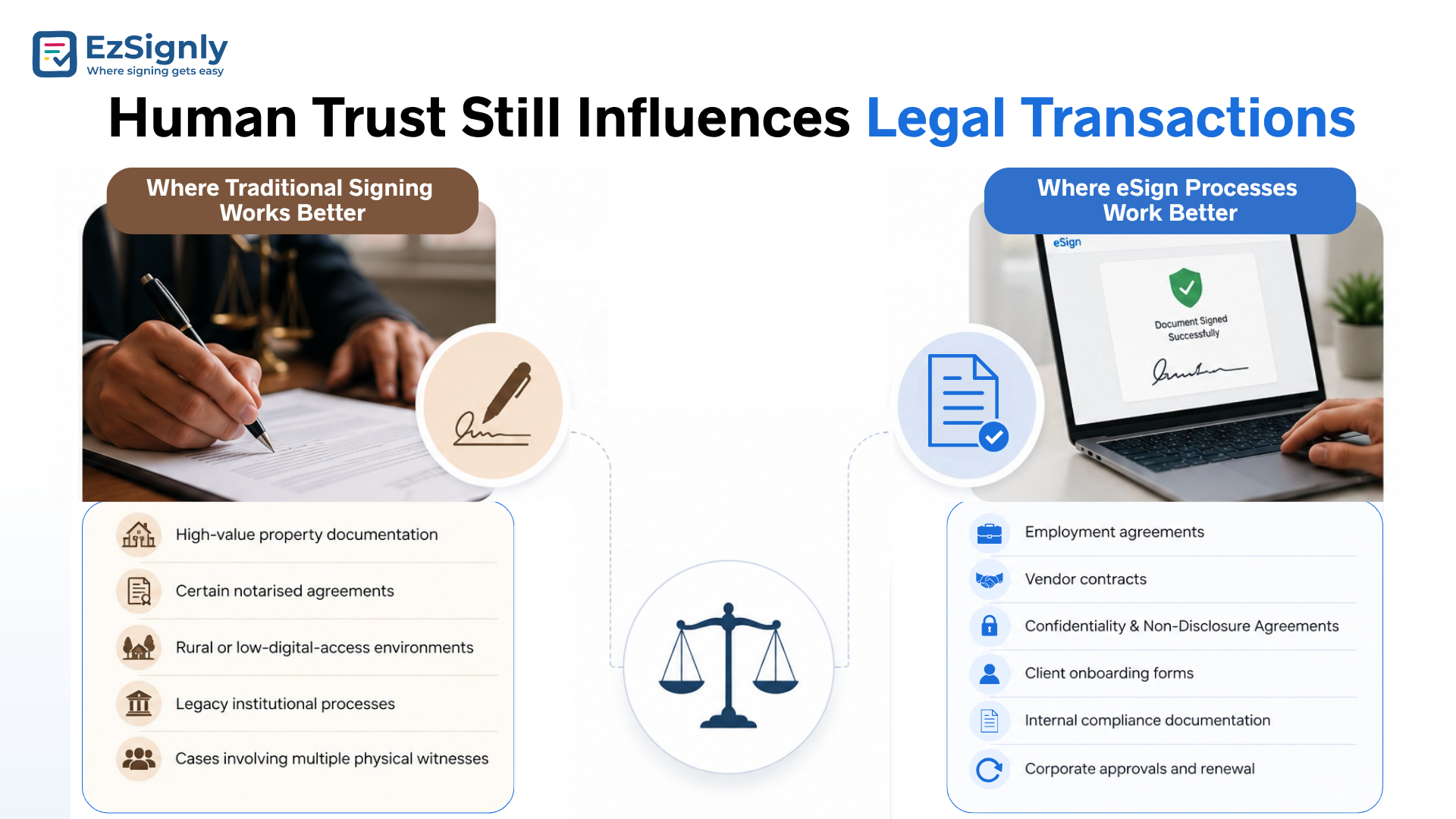
Traditional Signing Still Carries Legal Familiarity
Physical signatures remain broadly accepted among the legal profession, clients, and government-related functions in India. There is a certain comfort that most older attorneys and their clients feel with physical documents and handwritten signatures.
Advantages of Traditional Signing
- Easy acceptance in conventional legal environments
- Familiar process for clients from all demographics
- Useful for documents requiring physical verification
- Preferred for certain property and notarised transactions
- No need of internet or computer
Traditional signing also creates a tangible paper trail that some firms consider easier to archive for long-term legal records.
Limitations of Traditional Signing
Familiar though they may be, the use of paper documents causes a range of operational difficulties for modern law firms.
- Delays by courier's mobility and face-to-face meetings
- Risk of misplaced or damaged documents
- Higher printing, scanning, and storage costs
- Difficulties in tracking version history
- Slower client onboarding and approval cycles
Over time, this inefficiency can accumulate and eventually impact the firm's
productivity and service quality, in particular for firms with a high volume of
contracts and paperwork required to stay compliant.
Legal Operations Are Rapidly Going Digital
Indian law firms are embracing technology in legal procedures to meet customer demands. Today customers demand quick deliveries, online access and the option to work remotely from anywhere.
EzSignly can help to enable all these by sending out
documents, accepting them, tracking their status, and storing them securely,
all in a single place. The audit trail, user authentication, document
encryption and readiness/compliance with workflows will be on the cards for
businesses examining eSignature software prices in India.
Benefits of eSignature Workflows for Legal Teams
EzSignly offers digital signature solutions to legal firms, thus reducing the time spent on paperwork and increasing efficiency. From faster approvals to better workflow visibility, modern eSigning systems support legal teams in managing high-volume paperwork with greater accuracy and convenience.
| Productivity Benefits | How Does It work for Legal Firms |
| Rapid Execution | Law firms can collect signatures within minutes instead of waiting days for physical paperwork. |
| Clear and Translucent Document Processing | Digital systems maintain timestamps, signer identity logs, and document activity history for easier monitoring. |
| Streamlined Client Experience | Clients do not need to come to the offices to sign documents. It gives people the ability to sign documents electronically, from anywhere in the world. |
| Less bureaucracy | Time saved through printing, scanning, filing, chasing reminders and automating routine processes. |
| Operational Scalability | Firms that handle multiple branches or remote legal consultants can standardize workflows across their teams. |
Where Compliance and Security Matter Most
Despite the drive for ease of use, compliance remains at the core of Indian legal documentation. All e-signing services must comply with Indian laws and the prescribed rules for record-keeping. The IT Act, 2000, allows for the electronic signature to be valid under prescribed guidelines, making the digital execution of most commercial and legal transactions legally valid.
Some categories of documents may not be fit to be signed electronically. Specific types of documents such as contracts, wills, negotiable instruments, and property-related documents might have to be physically executed.
Key Compliance Considerations for Legal Firms
- Identity authentication of signers
- Tamper-evident audit trails
- Data encryption and document security
- Role-based access permissions
- Secure cloud storage practices
- Functionality for Prolonged archiving of documents
Apart from these factors, firms should also consider whether the platform provides visibility into workflows and the compliance reporting needed for internal audits.
Today, most enterprises have been implementing eSignature
solutions for business operations in India to consolidate their legal
approvals, vendor contracts, finance processes and compliance management under
one platform.
Human Trust Still Influences Legal Transactions
The signing isn't lost through age because one of the reasons for traditional signing is emotion. Most clients believe that a physical signature is synonymous with seriousness, trust, and genuine intention.
In many legal and sensitive cases like those dealing with succession, disputes over properties, partnership breakups or family settlements, a personal interaction provides an added confidence boost to both parties. Nevertheless the concept of digital signing is getting into accepted use from the companies which are starts-ups, Legal departments, Freelancers, Technology firms, businessmen of young generation etc.
Best E-signature Software
The ideal approach for many law firms today is not
choosing one method entirely over the other. Instead, firms are building hybrid
workflows based on document type, client expectations, and compliance
requirements.
Legal Firms Need More Than Just Digital Signatures
Modern legal operations involve much more than document execution alone. Businesses today are simultaneously managing new hire documents, employee contracts, operational approvals, supplier contracts, and records related to adherence to rules and regulations.
For these reasons, numerous companies are also looking
to implement eSignatures for HR operations in India, such as
employee onboarding, policy acknowledgement, offer letters and internal
approvals.
What Legal Teams Should Look for in an electronic signing Platform
When evaluating a platform, legal professionals should prioritise:
- Compliance-focused security features
- Easy document retrieval and storage
- Multi-party signing support
- Mobile accessibility
- Audit-ready reporting
- User permission controls
- Integration with existing legal workflows
Choosing the right platform like EzSignly is less
about adopting technology for trend purposes and more about creating dependable
operational consistency.
Have any other questions? EzSignly's team is here to help!
Conclusion
The arguments over traditional signatures vs.
electronic signatures are no longer about whether one completely replaces the
other but rather about a flexible document approach by the Indian legal sector.
While certain legal contexts can still use physical signatures based on
organizational habits and procedural demands that require tangible copies,
electronic signatures like EzSignly are growing as a means that provides ease,
scalability and transparency of operations. The chance for law firms looking to
stay competitive and be successful means ensuring that documentation processes
comply with the law, satisfy clients, and operate efficiently.
FAQs
1. Are eSignatures legally admissible in India?
A: Yes, eSignatures are legally recognised in India under the Information Technology Act, 2000, provided they meet the relevant authentication and compliance standards.
2. Can all legal documents be e-signed in India?
A: No. For some documents, such as wills, negotiable instruments, and some property-related agreements, physical signatures may be mandatory according to legal and regulatory guidelines.
3. Why are law firms implementing eSigning workflows?
A: Law firms are leveraging digital signature solutions to minimise delays arising from paperwork, enhance document tracking, facilitate remote work, optimise client onboarding, and adhere to compliance standards.
Take a look at the latest blog
EzSignly vs DocuSign in India: Get Compliance & Security for Legal Documents: Signup Now
Sign up now to experience secure digital signing with compliance-focused features for legal documents in India.
May 21, 2026
How eSignatures Are Evolving in India’s Business Workflow management: Book a Demo
Discover how eSignatures are transforming business workflows in India. Book a demo today.
June 29, 2026
AI Powered Features: Create Your First eSignature with EzSignly: Get 3 Months Free Trail
Start signing documents smarter with AI-powered features. Create your first eSignature today and enjoy a FREE 3-month trial of EzSignly.
July 9, 2026
Chasing Signatures Is Over: How Small Businesses Can Simplify Approvals with eSignatures
Stop chasing signatures and speed up approvals with eSignatures. Learn how small businesses can simplify document workflows, reduce delays, and get ag...
June 17, 2026
Have any other questions? EzSignly's team is here to help!
© 2026 Copyright EzSignly. All Rights Reserved