


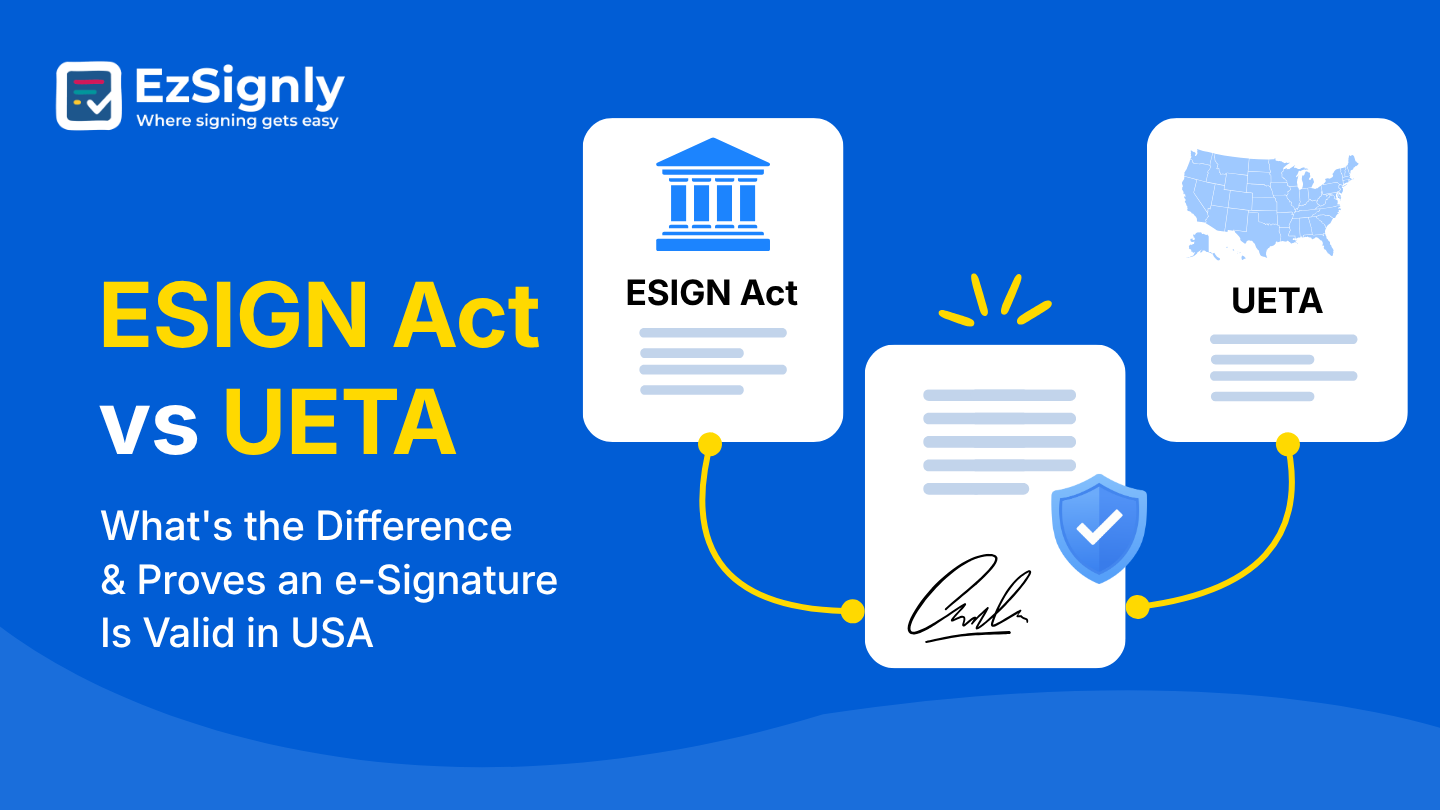
ESIGN Act vs UETA: What's the Difference & Proves an e-Signature Is Valid in USA
September 8, 2026 | Posted By Admin
Digital Signature Software
Summary
While digital consents are quite common in the
American workplace, not many are aware of the two acts that make these
signatures legally binding: the ESIGN Act and UETA. In this blog, we explain
what each act covers, how they complement one another, the exact criteria
required to ascertain the validity of the electronic signature legally, and the
role that e-signatures are playing in reforming law across the United States.
Introduction
Until recently, paper contracts and blue pens on paper
were the only ways companies clinched deals. Fortunately, legal
regulations—both federal and state—now grant e-signatures equal legal footing
to handwritten ones. Not only is a legally valid binding eSignature accepted
virtually everywhere, but it is also accepted in almost every sector in the
United States, from real estate to healthcare to finance. However, you should
be aware of the basis of these new regulations. The shift started with two
distinct laws, the ESIGN Act and UETA, which people frequently confuse. Knowing
how these laws work and the distinctions between them will help your business
sign documents with confidence.
Understanding ESIGN Act Compliance
Congress created this law, also referred to as the Electronic Signatures in Global and National Commerce Act. It's a law in all 50 states making it invalid to reject the enforceability of a signature or record just because it is in digital format, governing in terms of both interstate and international commerce and establishing an underlying minimum standard, without regard to local laws at the state level.
In addition, this act states that consumers must
affirmatively agree before being sent electronic records rather than paper
versions; this requirement is particularly relevant when it comes to
information being provided to them such as mortgage loan documents or insurance
policy disclosures. This provision is part of what makes it a wider-reaching,
consumer-oriented act that is distinct from the other one.
What Is UETA?
UETA is a common abbreviation for the Uniform Electronic Transactions Act, which the National Conference of Commissioners on Uniform State Laws (NCCUSL) established in 1999. The Uniform Electronic Transactions Act is not federal legislation, unlike the Electronic Signatures in Global and National Commerce Act. It is a model law that individual states adopt and can adjust to fit their own legal systems. Most states in the USA, with a few exceptions such as New York and Illinois, which have their own similar statutes, have adopted this law in some form.
The Uniform Electronic Transactions Act focuses on
removing barriers to online transactions within a state's own commerce laws.
The rule offers paperless transactions digital equivalences: paperless data and
e-signatures will hold just as much legal power as paper certificates and
writings do—so long as the parties themselves agreed to transact online and not
on paper.
ESIGN Act & UETA: Similarities and Differences
The most interesting thing about them is that, despite both laws applying to the use of digital signatures, they are entirely unique.
- Jurisdiction: Since the Act is federal law, it means that it applies to all the states across the country. The Uniform Electronic Transactions Act is state-level and varies slightly depending on the state that adopts it.
- Purpose: The online signature Act was created partly to prevent states from passing inconsistent or restrictive digital signature laws. The electronic transaction law was designed to provide states a ready-made framework they could adopt directly.
- Consumer Consent: The digital signing act has stricter requirements around consumer disclosures and consent, especially for electronic delivery of important documents. The online transaction act leaves more of this detail to individual states.
- Preemption:
Any state that has not passed something similar to UETA has the ESIGN Act
working in the background to still validate signatures electronically.
How Virtual Signatures Are Proven Valid in the USA
When deciding if a paperless signature is valid in the US, they consider the following factors. These include:
1. Intent to sign: You must be really certain that you want to sign the document and definitely do so on a digital platform.
2. Consent to do business electronically: Both parties must agree, whether explicitly or through their actions, to use electronic records.
3. Association of signature with the record: The system used must clearly link the signature to the specific document being signed.
4. Record retention: The signed document must be accurately stored and reproducible for all parties involved.
This scenario is where reliable online signature
platforms matter. Reputable solutions will keep robust, easily accessible audit
trails and timestamps. Records of signer authentication that can be verified in
court if the signature is challenged. Companies looking for eSignature
software for businesses in Chicago or other urban centers can't afford
to hunt down a paperless signature from vendors during a dispute.
Impact of Digital Signatures on the Legal Sector in the USA
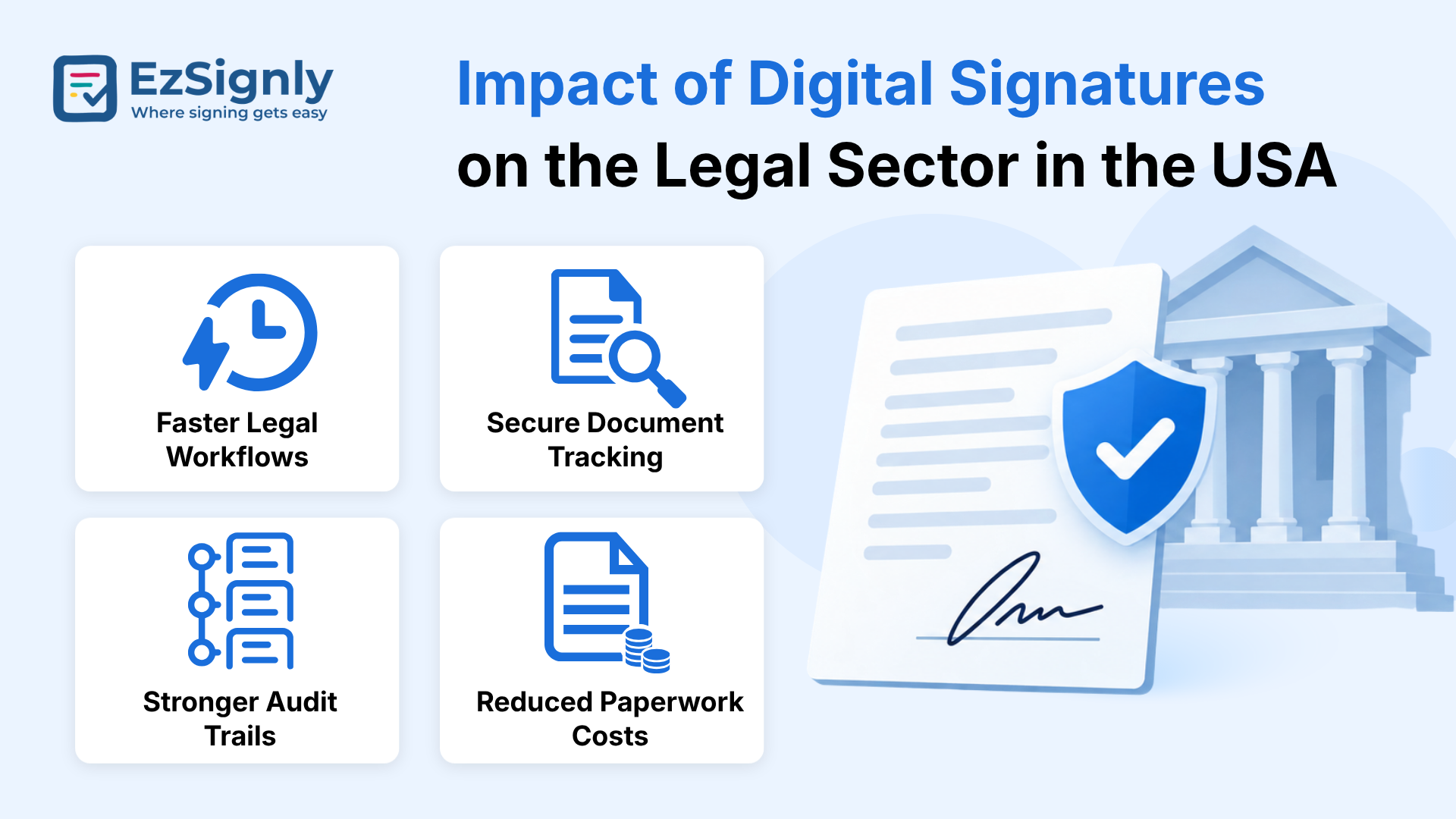
The legal industry has seen significant effects from the adoption of online document signature solutions. Clients are signing client agreements, retainer letters, settlement agreements, and any other court-required submissions that are legally compliant in any given jurisdiction thanks to e-signatures. That said, expedited timelines from closing one matter to another have drastically minimized the amount of time we wait on paperwork and to meet face-to-face with each party.
Corporate law, commercial contracts, and real estate transactions have undergone a significant digital transformation. Property deals and merger agreements that once took days due to signature delays can now be completed within minutes. With a cost-effective eSignature solution in USA, individuals can securely sign documents from virtually anywhere while meeting the legal requirements of the Electronic Signatures in Global and National Commerce Act and the Uniform Electronic Transactions Act.
Compliance is another major focus for legal teams. To
approve digital signatures, judges need the evidence—audit trails—and consent
trails, so now law firms and in-house legal departments are partnered with
web-based signing solution companies that integrate robust tracking into the
platform from the start rather than shoehorning it in later, if at all.
Digital Signature for Small Business
Essential Features of the Right Online Signature Platform
Each electronic approval solution is constructed differently, and companies ought to select a service with solid encryption, comprehensive audit trails, several identity verification measures, and compliance with the online signature standards. This goes triple for the realm of eSignatures software for small businesses, where companies have an even bigger need for the same legal protections of larger companies, but on a budget.
Price matters too. Many companies search for an affordable, secure online signing solution in the USA that doesn't compromise on legal validity or security features. Finding the right balance between affordability and compliance is crucial for businesses that sign contracts regularly but don't have large legal or IT teams to manage the process.
That's why EzSignly was designed as a way to strike
that balance. It creates an environment where every signed document feels
accessible and secure, while also serving as a reminder of your legal
responsibilities.
Have any other questions? EzSignly's team is here to help!
Conclusion
The Electronic Signatures in Global and National
Commerce Act, enacted at the federal level, and the Uniform Electronic
Transactions Act (which operates at the state level) work together to establish
the legal framework for legally binding digital signatures in the United
States. The twin legislation essentially provides the same legal status and is
as legally binding and secure as traditional processes for electronic
transactions. The impacts have been enormous across industries and institutions
of law because many contracts, closing, and compliance requirements are now
completed far more swiftly than ever before. EzSignly wants to support
businesses in their confident digital transformation and journey.
FAQs
1. Is an eSignature as legally binding as a handwritten signature in the USA?
A: Yes. Under both the online document signing acts, an electronic authentication carries the same legal weight as a handwritten one, as long as the signer's intent and consent are clearly established.
2. Do all 50 states follow the same virtual signature law?
A: Not exactly. Most states have adopted the Uniform Electronic Transactions Act, but a few, like New York, use their own separate web-based signature laws. The Federal Electronic Document Signing Act still applies nationwide and fills in any gaps.
3. What information should an electronic signature platform keep to prove validity?
A: It should keep an audit trail showing the signer's identity, timestamp, IP address, and confirmation of intent, along with a secure, tamper-evident copy of the signed document.
Take a look at the latest blog
How HR Team Can Track Outstanding Employee Signature Requests Using e-Signature Tool
HR departments are able to check the status of documents, keep track of pending employee signatures, and remind employees to complete them on time.
October 9, 2026
How Bulk Send eSignature Speeds Up Document Workflows – Try 3-Month Free Trial
Speed up document approvals with Bulk Send eSignature and manage hundreds of agreements in minutes. Start your 3-month free trial today and streamline...
May 14, 2026
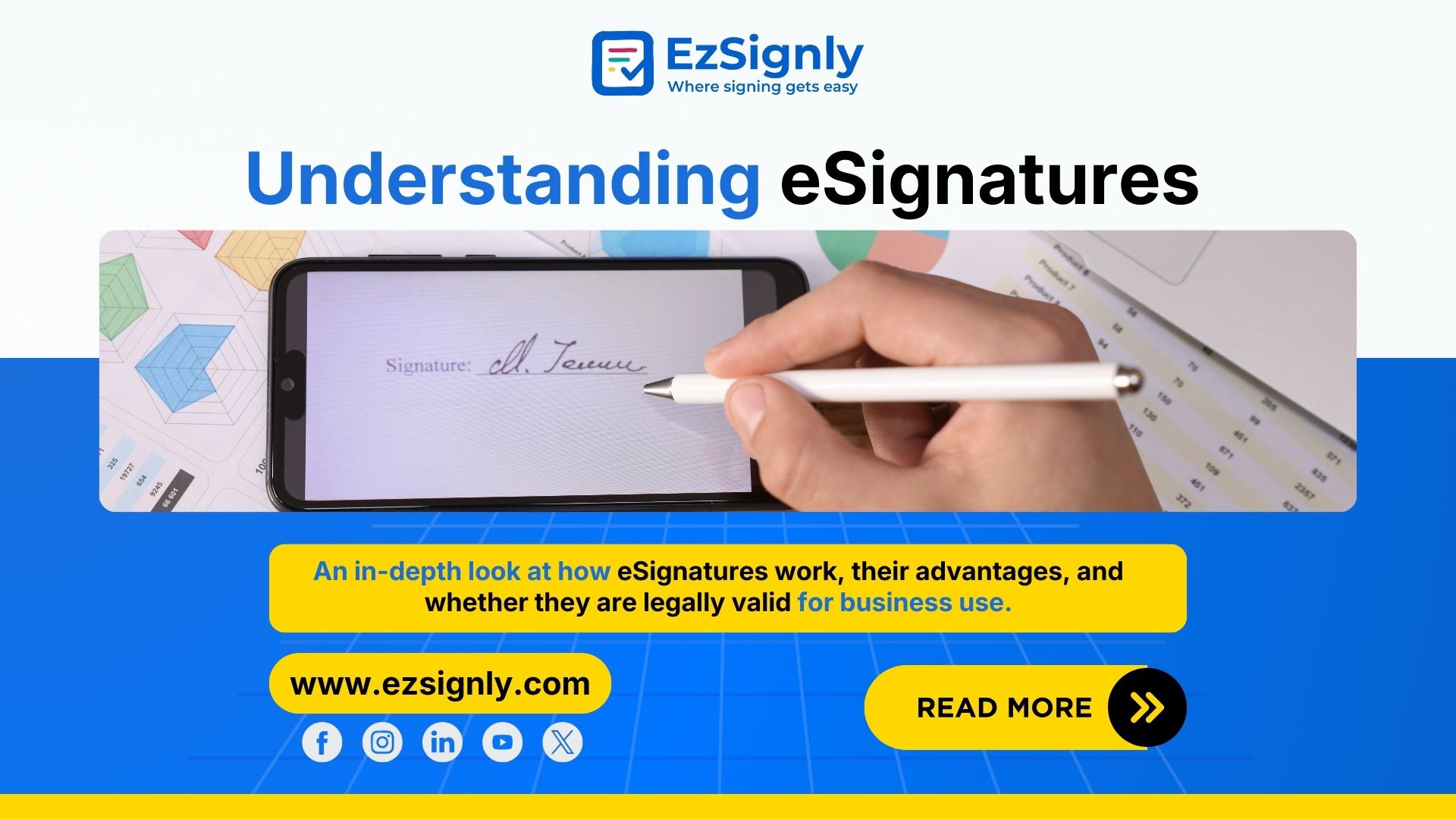
Electronic Signature Solution: How It Works, and Why Businesses Use It
An electronic signature solution helps businesses approve documents instantly with secure digital signing.
January 29, 2026
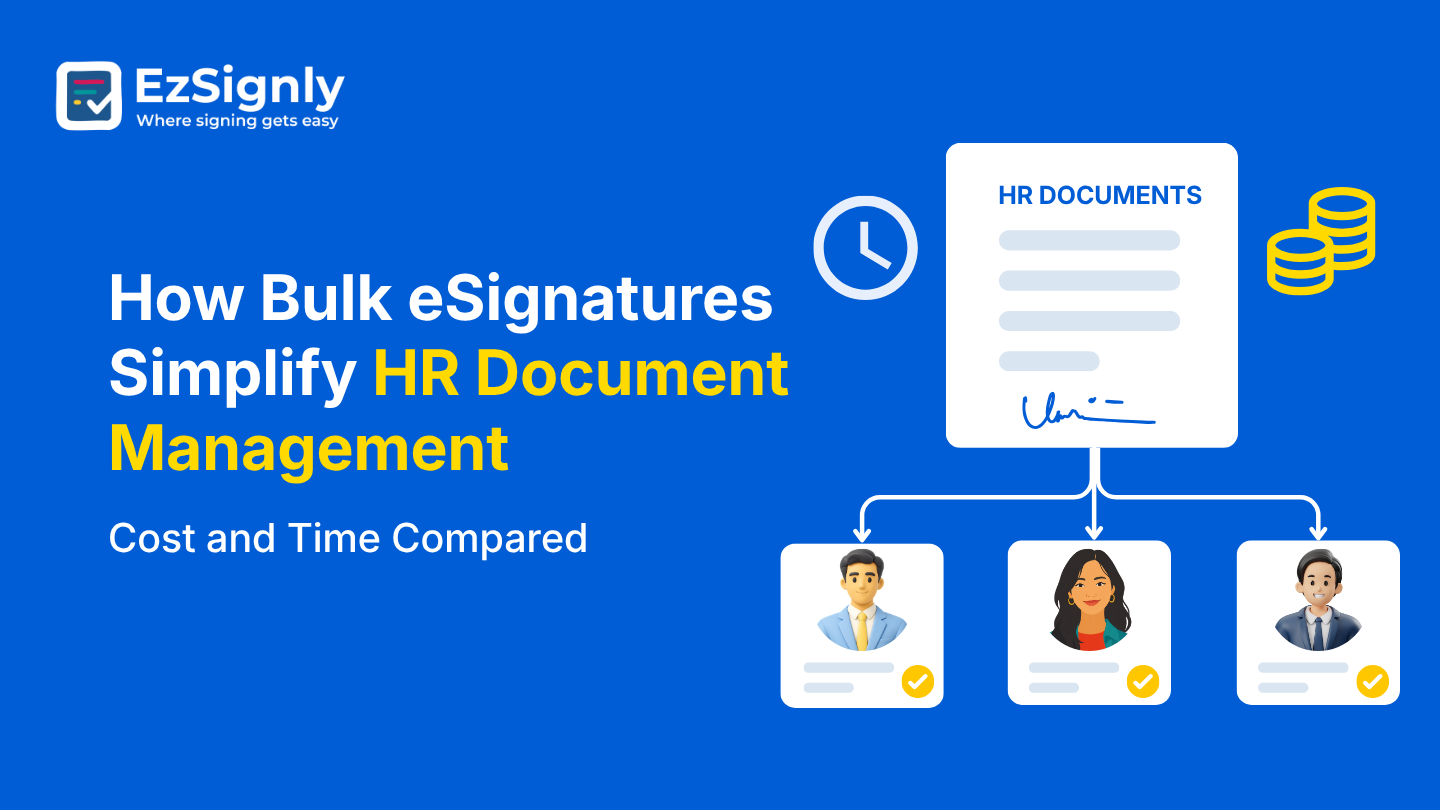
How Bulk eSignatures Simplify HR Document Management: Cost and Time Compared
By simplifying document signature, approvals, and management, bulk eSignatures help HR teams save time and money.
September 28, 2026
Have any other questions? EzSignly's team is here to help!
© 2026 Copyright EzSignly. All Rights Reserved