


eSignature Software: Why One Multi-Company Platform Costs Less Than Multiple Accounts
July 24, 2026 | Posted By Admin
Best Electronic Document Signing
Summary
Having multiple eSignature accounts across all the
different branches of your company may appear to be a lot neater; however, it
is financially costing you, and you may not have noticed. This article explains
why a multi-company platform is financially and operationally the better choice
for US companies looking to expand. Read this article to see how consolidating
your subscriptions will save on licensing, streamline administration, and
increase your compliance posture, and discover why increasing numbers of US
organizations are transitioning over to the benefits of a single, consolidated
eSignature platform.
Introduction
If your company has several entities, franchises,
divisions, or departments operating under your umbrella, it's likely that each
one has subscribed to a document-signing solution that doesn't cover the
others. What was perhaps the obvious and simplest workaround to handling a
particular pain point in a business unit's remit back in March 2020 has
resulted in each business month having 5 different bills ahead, 5 usernames
added, and 5 monthly subscriptions to manage. Thankfully, that can be your
wake-up call. The eSignature software for multi-company in US can
offer a refreshing change of pace by consolidating those disparate and siloed
signing solutions under one platform that actually was designed to manage it
all. Let's dive into why this platform consolidates the entire financial value.
How Multiple eSignature Accounts Drain Your Budget
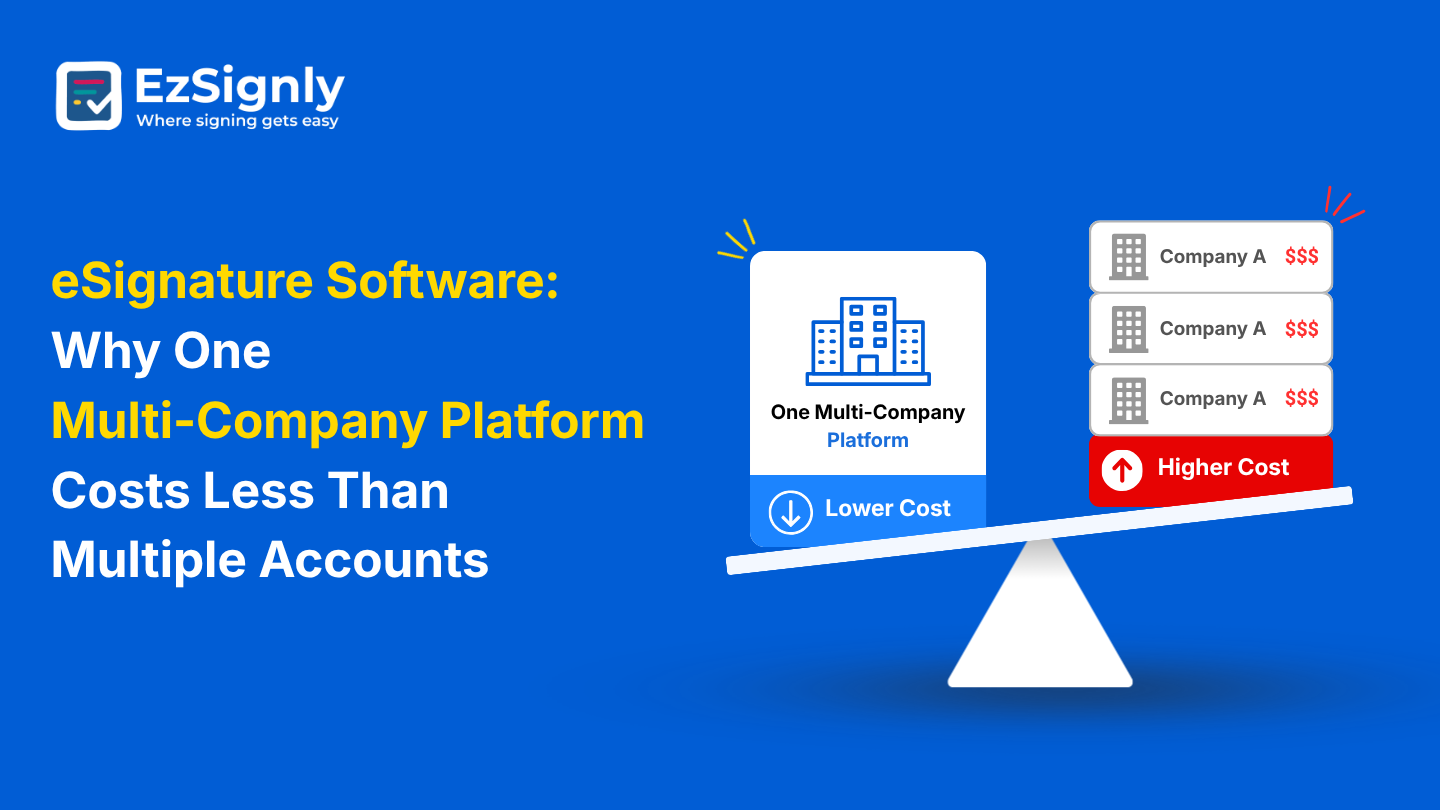
While logically, a separate eSignature account per company business unit seems empowering for each division, in reality, it typically equates to paying a premium, not just once but multiple times, for the same capabilities. Each stand-alone eSignature platform prices itself by individual users, number of companies, or transaction volumes- all of which often won't be reduced just because your team members are limited in number. And again, when multiplying three times, five, or ten, the total can escalate rapidly.
The problem goes deeper than the subscription fees.
Another area where there's some drag - For every integration that an IT team
implements, there's another integration for every vendor integration to manage.
Finances have to monitor how many contracts they have and on what renewal
dates, and if a problem pops up, whether it's the logon screen, or the
contract, or whatever- - all of that becomes tickets that get handed back and
forth from multiple different vendors at varying levels of service. There is an
untold inefficiency you avoid when you have a single platform.
A Simple Guide to Multi-Company eSignature Platforms
What is multi-company e-signature software? Well, it's precisely as described. It's a single central account where you can control a host of business units or departments or brands - and not pay for five different accounts or have five separate logins. These will be instead managed in one account with cross-company account switching and the ability to leverage corporate identity (branding) as well as define access based on role for each business.
This configuration is especially beneficial to holding
companies, franchisors, staffing firms, or companies that use various business
names. Every enterprise has its own custom version of templates, signer flows,
and audit trails. In the interim, every executive can monitor all operations
across business units in one place. And the multi-company architecture found on
EzSignly and its counterparts caters precisely for companies who want to be out
from under the wing of a multi-account model but aren't ready to endure the
messiness of disparate, disconnected systems.
Unify HR Workflows for Faster Employee Management
Human resources personnel are often the biggest defenders of electronic signature software, but they also suffer the most from poorly integrated systems. Offer letters, NDAs, policy acknowledgments, and benefits enrollment forms, these documents are constantly in motion, especially in organizations with multiple subsidiaries or regional offices. Managing different signing platforms for different entities forces the HR team to switch back and forth, which delays onboarding and increases the risk of errors.
In a multi-company arrangement, you can easily
circumvent that problem. HR can govern all organizations with just one portal;
however, each company still handles its documents, branding, and workflows
distinctly. This is why so many organizations specifically look for eSignature
software for HR in US teams that need to operate across multiple
business units without duplicating effort. Instead of teaching the five
separate systems used by different companies, the HR team learns one single
tool that it will implement across all the company profiles it supports. This
means onboarding happens faster, compliance holes shrink, and your HR
department spends less time collecting electronic signatures all over the
place.
How Multi-Company Support Cuts Your Software Spend
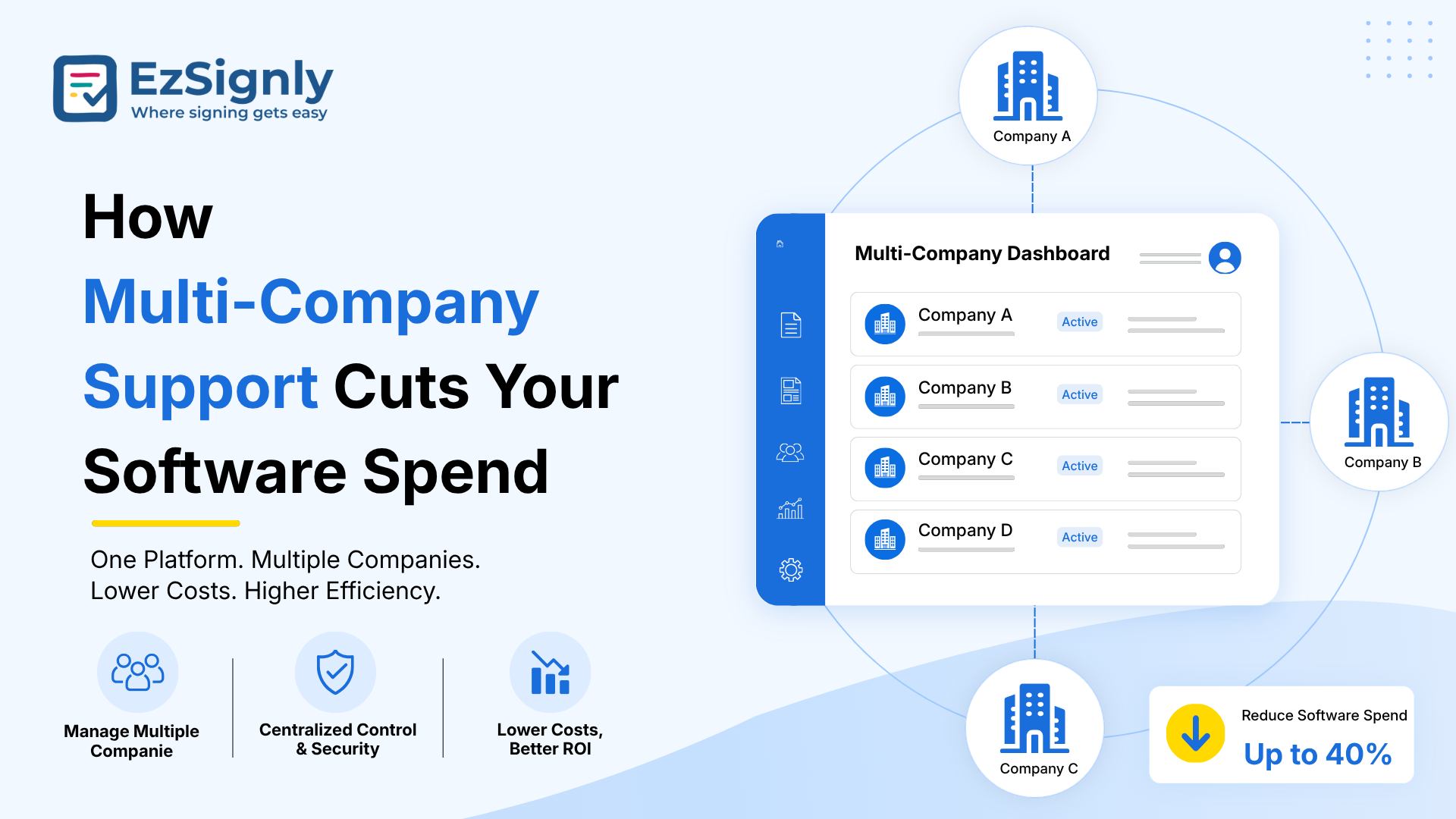
The math here is straightforward. When one platform supports multiple companies under a single pricing structure, you eliminate the redundant base fees that come with separate accounts. Instead of paying five separate monthly minimums, you're typically working within one tiered plan that scales based on total usage across the organization, which almost always works out cheaper than the sum of individual subscriptions.
There's also the matter of negotiating power. A single
vendor relationship with higher combined volume often unlocks better rates than
five smaller, disconnected contracts ever could. If you're comparing options,
it's worth reviewing eSignature software pricing in US markets specifically,
since providers structure their multi-entity plans differently, and the savings
can vary significantly depending on how volume-based tiers are set up.
Consolidating doesn't just save money on subscriptions either- it reduces the
administrative overhead of tracking multiple renewal dates, cancelling unused
seats, and auditing which team is actually using which tool.
Best eSignature Software
Optimize Business Operations for Long-Term Growth
Although businesses often cite expense as the primary reason for changing vendors, it typically isn't their only concern. If you have several departments operating with entirely different e-signature providers, compliance will immediately start slipping. Team A may use stale legal templates, Team B may not have clear audit trails, and Team C may not even be utilizing a compliant e-signature industry best practice. A multi-company platform standardizes all of these practices across the organization.
Centralized reporting is another major win. Instead of pulling data from five different systems to understand how many contracts closed last quarter, administrators can view everything in one place. This is especially valuable during audits, mergers, acquisitions, or investor due diligence, when leadership needs a clear, unified view of contractual activity across the entire organization, not a patchwork of exports from unrelated tools.
The unified platform also enhances diligence. When you
have one system for user access controls, two-factor authentication, and
compliance standards instead of five separate vendors with different security
practices, it is much easier for your IT team to enforce the same standard
across the board, reducing five attack vectors to one.
Choosing the Right Platform for Your Organization
While most eSignature services will boast about some sort of "multi-company" feature, many will only offer some ability to create multiple "teams" within the same billing account. You'll miss out on separate branding, independent audit trails, or entity-specific user controls that more robust features offer. It's important to confirm with vendors to ensure that their "multi-company" approach provides distinct company profiles rather than simply some labels over a shared workspace.
It's also worth thinking beyond your current needs. A platform that works for three entities today should be able to scale to ten without forcing you into an entirely different pricing tier or product. This is where solutions built specifically for growing organizations, rather than retrofitted from single-user tools, tend to hold up better over time. For companies evaluating their options, exploring eSignature software for business in US operations with true multi-entity architecture is a good starting point, since it narrows the search to platforms actually designed for this use case rather than ones simply marketed that way.
And this scenario is where EzSignly fits in: the
structure it provides companies with to manage a wide array of companies,
brands, or departments under one umbrella account while retaining the integrity
and discretion needed in that respective business. So if you're one of those
companies that want to reduce its invoice reconciling time and separate your
logins, here's a concrete illustration of how your multi-company accounts may
look.
Switch to Smarter Digital Workflows With Ease
Migrating from multiple accounts to one consolidated
platform can feel daunting, but most providers, including EzSignly, offer
support to import existing templates, transfer historical documents, and set up
entity-specific workflows during onboarding. The key is planning the transition
in phases, starting with your highest-volume business unit, validating the
setup, then rolling out to the remaining entities. This structured rollout
reduces the shock factor. Each of your teams will have enough time to learn the
basics of a new system. Before it's critical for all.
Have any other questions? EzSignly's team is here to help!
Conclusion
It seems logical that you'd want a different
eSignature account for every business unit to give you control and flexibility.
But most of the time, it's a complex, expensive solution that offers little
benefit. Instead, a multi-company solution allows you to streamline billing,
improve compliance, and get executive visibility into agreements. US businesses
managing multiple entities should switch to a unified solution like EzSignly,
not just to cut costs, but to run signing workflows in a way that aligns with
the needs of a modern, multi-entity organization.
FAQs
1. Can one multi-company eSignature platform separate the branding of different business entities?
A: Yes. Most multi-company platforms, like EzSignly, can be used to separate different brand entities with their logo, templates, and signer flows while managing all from one central account.
2. Is switching to one multi-company platform disruptive for teams already using separate tools?
A: Not necessarily. We believe a rolling, staggered implementation plan whereby one business unit goes live at a time and then rolls out is the way forward, not interrupting existing document management processes.
3. Does consolidating eSignature accounts affect document security or compliance?
A: In most cases, your security and compliance actually benefit. You only have one platform to manage and apply your security configurations, audit trail, and compliance requirements for all your businesses. Instead, you'd be working across many vendors with unique security protocols.
Take a look at the latest blog
All-in-One eSignature Solution for Multi-Company Access – Signup & Cost Guide
All-in-one eSignature platform with multi-company access, easy signup, and flexible pricing.
April 8, 2026
How to Sign Documents with Advanced Electronic Signatures Using EzSignly
Sign documents in EzSignly by uploading the file and applying a secure, advanced electronic signature to ensure the document is authenticated and lega...
March 4, 2026
From Paper to Digital: Save Thousands Every Year with eSignature Software
Switch from paper to digital and save thousands every year with secure eSignature software.
April 16, 2026
Electronic Signature Solution: How It Works, and Why Businesses Use It
An electronic signature solution helps businesses approve documents instantly with secure digital signing.
January 29, 2026
Have any other questions? EzSignly's team is here to help!
© 2026 Copyright EzSignly. All Rights Reserved