


eSignature Tool Online: Top 10 Business Documents Every Firm Should Sign Digitally
July 23, 2026 | Posted By Admin
eSignature for Business
Summary
Across the United States, law firms are abandoning
manual sign-offs in favor of eSignature solutions to finalize contracts more
quickly and meet regulatory standards. This blog covers 10 legal documents that
are ripe for electronic signature, the importance of audit trails and security
for lawyers, and how today's e-signature platforms are transforming daily
workflow from days to minutes.
Introduction
It was normal to use paper in the legal industry.
However, paper was often the bottleneck. A simple contract can take up to days
to complete due to the lengthy process of printing documents, sending them by
postal mail to a client for their signature, and later rescanning them into a
case management system. However, for those firms that deal with time-sensitive
issues such as real estate closings, settlement approval, or onboarding
clients, a delay of days in completing a document can result in a financial cost.
So, the demand for a secure way to eSign legal doc in Chicago and
other major markets has reached all-time highs as legal professionals scramble
to keep up with court deadlines and their clients' needs. E-signature
solutions are no longer a nice-to-have amenity but rather a crucial part of any
firm that desires to be a safe, effective, and competitive player in 2026.
The Rise of Digital Signatures in Law Firms
Trust, attention to detail, and paper trails are the lifeblood of legal practice, and ironically enough, that's why eSignatures were so perfect for the field. Each digital signature has an audit log that shows the signer, date and time, IP address, and whether the document was tampered with, and it sometimes provides more traceability than a wet-ink signature if its legitimacy is disputed later.
Beyond the legal defensibility, there's a simple
business case. Companies making the switch to e-signatures see faster new
client onboarding, fewer missed deadlines, and drastically reduced
administrative costs. Paralegals and legal assistants can once again leave
behind fax machines, couriers, and the tedious hunt for signatures. Documents
are now processed electronically and proactively send reminders as if on their
own, and all your documents are kept together in one encrypted, searchable
database.
Top 10 Legal Documents to Sign Digitally Today
And while there might be different levels of formality for various types of documents, these ten digital workflow-friendly categories are most universally useful:
1. Client Engagement Letters - The beginning of almost every attorney-client relationship. Digital signing speeds up intake and creates an instant, timestamped record of consent.
2. Non-Disclosure Agreements (NDAs) – These agreements often get signed long before you and your potential collaborator start talking specifics. Here, faster is better than just about anywhere else.
3. Retainer and Fee Agreements – We strongly advise our clients to get Retainer and Fee Agreements signed at the earliest possible stage of the engagement to ensure that both parties are on the same page when it comes to the legal services they'll be providing and when they expect to be paid.
4. Settlement Agreements – Multi-party matters often involve signatories in different cities or states; digital routing eliminates the logistics headache.
5. Powers of Attorney – They also require stricter identity checks. Luckily, this feature is now integrated into the eSignature process in many current-day platforms.
6. Employment and Independent Contractor Agreements – These typically apply to companies that bring on associates, paralegals, or outside counsel.
7. Real Estate Closing Documents – Remote multi-party signing is highly valuable for completing transactions, disclosures, and closing statements.
8. Litigation Consent and Waiver Forms – Depositions, expert witness agreements, and discovery-related consents - it can all be handled here!
9. Vendor and Service Contracts – A law firm may contract with literally dozens of vendors annually. That can range from court reporters and private investigators to external consulting firms and software providers.
10. Compliance and Disclosure Forms – These are particularly important for those of you practicing in the regulatory fields of securities law, tax, and immigration.
Combine the categories, and you're left with a set
that encompasses 90% or more of all documents going through a law firm in any
given month.
Security, Compliance, and Chain-of-Custody Concerns
In an industry that thrives on secrecy, security isn't a nice-to-have; it's what all of the client-attorney trust relies on. The eSignature software you select should feature end-to-end encryption, tamper-proof seals, and compliance with both the ESIGN Act and UETA. These are the two federal laws that grant eSignatures the same authority as traditional signatures in all states of the U.S.
Legal HR practices, like generating employee offers,
settlement agreements, and acknowledgment forms for workplace policies, usually
require another touchpoint for legal and HR staff. That's where dedicated eSignature
software for HR in Chicago shines. The ability to create a
central hub for legal and HR teams to share templates, monitor completion
rates, and store an accurate record for compliance makes life so much easier
than trying to juggle separate programs.
Save More While Keeping Quality at Its Best
For most businesses, it's the bottom line that really seals the deal on whether or not to take the plunge. The total cost of hard copies, couriers, notary services, and lost employee time spent trying to obtain signatures exceeds what you might expect. Most companies are pretty surprised when they finally add it all up. Cloud e-signatures wipe almost all of these costs out at once.
If your business's primary goal is to keep operating
costs low while maintaining a strong market presence, then look into packages
that would reduce e-signature cost in Chicago. Think about bundles
for documents, unlimited signer packages, or monthly subscriptions in lieu of
paying per envelope. Independent professionals or small practices can
especially appreciate clear payment structures that won't penalize them during
tax season or for year-end contract expirations.
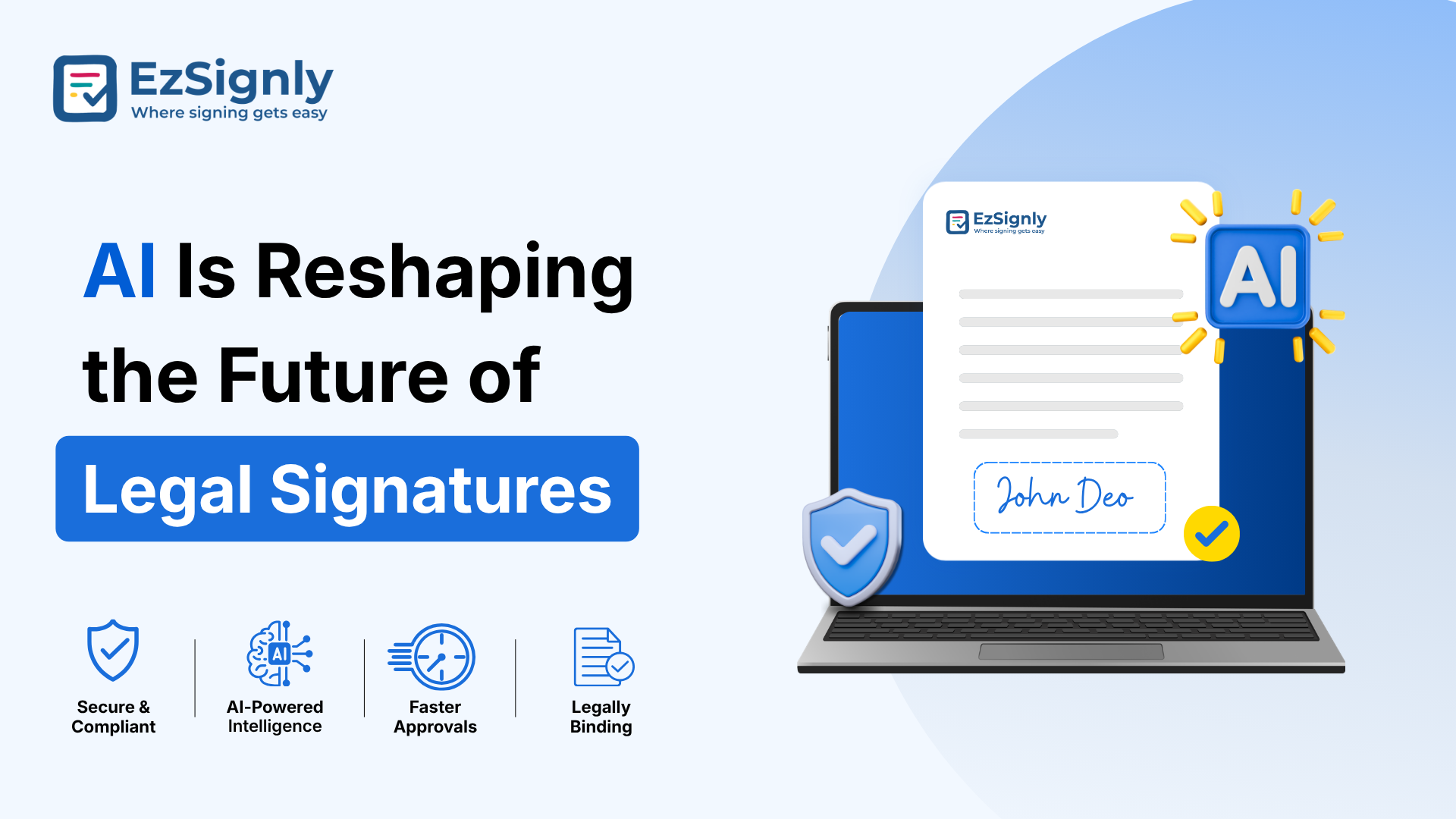
AI Is Reshaping the Future of Legal Signatures
AI has stealthily permeated the signing workflow. No longer does a user need to position individual signature blocks on a 15-page agreement - current solutions identify signature, initials, and date fields on any document and fill them automatically within a few seconds. Other solutions scan for missing terms or language discrepancies before the contract even goes out for signature, preventing mistakes that a hasty paralegal might make.
And that's exactly the sort of change intelligent
automation is bringing about, and why many law firms here in the US have
already embraced AI-powered esignature software in USA. They
are using e-signatures not just to gather signatures but to speed up their
entire document workflow, from document creation to execution and filing. Law
firms that deal with hundreds, or even thousands, of documents that are all
similar to each other, such as retainer agreements or non-disclosure
agreements, are already saving many hours each and every week with these sorts
of automations.
Electronic Signature for Legal Documents
Choose a Reliable eSignature Solution for Your Firm
eSignature solutions aren't created for legal workflows (necessarily). When evaluating an online signature platform, organizations should keep a few requirements top of mind: bank-grade encryption, in-depth audit trails, and compatibility with existing case or document management systems as well as signature workflows with multiple parties that are required to sign off sequentially (most settlement and closing processes call for these features). For some processes, the platform also needs to support an in-person and remote notary.
Also important is pricing transparency. Not all
platforms operate this way. While some charge you a per-document-sent model - a
cost that adds up quickly when you perform dozens of signings in a week—others
have developed fixed-price plans, so you know what your expenses will be, no
matter how many signings you do.
Why EzSignly Fits the Needs of Modern Law Firms
EzSignly was designed with those very issues at the forefront. This online signature software tool combines legally compliant, ESIGN and UETA-authorized signatures with a user-friendly, drag-and-drop platform that paraprofessionals and clients who aren't comfortable with digital document signing can understand immediately, and it also allows for multi-party serial signing, white-labeled signing links, and audit logs that will hold up to any potential challenges.
Legal firms love EzSignly because it's so versatile -
they can make templates for their retainer agreements, engagement letters, and
NDAs and then send them out in bulk instead of reformatting everything. With
EZSignly, pricing is simple and reliable, customer service is exceptional, and
it’s a cost-effective option for individual practitioners and midsize practices
alike that seek the power of enterprise-grade signing without enterprise-grade
complexity.
Have any other questions? EzSignly's team is here to help!
Conclusion
The truth is, digital signatures aren't just nice to
have anymore; they're a competitive advantage for law practices everywhere.
Whether it's for engagement letters, settlement agreements, or the nine other
documents we review, there are real-time savings, administrative cost
reductions, and an improvement in firm-wide compliance standards that your
practice stands to gain by implementing this tech. One of the most secure and
user-friendly digital signature platforms, adding eSignly to your business is easier
than you think.
FAQs
Q: Are e-signatures legally valid for contracts used in U.S. courts?
A: Absolutely. Both the ESIGN Act and the UETA affirm that electronic signatures have the same legal validity as wet signatures, provided standard consent and record retention rules are followed.
Q: Can a client revoke consent after signing a document electronically?
A: Generally, once a document is signed and the signer has acknowledged the terms, it's treated the same as a physical signature; it cannot be unilaterally revoked. However, the underlying agreement may still be challenged through normal legal channels if there's evidence of fraud, coercion, or lack of capacity.
Q: Do all legal documents qualify for electronic signing?
A: Most do, but a few exceptions exist — such as certain wills, court orders, and some real estate transfer documents in specific states — where wet-ink signatures or in-person notarization may still be required. It's worth checking state-specific rules before assuming every document is eligible.
Take a look at the latest blog
Smart Authentication for eSignatures: Enhance Security Without Slowing Down Your Workflow-Free Trial
Secure eSignatures with smart authentication like OTP and ID checks—fast, simple, and friction-free. Start your free trial today.
April 28, 2026
AI-Powered eSignature Security for SMBs: Setup to Full Protection (USA & India)
Protect your business documents with AI-powered eSignature security. Fast setup, fraud detection, and full protection for SMBs in the USA & India.
April 17, 2026
Why Businesses Are Combining AI & eSignatures for Faster Approvals: Book a Demo
Accelerate approvals with AI-powered eSignatures. Automate workflows, reduce delays, and get documents signed faster—book a demo today.
June 12, 2026
Boost Productivity: Why Small Businesses Are Adopting Electronic Signatures
The smart way small businesses speed up signing and approvals.
January 27, 2026
Have any other questions? EzSignly's team is here to help!
© 2026 Copyright EzSignly. All Rights Reserved