


How to Create Legally Binding Electronic Signatures with eSigns in 2026
January 30, 2026 | Posted By Admin
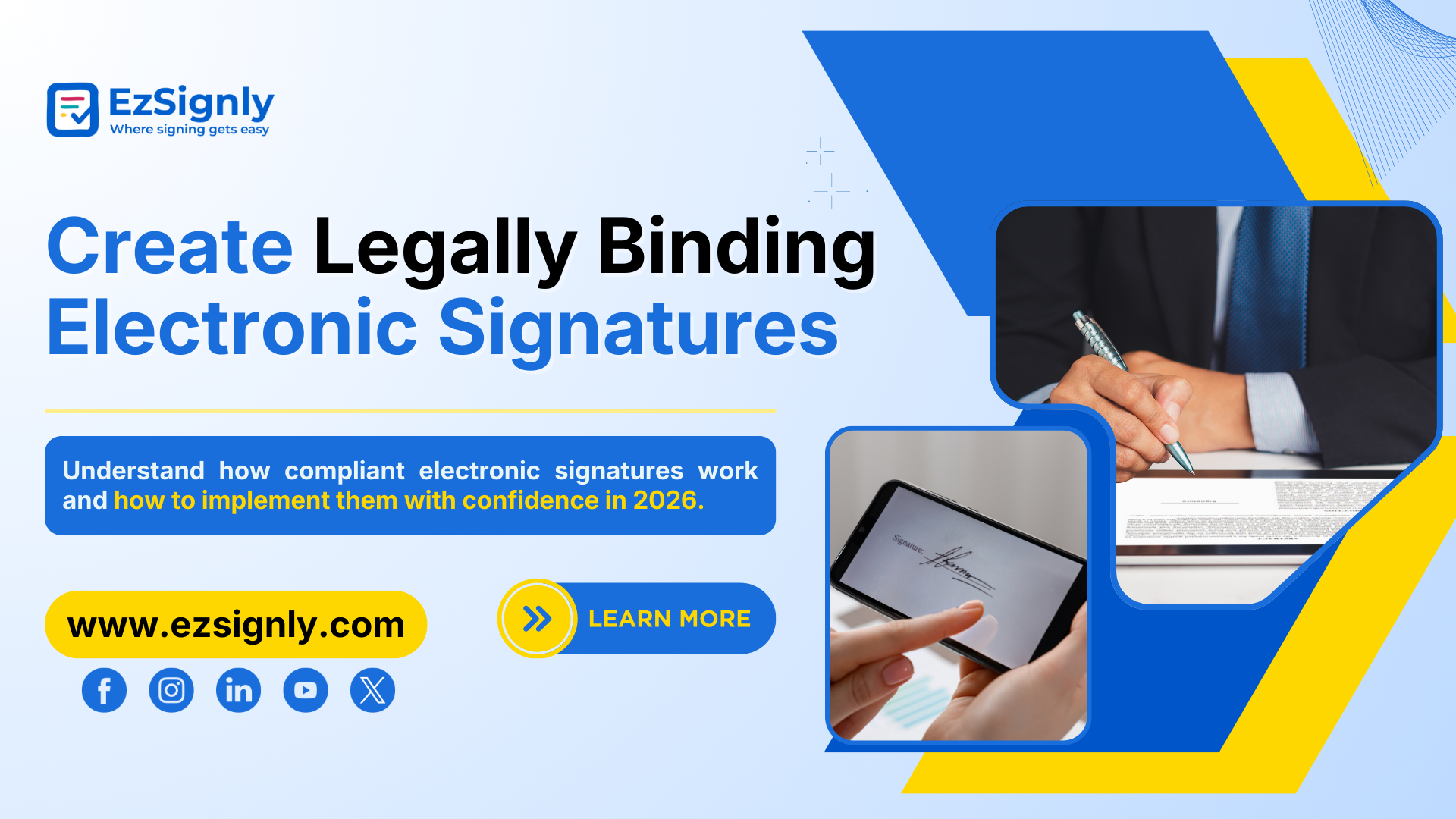
Electronic Signature For Legal Documents
Key Takeaways
- Legally binding electronic signatures in 2026 depend on process integrity, not just digital appearance.
- eSignature Legal Compliance is achieved through clear signer intent, identity verification, and tamper-proof document integrity.
- The ESIGN Act & UETA both state that properly executed eSignatures constitute legally enforceable documents.
- Defensible digital execution requires audit trails, encryption, and authentication.
- The use of compliant eSign solutions has enabled more businesses to reduce execution risk and accelerate workflows.
- Using a regulated, secure eSignature platform provides long-term legal fallbacks and enables operations at scale.
Organizations that treat digital signing as a casual convenience often expose themselves to compliance gaps, while those that implement it strategically gain speed, legal certainty, and operational confidence.
Creating legally binding electronic signatures today requires more than adding a signature image to a document. This is where eSignature Legal Compliance in South Barrington becomes central to business decision-making. It requires compliance with legal frameworks, secure identity verification, tamper-proof execution, and reliable audit trails.
This guide explains how businesses can create legally
binding electronic signatures in 2026, what compliance really means in
practice, and how organizations, including those operating in South
Barrington are implementing digital signing with confidence.
What Makes an Electronic Signature Legally Binding?
An electronic signature is not so much about how it looks as about whether it was legally signed or enforceable.This definition has three main elements that must be present for an electronic signature to be enforceable under the law in many jurisdictions. The first requirement for an electronic signature to be enforceable is that the signer must clearly demonstrate intent to sign.
Second, the signer’s identity must also be verifiable in a reasonable manner. Third, once a document has been signed by the signer using an electronic signature method, the document should remain intact. This structured approach is the foundation of eSignature
Legal Compliance in 2026. Modern eSign platforms are built specifically to meet these requirements.
They capture intent through explicit signing actions,
verify identity through authentication mechanisms, and protect document
integrity using encryption and tamper-evident sealing.
The Legal Framework Behind eSignatures
The procedure of electronic signature is established by its legal base. The legal basis for electronic signatures in the USA includes the ESIGN Act and the Uniform Electronic Transactions Act. This legislation proves that a signature should not be denied legal effect based solely because it is in electronic form.
The key factor is not that it is a digital signature, but that it is a procedure that meets the appropriate legal criteria. In contemporary courts, what matters is not the ink on the paper but the audit trails or logs used to authenticate the document.
For businesses evaluating a legal eSignature solution in South Barrington understanding this distinction is critical. Compliance is achieved through process design, not through appearance.
How eSign Platforms Ensure Legal Compliance
Current electronic signature platforms are designed with compliance built into the signing process. When a document is released for signing, the system captures all relevant events during the signing process.
The exact time that a document was created, when it was accessed, when it was executed, and by whom are captured. In addition, the system will automatically log information about the signer, such as timestamps, IP addresses, and the methods used for identity verification.
Once the document has been executed, it is sealed using the signature encryption method. It cannot be modified without it becoming apparent, thereby providing the requisite evidence that the document was returned to the signer with the original content intact.
As such, the various levels of control on the signed
document provide sufficient evidence to establish it as a valid legal document,
rather than merely a document containing a signature.
Creating Legally Binding eSignatures: Step by Step
Developing compliant electronic signatures in 2026 is simple thanks to EzSignly. This complete electronic workflow is what distinguishes an electronic signature from an informal electronic mark. Create a legally binding electronic signature using our free tool.
- The initial step of creating the document generally includes the creation of an electronic version of the text using pre-approved templates for the purpose of consistency. After creating the document, the sender establishes the order in which signers will electronically sign.
- All signers receive secure access to the document to electronically place their signature on the document using a controlled action which provides a clear indication of intent and ties the intent to a Verified Identity of the signer.
- Once
the document has been electronically signed, the system produces a
complete audit trail for the signed document. It securely stores the
signed document in a way that allows for retrieval at any point in time
should the document be needed for legal, compliance, or audit purposes.
Why Compliance Matters More in 2026
With the rise of digital transactions, there has also been an increase in the scrutiny of organizations around compliance of regulatory documents, which must be signed properly and documented as being signed.
If an organization's execution processes for
electronic documents is weak, a document will not demonstrate that it was
executed by the right people. This is why companies are putting eSignature
Legal Compliance at the forefront of their governance strategy. Compliance
has become an operational requirement, whether for managing employment
contracts, vendor agreements, or client documents.
Advantages of Legally Binding eSignatures
Legal Enforceability
Legally binding eSignatures meet statutory requirements and are admissible as evidence when supported by proper audit trails and authentication.
Stronger Document Integrity
Cryptographic sealing and tamper detection ensure that signed documents cannot be altered without invalidating the signature.
Clear Proof of Signer Intent
Digital signing captures explicit consent through recorded actions, timestamps, and identity metadata.
Audit and Compliance Readiness
Automatically generated audit logs simplify regulatory audits, internal reviews, and legal discovery.
Faster, Risk-Controlled Execution
Documents are executed in minutes without compromising compliance, reducing delays and exposure.
Scalable Governance Across Teams
Legally binding eSignatures support standardized
execution across HR, legal, sales, and operations.
eSignatures in HR and Workforce Management
Human resources is considered a highly sensitive field in terms of digital signing.
The execution of employment contracts, offer letters, policy acknowledgments, and consent forms must be done properly. Omissions or errors in a signature will expose an organisation to undue risk.
By using eSignature for HR in South Barrington, organizations streamline hiring while maintaining clear, audit-ready records. Digital signing will ensure that all employment documents are signed in the same way, whether employees are working from the office or from home.
By 2026, the execution of HR compliance cannot be
separated from digital signing.
Local Adoption with Legal Confidence
Firms operating in and around Chicago increasingly have to deal with clients, candidates, and partners across various regions. Geographic limitations are eliminated through electronic signatures, thereby ensuring contract validity.
By choosing a legal e-signature solution in South Barrington, organizations can enjoy the benefits of the understanding that the operation is gaining while at the same time reaping the benefits of national compliance.
Having a local impact and a digital execution adds
depth to businesses.
Common Misconceptions About Legal eSignatures
People often mistakenly believe that electronic signatures lack the security of traditional wet-ink signatures, when in fact the opposite is true. Wet-ink signatures can be forged, altered, or removed from their original documents, and they very rarely provide reliable evidence of who actually signed the document. When implemented properly, electronic signatures create a structured record of evidence that can be verified.
A common misconception is that you need to use
complicated processes to ensure compliance. Newer platforms simplify compliance
by integrating it into the workflow rather than requiring manual checks.
Choosing the Right eSign Solution in 2026
Not Every eSign Tool Is Created Equal. The potential eSignature software must be assessed based on: security framework, audit logs, form signature capabilities, and ability to comply with state/enterprise law.
A good eSignature System should be able to perform all types of commercial transactions, as well as crucial transactions that may involve meeting diverse legal requirements, depending on how it is used.
An effective eSignature platform will allow users to effortlessly navigate their routine agreements through Human Resource Management, Sales, Legal, Operations, and other workflow processes without adding extra steps or increasing delays.
Sign up on EzSignly and improve productivity, fulfill
compliance needs, and make your workflow easier!
Understanding Legal eSignature Pricing Plans
Compliance-focused digital signing does not require unpredictable costs.
Modern Legal eSignature Pricing Plans are designed to scale with business needs. Pricing models are usually based on usage, features, or volume of documents rather than any undisclosed transaction fees.
When eSign solutions are compared to the expense associated with execution, such as the cost associated with printing, mailing, storing, and manually dealing with documents, it is found that not only is significant expense saved, but risks are reduced too.
For many organizations, pricing clarity is as
important as technical capability.
Have any other questions? EzSignly's team is here to help!
Conclusion
Making legally binding electronic signatures by the year 2026 involves the right process, not just the right technology. Intent, identity verification, document integrity, and auditability are the foundation on which meaningful electronic signature execution is based.
Organizations that prioritize eSignature Legal Compliance gain faster execution, stronger legal protection, and greater operational clarity. Whether implementing a legal e-signature solution in South Barrington, enabling eSignature for HR in South Barrington, or evaluating transparent Legal eSignature Pricing Plans, businesses benefit from treating digital signing as a governed, strategic capability.
In a digital-first economy, legally binding eSignatures are no longer optional. EzSignly provides you with enterprise-grade eSignature solutions, open a free account and try it today.
Take a look at the latest blog
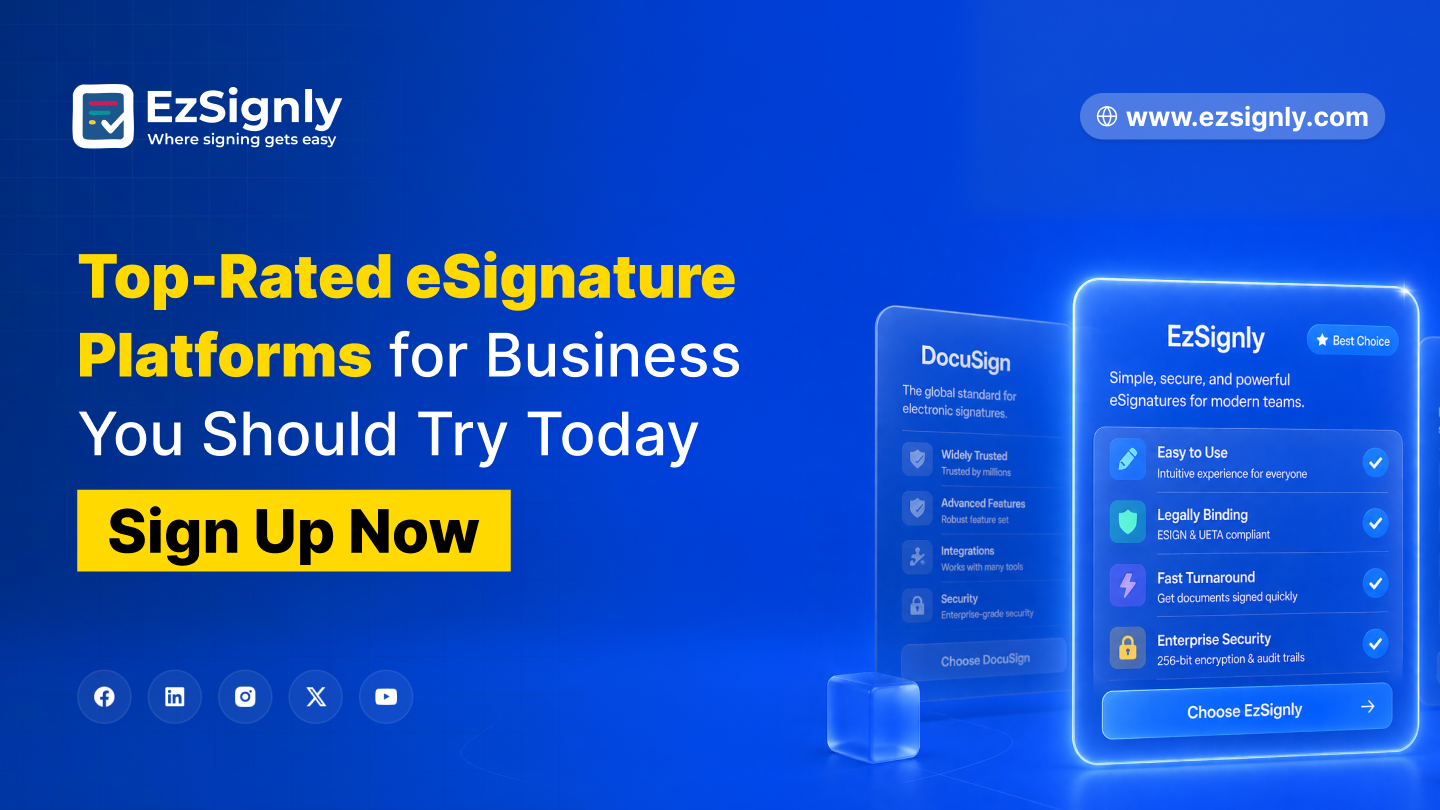
Top-Rated eSignature Platforms for Business You Should Try Today – Sign Up Now
Top-rated eSignature platforms help businesses sign documents fast and securely. Sign up now to streamline workflows.
April 29, 2026
The Evolution of Electronic Signatures and the Shift from Paper to Digital Trust
EzSignly is holding your hand to help you in this transition by providing secure eSignatures, remote signing, audit trails and much more and at a frac...
January 22, 2026
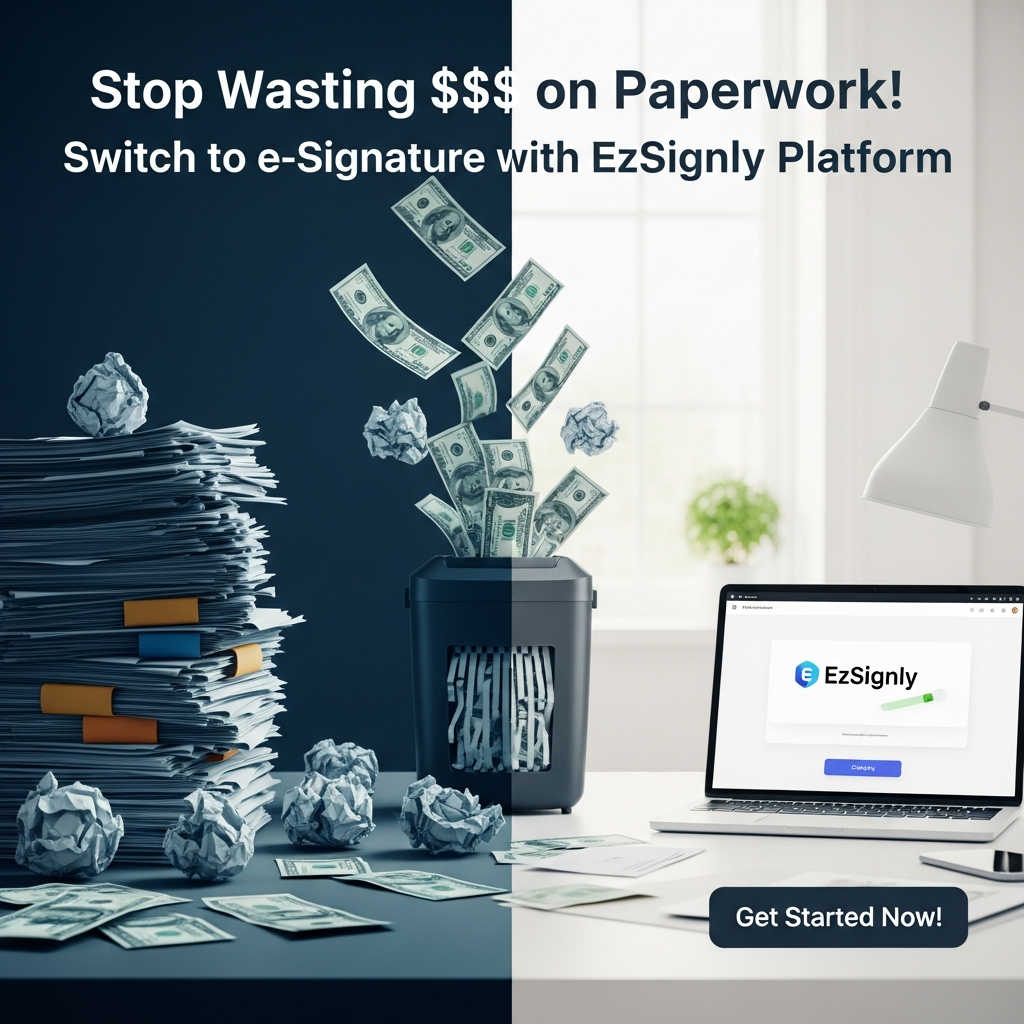
Stop Wasting $$$ on Paperwork! Switch to e-Signature with EzSignly Platform
Cut paperwork costs—switch to EzSignly for fast, secure e-signatures anytime, anywhere.
April 3, 2026

Drive Real Estate Growth in 2026 with eSignature Tools – Start Your 90-Day Free Trial
Close real estate deals faster with eSignature tools. Start your 90-day free trial today.
April 2, 2026
Have any other questions? EzSignly's team is here to help!
© 2026 Copyright EzSignly. All Rights Reserved