


Know About Sequential Signing & Role-Based Access Control in AI eSignature Software
September 24, 2026 | Posted By Admin
Best Electronic Document Signing
Summary
Sequential signing and role-based access control
(RBAC) are the two features that decide whether your document approval chain
runs smoothly or turns into a compliance headache. This guide breaks down how
ordered approval routing and permission tiers work inside modern electronic
signature platforms, when to use them, and what US businesses, especially in
Illinois, should check before picking a provider. To make your decision easier,
you’ll also get a practical comparison framework and a straightforward checklist.
Introduction
If you've ever followed up on three approvers via
email, only to realize one approved an old draft of a contract, you already
know why approval order is important. Changing the order of approval, or simply
giving the wrong person access to an HR file, can cause delays in the workflow,
headaches with versions, and real legal risks. This risk is multiplied in
regulated industries like healthcare, financial services, and real estate that
require, on a continuous basis, to be audit-ready. In this post, we will review
how sequential routing and permission controls address those concerns, how they
compare to parallel approval, and what to consider when choosing an online
eSignature vendor. For more information on e-commerce, read on for our guide to
eSignature Online Free in Illinois, including tips for evaluation.
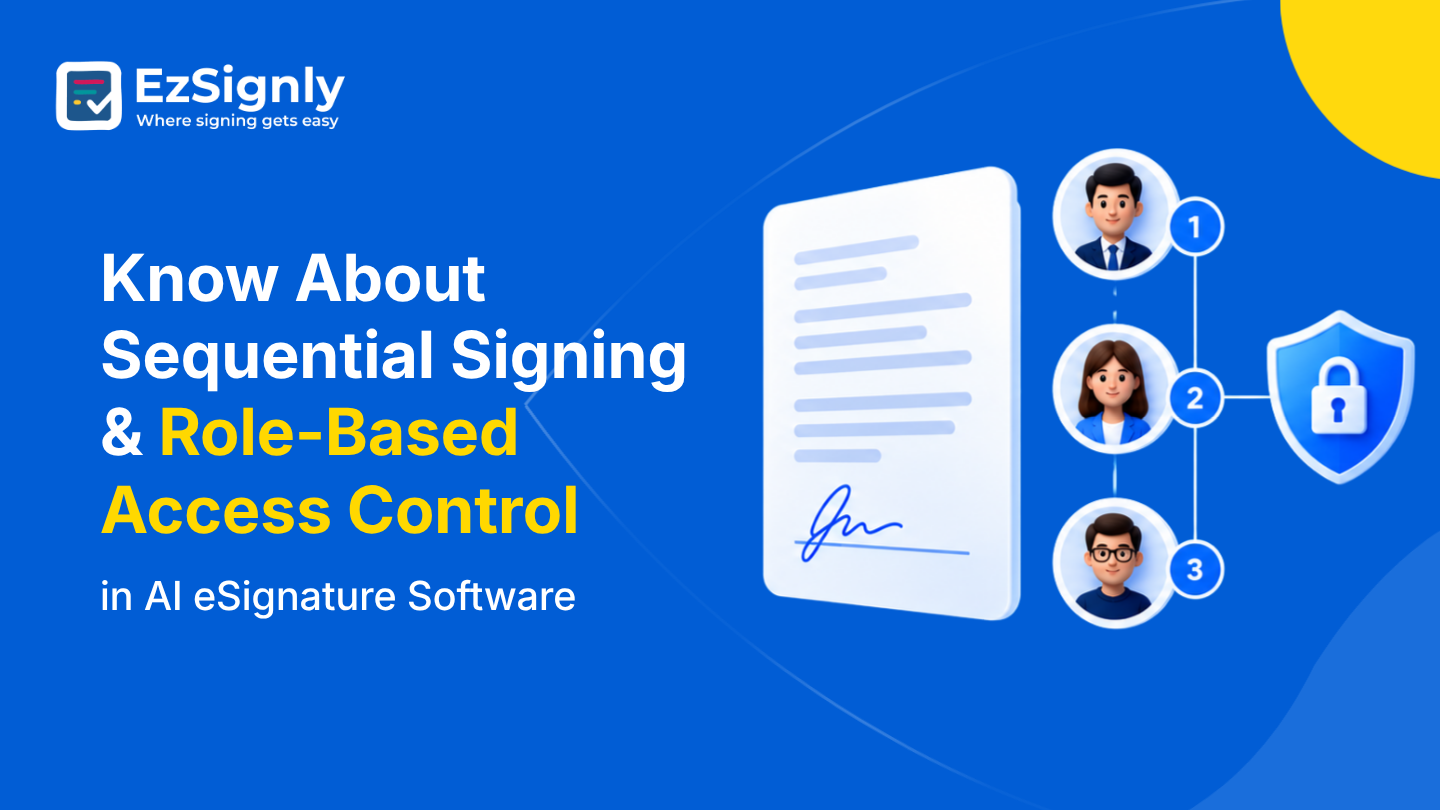
What Sequential Routing Actually Means
Sequential routing – the document passes from one participant to the next in a set order, with every move activating the next step. Parallel routing – where all of your recipients receive the file in a batch and can proceed in any order. Neither is necessarily "best": one or the other will work better depending on whether your process involves dependencies.
A hiring offer, for instance, often requires approval
from the hiring manager before the candidate even receives it. For a trivial
internal acknowledgement form, however, it may not require an order at all.
Having these wrong is costly either way: it delays non-caring paperwork
unnecessarily or allows high-stakes paperwork to get past the wrong eyes
without requiring an order.
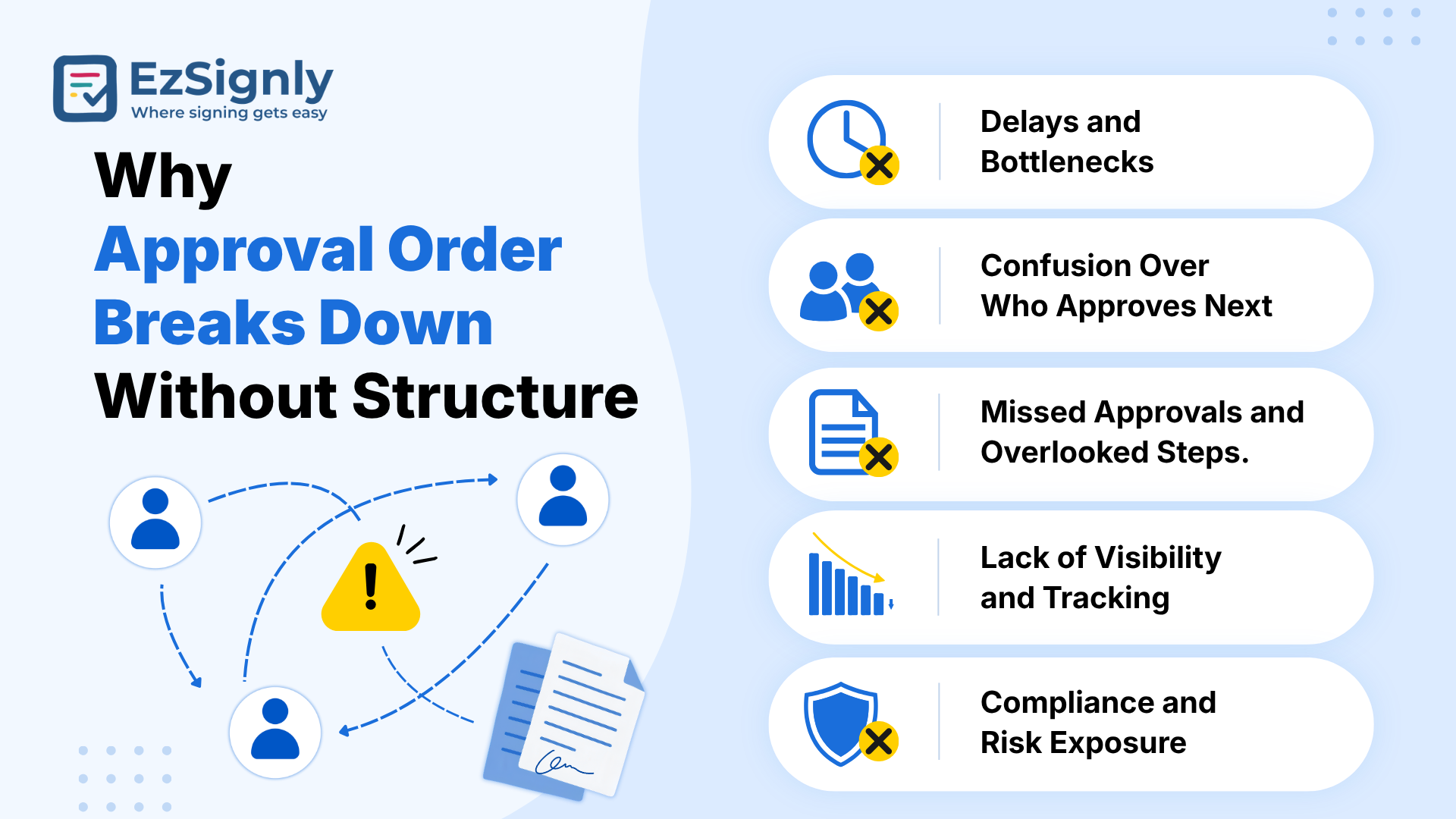
Why Approval Order Breaks Down Without Structure
The paperwork is passed around until a company loses control. No one has time to read a lease before it goes to a tenant. A vendor contract is skipped legally because the sender forgot who needed to review it first. These aren't mistakes; these are the outcomes of routing paperwork on their guts instead of a system.
eSignature Software Solution
Role-Based Access Control: The Layer Most Teams Skip
RBAC (Role-Based Access Control) assigns permissions based on a person's function rather than granting broad access to everyone in a shared folder. A recruiter might create and send offer letters, a hiring manager might approve terms, and an auditor might only view completed records without editing rights. This is the "least privilege" principle that federal cybersecurity guidance, including standards published by NIST (National Institute of Standards and Technology), has recommended for decades: give people exactly the access their job requires, nothing more.
Without this tier, a single shared login frequently
becomes the master over all - who is responsible for preparing the contract,
and who is authorized to delete it forever? That's a disadvantage in the case
of a dispute and a warning sign in an audit. Established roles turn "who
touched this file and why" from a gamble to a click-away query.
Sequential Routing vs Parallel Approval vs Hybrid Chains: A Decision Framework
| Scenario | Best Fit | Why |
| The contract needs legal review, then finance sign-off, then CEO approval | Sequential | Each step depends on the prior approval. |
| Internal policy acknowledgement sent to 50 staff members | Parallel | No dependency between recipients |
| Vendor onboarding with internal review, then external counterparty signature | Hybrid | Internal steps run in order; the external party joins after |
If your paperwork has dependent steps, sequential
routing prevents out-of-order approvals. If everyone is acting independently,
parallel saves time. Hybrid chains, internal order first, external party last,
tend to suit vendor and partnership paperwork best. Any provider marketed as eSignature
software for HR in Chicago team should support all three, since HR
paperwork routinely needs both.
How Automation Strengthens Order and Permission Rules
Sign-based automation, including that driven by some of the machine-learning models used to identify anomalies, is beginning to go beyond simply routing files. It is beginning to identify mismatched signer field inputs, notifying you of a document sent to the wrong role, or even, after a predefined number of hours, escalating a stagnant approval. This AI-assisted monitoring is alleviating the need to constantly watch over ordered workflows.
It's worth noting this shouldn't replace human
judgment on sensitive paperwork. Automation is best used to catch obvious
errors and speed up routine steps, not to make final calls on legal terms. A
well-built platform uses smart logic to support your team's process, not
override it.
Industry-Specific Use Cases and Applications
Healthcare groups use tiered permissions so only
credentialed staff can finalize patient consent forms. Real estate brokerages
rely on ordered routing so a buyer never signs before financing terms are
locked. They both - a bad filing from any of a multitude of different
jurisdictions can cause a bad outcome in a case. Even small nonprofits can use
it, with board approvals and grant papers often having tight sign-off chains
before the money can change hands. The common thread: any organization handling
paperwork with dependencies or sensitive data has a reason to formalize both
order and permissions.
What Makes EzSignly a Flexible eSignature Solution
EzSignly creates sequential approval chains and
role-specific permission levels within its document management, so your teams
aren't cobbling together email threads and shared drives to maintain order.
Establish a fixed approval sequence on contracts, limit which users can see or
submit HR documents, and maintain a time-logged record of all document
movements. For organizations comparing a cost-effective eSignature solution
in Chicago against larger, pricier platforms, the appeal is
straightforward: the same ordering and permission logic that enterprise tools
charge a premium for, without the bloated feature set most small and mid-sized
teams never touch. It's one option worth evaluating, not the only variable in
your decision.
A Quick Checklist Before You Switch Platforms
- Can the platform enforce a strict approval order when dependencies exist?
- Does it support permission tiers by function, not just by individual?
- Is there a full, exportable trail of who acted, when, and in what role?
- Does pricing scale reasonably as your staff count grows?
- Is
customer support available when a routing rule needs fixing fast?
Conclusion
Getting approval routing rules and access rights right isn't a trick to making things needlessly complicated. It's about eliminating the uncertainty that leads to delays and compliance gaps. Use the same routing mode - sequential, parallel, or hybrid - as you use to describe how your paperwork relies on itself, and provide only the access that each role needs. The platforms that get this right save your staff time and protect you during an audit.
Wait No More. Start Your Paperwork Today
Have any other questions? EzSignly's team is here to help!
FAQs
Q: Can a single person hold multiple roles in a permission system?
A: Yes, most platforms allow one user to hold combined permissions, such as a manager who both approves and finalizes records, though best practice keeps drafting and final approval separated where possible for accountability.
Q: What happens if a signer in a sequential chain is unavailable?
A: Most platforms allow an admin to reassign that step to a backup approver without restarting the entire chain, keeping the rest of the completed steps intact and the audit trail unbroken.
Q: How many approval tiers should a small business set up before it becomes overkill?
A: Most small teams do well with two or three tiers, such as creator, approver, and admin. Adding more layers than your staff count can realistically manage tends to slow paperwork down rather than protect it, so match tier count to actual decision points in your process, not to what a larger company uses.
Take a look at the latest blog

Secure Your Business Future with eSignature Best Practices – Book Free Demo Now
Secure your business with eSignature best practices. Book a free demo today to get started.
April 14, 2026
Boost Productivity: Why Small Businesses Are Adopting Electronic Signatures
The smart way small businesses speed up signing and approvals.
January 27, 2026
One Platform, Endless eSignature Features for Businesses: Try 3 Months Free Trail
One platform that has every eSignature capability your company requires. Take advantage of a free three-month trial.
July 22, 2026
eSignature for Remote Hiring: Speedup Your Productivity in HR Industry: Signup Now
Secure eSignatures can facilitate remote recruiting. Send HR paperwork, promptly get signatures, and enroll new employees without the paperwork. Enrol...
July 30, 2026
Have any other questions? EzSignly's team is here to help!
© 2026 Copyright EzSignly. All Rights Reserved