


Smart Authentication for eSignatures: Enhance Security Without Slowing Down Your Workflow-Free Trial
April 28, 2026 | Posted By Admin
Best E-signature Software
Summary
Smart authentication technology is reinventing how
companies protect themselves against the threats associated with eSignatures by
integrating these features into the electronic signature process. With the help
of AI-powered electronic signature solutions, companies will be able to
identify possible risks during their operation yet still have an efficient
workflow in the field of document management. This type of authentication
solution guarantees that the security level will automatically increase depending
on how important the transaction is. Using this kind of system in electronic
signature software and API systems helps enterprises around the world operate
safely.
Introduction
In a world where most of our interactions happen online, international companies find themselves under increasing pressure to be efficient and safe. With more and more firms using electronic signatures in their processes, it is not about whether digital signatures are safe but how companies can make sure they use them wisely. Intelligent electronic signatures: introducing a new level of protection for your business processes.
This article will explain how intelligent
authentication is changing the current e-signature landscape and how AI-powered
electronic signature solutions can help you achieve more.
The Growing Need for Intelligent Authentication
The conventional modes of authentication such as static passwords, email verification, or even one-time passwords cannot be considered enough to handle today's business environment where cybersecurity breaches, remote working conditions, and international transactions are common.
Smart authentication brings new ways of authenticating users by applying various parameters such as behaviour, device information, location and potential threats before giving permission to log in or sign any document. This will greatly minimise the chances of fraudulent activity.
Companies dealing with valuable agreements or
contracts will need to embrace this technology as an essential part of their
business model.
What Is Smart Authentication in eSignatures?
Smart authentication refers to the application of sophisticated authentication technologies in digital document signing. Unlike traditional authentication technology that relies on one checkpoint, smart authentication utilises multi-factor authentication techniques that evolve dynamically based on risk factors.
Key components include:
- Multi-Factor Authentication (MFA): Combining two or more verification methods such as passwords, biometrics, or device recognition.
- Behavioural Analytics: Monitoring typing patterns, login behaviour, and interaction signals to detect anomalies.
- Device Fingerprinting: Identifying trusted devices and flagging unknown access attempts.
- AI-Based Risk Scoring: Assessing the probability of fraudulent activity before approving a signature.
The systems operate quietly in the background,
ensuring that security does not interfere with productivity when integrated
into electronic signature software and API ecosystems.
The Role of AI in Modern eSignature Security
Artificial intelligence plays a central role in advancing authentication frameworks. AI-powered electronic signature solutions analyse vast datasets in real time to identify patterns, predict risks, and automate decision-making.
Key advantages include:
- Real-Time Fraud Detection: Immediate identification of suspicious activity during the signing process.
- Continuous Learning: Systems improve over time by learning from new threats and user behaviour.
- Automated Compliance Checks: Ensuring adherence to regional and international regulations without manual intervention.
For global enterprises operating across multiple
jurisdictions, AI-driven authentication ensures consistency in security
standards while accommodating local compliance requirements.
Use Cases Across Global Business Environments
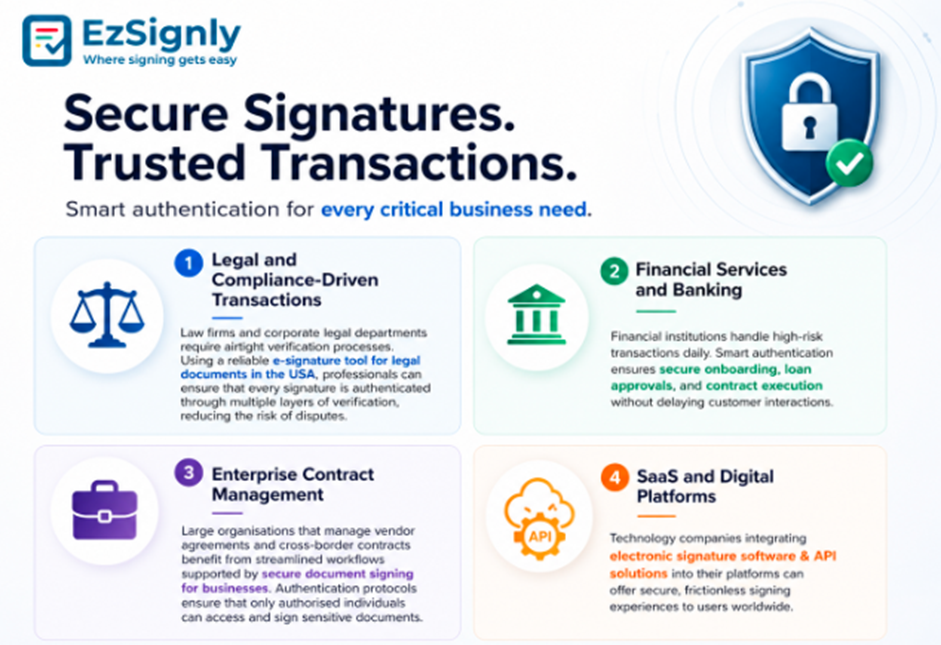
Smart Authentication is especially useful in fields where the authenticity of documents and verification of identities are critical. Secure document signing for companies is a crucial factor in today’s interconnected world, where transactions cut across different jurisdictions and risk factors. With the globalisation of organisations, the need for flexible and secure authentication processes is becoming ever more apparent. The examples below demonstrate how Smart Authentication can be beneficial for various business settings.
e-signature tool
Compliance and Global Standards
Adhering to regulations is still the basic principle for implementing electronic signatures, especially when organisations use the e-signature tool for legal documents in the USA. Smart authentication provides further support to the principle because it facilitates the process of complying with the important regulatory acts such as the ESIGN Act, the UETA Act, and the EU’s eIDAS. In addition, it provides legally binding digital trails.
- ESIGN Act (USA)
- UETA (Uniform Electronic Transactions Act)
- eIDAS (European Union)
By embedding authentication mechanisms aligned with these standards, businesses can confidently execute agreements across borders.
Additionally, transparent pricing models—such as those
detailed under eSignature Software Pricing in the USA—enable
organisations to scale securely without unexpected costs.
Why Businesses Are Moving Towards Smart Authentication
Organisations are realising that traditional forms of authentication alone do not suffice in dealing with the emerging threats and challenges. With growing numbers of complicated online transactions, businesses need intelligent ways of ensuring high levels of protection for their workflow. Smart authentication is one such solution that allows them to accomplish both goals at once.
Several factors drive the shift towards intelligent authentication:
- Increased Cybersecurity Threats: Traditional methods are vulnerable to phishing and credential theft.
- Remote Work Expansion: Distributed teams require secure, location-independent verification.
- Customer Expectations: Users demand fast, intuitive digital experiences without compromising security.
- Regulatory Pressure: Governments and industry bodies are enforcing stricter compliance requirements.
Smart authentication addresses each of these
challenges by delivering a balanced, future-ready solution.
Have any other questions? EzSignly's team is here to help!
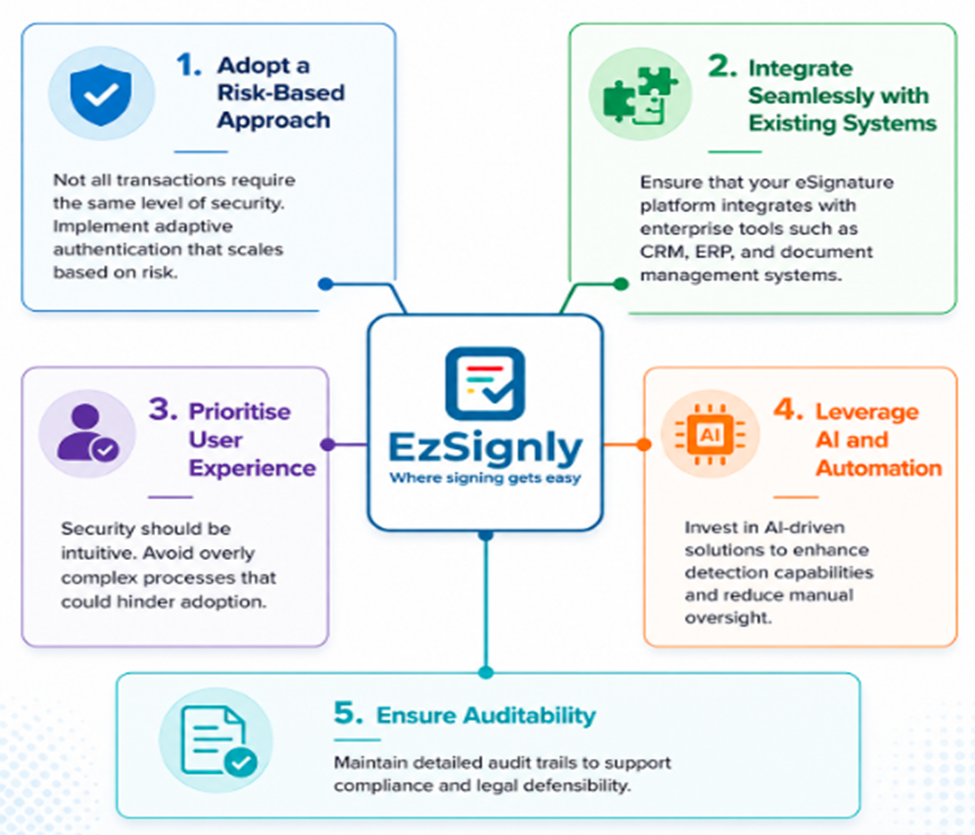
Best Practices for Implementing Smart Authentication
To maximise the benefits of smart authentication, businesses should consider the following strategies:
Electronic Signature Software
The EzSignly Advantage
This platform delivers a sophisticated blend of security, usability, and scalability tailored for global enterprises. By incorporating smart authentication into its core architecture, the platform ensures that businesses can execute agreements confidently, regardless of geography or complexity.
Its AI-driven framework, combined with flexible electronic signature software & API capabilities, empowers organisations to
- Accelerate document workflows
- Strengthen identity verification
- Maintain regulatory compliance
- Reduce operational overhead
Transform the way your business handles digital agreements. An electronic signature software like this has an advanced authentication capabilities and with AI-driven technology, you can achieve uncompromised security without sacrificing speed.
🚀Start
your journey today with EzSignly’s exclusive 90-day free trial.
Conclusion
Smart authentication is not merely an enhancement—it is a necessity for businesses operating in a digital, interconnected world. By combining intelligent verification with seamless workflows, organisations can protect sensitive transactions while maintaining operational agility.
As eSignatures continue to underpin global business
processes, adopting advanced security measures will be essential for sustaining
trust, compliance, and efficiency.
FAQ
1. What makes smart authentication different from traditional verification methods?
Smart authentication uses adaptive, multi-layered verification techniques powered by AI and behavioural analytics, whereas traditional methods rely on static credentials such as passwords or OTPs.
2. Is smart authentication suitable for small and medium-sized businesses?
Yes. Modern eSignature platforms offer scalable solutions that allow SMEs to implement advanced security without significant infrastructure investment.
3. Does smart authentication slow down the signing process?
No. It is designed to enhance security without adding unnecessary friction. Authentication steps are applied dynamically based on risk, ensuring a smooth user experience.
Take a look at the latest blog
Legal e-Signatures in Chicago: Innovative Digital Workflows for Teams Everywhere
Legal e-signatures in Chicago made simple—secure, compliant digital workflows that help teams collaborate, sign, and close business faster.
June 11, 2026
Top 10 eSignature Tools for U.S. Businesses in 2026
Discover the best eSignature platforms that help U.S. businesses securely send, sign, and manage digital documents efficiently.
March 10, 2026
How Document Management Strategies Support Sustainable Business Growth With eSignatures
Use eSignatures to streamline paperwork, cut expenses, and promote long-term growth.
September 7, 2026
The Best eSignature Solution in Illinois for Turning AI-Drafted Contracts Into Verified Ones with EzSignly
EzSignly turns AI-drafted contracts into secure, verified agreements with fast, reliable eSignatures for Illinois businesses.
August 26, 2026
Have any other questions? EzSignly's team is here to help!
© 2026 Copyright EzSignly. All Rights Reserved