


Traditional Contract Workflows vs AI eSignature Software: What Has Changed in 2026?
September 1, 2026 | Posted By Admin
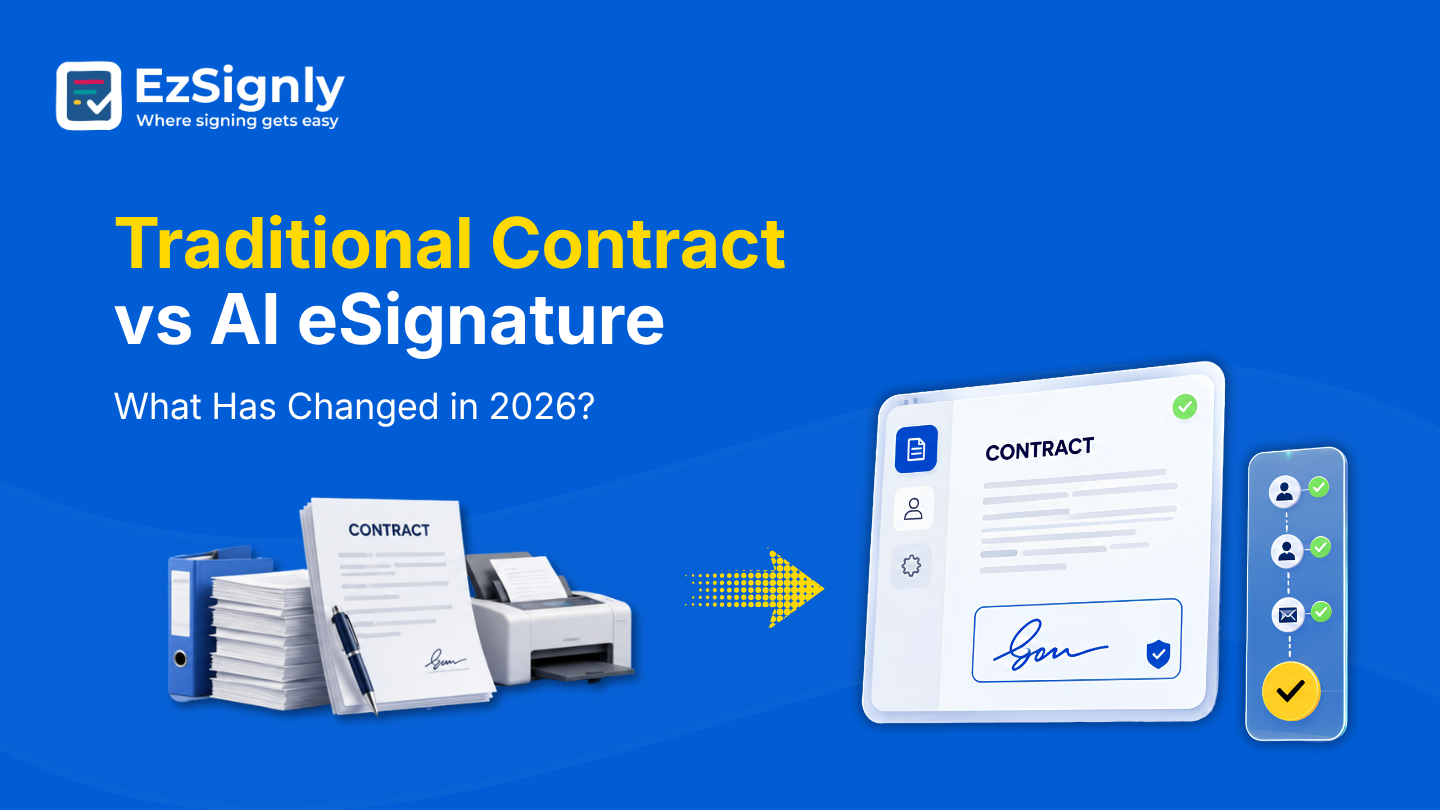
Best eSignature Software
Summary
In 2026, contract work no longer limits itself to
uploading a file and adding a digital signature. AI now helps teams prepare
documents, manage signing steps, follow up with recipients, and monitor every
agreement. EzSignly brings these tasks into one secure, user-friendly platform
for faster and more organized workflows. This blog compares traditional
contract processes with AI-powered electronic signature software and explains
what businesses gain by switching.
Introduction
Businesses today need a faster and more reliable way
to manage contracts, approvals, and signatures. By using esignature
software for businesses in Chicago, teams can securely manage,
send, sign, monitor, and organize essential documents from anywhere. EzSignly
simplifies this process with reusable templates, automated reminders, bulk
sending, and real-time tracking. Its AI-powered features help reduce repetitive
tasks and improve document accuracy. Secure audit trails and identity
verification also provide greater transparency throughout the signing process.
As a result, businesses can reduce paperwork, avoid unnecessary delays, and
complete agreements faster.
Traditional Contract Workflows vs AI eSignature: The 2026 Shift
For years, contract management stuck to the same slow, manual routine: draft a document, send it out for review, revise the file based on feedback, get physical signatures, and then digitize and redistribute the finalized copy — a cycle that repeated with every new agreement. By 2026, groups requiring enterprise digital signature solutions in Illinois and Chicago will expect a solution that goes far beyond PDF signing tools. Those groups will want smart document preparation, secure authenticated access, automatic reminder emails, organized signature queues, and real-time monitoring capabilities.
Current processes and workflows in business rely
heavily on human memory to proceed with them step-by-step. Someone must select
the right version, check recipients and fields, send reminders, and update the
team. An unread email, a forgotten attachment, or an unsigned copy can hold up
a deal for a few days. AI-driven e-signature applications provide a complete
solution for document generation, approval, delivery, monitoring, and secure
storage of all your agreements. EzSignly ensures these applications deliver
this experience seamlessly across any platform and device, from sole
proprietorships to small enterprises and large businesses alike.
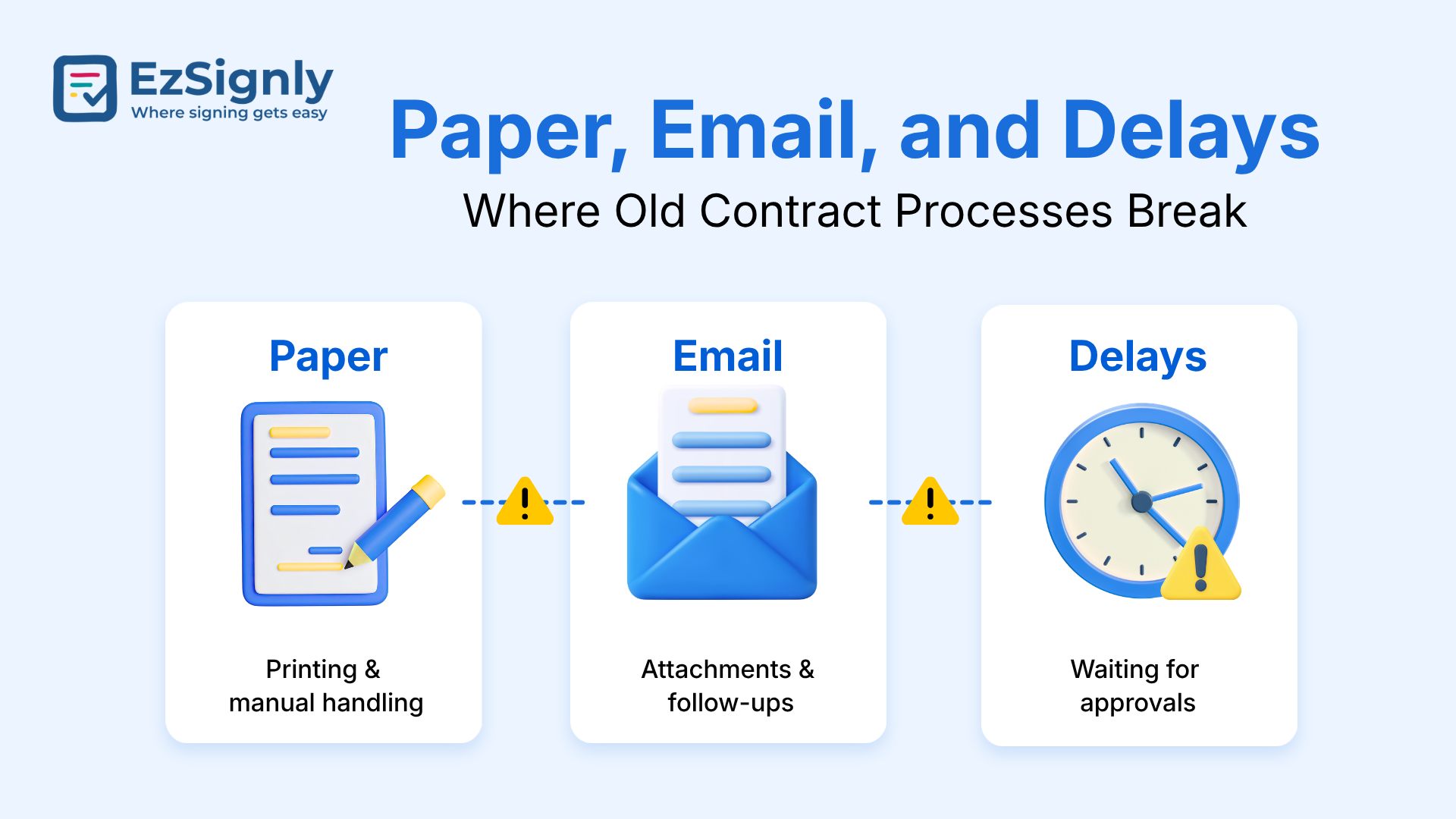
Paper, Email, and Delays: Where Old Contract Processes Break
The biggest weakness of a traditional workflow is fragmentation. Drafts sit in one system, comments in email, signed copies in a shared folder, and status updates in a spreadsheet. Employees often spend time searching and asking, “Has the document been signed?”
This problem becomes even more visible in property transactions. eSignature software for real estate in US enables your team to create and track real estate contracts from a single, central place, eliminating barriers associated with printing and scanning, unnecessary travel, and extended email chains. Identical file naming conventions may lead a signer to submit an outdated draft or fail to complete it all.
A centralized workflow keeps actions connected to the correct document and recipient. Accountability is another challenge. Email may show that a file was sent but not the full signing journey. Modern platforms record when a document was created, viewed, signed, or completed.
Manual follow-up also fails at scale. Tracking 30 or
300 pending documents is very different from chasing three. Automation keeps
follow-up consistent without adding administrative work.
Electronic Signing Software
What AI Changes Before, During, and After a Signature
AI makes contract workflows proactive. EzSignly can assist with email content and document descriptions, predict document types, create templates from prompts, and send smart resend notifications. These tools reduce repetitive preparation.
In any legal setting, however, control and traceability are just as crucial to speed. eSignatures for law firms and legal teams can power engagement letters, NDAs, service agreements, and legal notices. With built-in templates, signing flows, tracking, and audit trails, every step of the process leaves a transparent and actionable audit log.
It all becomes clearer with concrete examples:
- Traditional teams manually prepare emails; AI can help generate send-ready messages and descriptions.
- Old processes rely on individual reminders; automation can follow up on pending signatures.
- Paper and email workflows scatter updates; one dashboard shows document activity.
- Standardizing repeating tasks. With reusable AI templates, teams can reconstruct, duplicate, or reuse contracts that they repeat.
- Doing the distribution manually grows painful with scale. Bulk distribution covers thousands with consistency.
After signing, teams can retain an activity history
and keep agreements accessible to authorized users. This helps during reviews,
renewals, internal checks, or customer questions. AI does not replace judgment.
People must still confirm terms, recipients, and important legal or financial
details. Software handles repetitive coordination so employees can focus on
decisions.
From Signature Tool to Agreement Workflow: Why Automation Matters
The 2026 shift goes beyond replacing handwritten signatures. Basic tools digitized the last step; AI-powered platforms improve the full journey. Signing order routes a document in sequence, reminders prevent quick delays, and tracking shows what is pending.
These are advantages HR hiring and onboarding teams realize on an everyday basis. From having a eSignature software HR in Chicago to reuse their templates, sending documents in large volumes, keeping track of the status of your documents, designating users, creating auditable trail logs and more to manage all your offer letters, agreements, consent forms, acknowledgments, NDAs, etc. Automation creates consistency across human resources, legal, sales, operations, and real estate. Each team can prepare accurately, send securely, collect signatures promptly, and retain a reliable record in one common workflow.
EzSignly in Action: Three Illustrative Mini Case Studies
- Real estate brokerage: A brokerage managing listings, disclosures, and renewals replaces separate attachments with reusable templates. Agents send documents to the right parties and monitor progress in real time, gaining a clearer view of every transaction.
- Growing law firm: A firm standardizes engagement letters and NDAs, sets the signing sequence, and uses audit trails. Lawyers see what is pending while support staff manage fewer follow-up emails.
- Seasonal
HR team: A hiring department uses bulk sending
and automated reminders to distribute offer letters, monitor responses,
and focus only on cases needing human help. These illustrative scenarios
show how workflow design—not just a signature—creates value.
Why This AI Virtual Signature Platform Fits Modern Workflows
Our approach combines the benefits of intelligent automation and simple, day-to-day utility. Create and upload your documents, add recipients, eSign documents, follow the process, and archive agreements. Available plan features include templates, identity authentication, bulk sending, sequential signing, attachment requests, and role-based access.
The system also supports encryption, identity verification, data security, and tampering-proof audit logs in its workflows. Companies will still need to understand any local laws or legal implications pertaining to the unique witnessing, notarial, filing, and "wet-signature" needs associated with any given document.
For smaller teams, things can remain small and simple;
once your business expands, you can add users, templates, and automation. Users
and documents can all become a bit more sophisticated, and of course, documents
themselves can also become more sophisticated. This flexibility supports
modernization without unnecessary complexity.
How Businesses Can Automate Contract Signing in 2026
Try it out with one common, simple doc—think an NDA, lease agreement renewal, or offer letter. Map who prepares and signs it and where delays occur. Then build a reusable template, define recipient roles and signing order, and set reminders.
Run a small pilot. Check whether recipients understood
the process, whether employees could find document status, and whether an
approval step was missing. Once stable, extend the workflow to other recurring
agreements. Rolling it out gradually would be ideal since it allows the team to
learn and adapt during the implementation process, and the customers will
clearly see progress without disruptions.
Have any other questions? EzSignly's team is here to help!
Conclusion
Traditionally, manually tying together each draft, email, reminder, signature, and update slows down contract workflows. In 2026, AI e-signature software ties those pieces together to streamline document processes to bring agreements all together—with EZySignly. We support companies in generating documents, sending automation-driven checkups, gathering signatures securely, and managing workflows with much higher degrees of transparency. Companies that want to reduce the number of documents processed and complete contracts quickly should sign up for free or request a demo to see results.
👉
Automate Contracts and Close Deals Faster - Sign Up Now!!
FAQs
1. How is AI eSignature software different from a basic online signature tool?
A: A basic tool mainly captures a signature. AI electronic signature software can also assist with template creation, document classification, message preparation, reminders, routing, and tracking. These capabilities help teams manage the agreement process, not only the final signature.
2. Can this AI-driven digital signature software help reduce contract errors?
A: It can reduce common process mistakes through reusable templates, recipient roles, signing order, centralized tracking, and activity records. Human review remains essential for contract language, recipient details, business terms, and legal requirements.
3. Is an electronic signature suitable for every contract?
A: Electronic signatures are widely used for many business agreements, but some documents may require special handling based on jurisdiction or document type. Before moving a high-risk, witnessed, notarized, or regulated document online, confirm the applicable rules with qualified legal counsel.
Take a look at the latest blog
Speeding Up Real Estate Transactions With eSignature Tool: Automate Contract Sign Now
Secure eSignatures can expedite real estate transactions. Close contracts more quickly by signing them online.
September 30, 2026
Cost-Effective eSignature Platforms for Small Businesses in USA & India
Affordable eSignature platforms help small businesses in the USA and INDIA sign and manage documents online quickly, securely, and without paperwork.
March 24, 2026
Secure Your Business Future with eSignature Best Practices – Book Free Demo Now
Secure your business with eSignature best practices. Book a free demo today to get started.
April 14, 2026
Eliminate Extra Subscription Costs for Bulk Sign Documents with EzSignly: Book a Demo
Eliminate extra subscription costs for bulk document signing with EzSignly. Book a demo today!
July 8, 2026
Have any other questions? EzSignly's team is here to help!
© 2026 Copyright EzSignly. All Rights Reserved