


Why E-Signatures Are Essential for Business Digital Innovation
January 27, 2026 | Posted By Admin
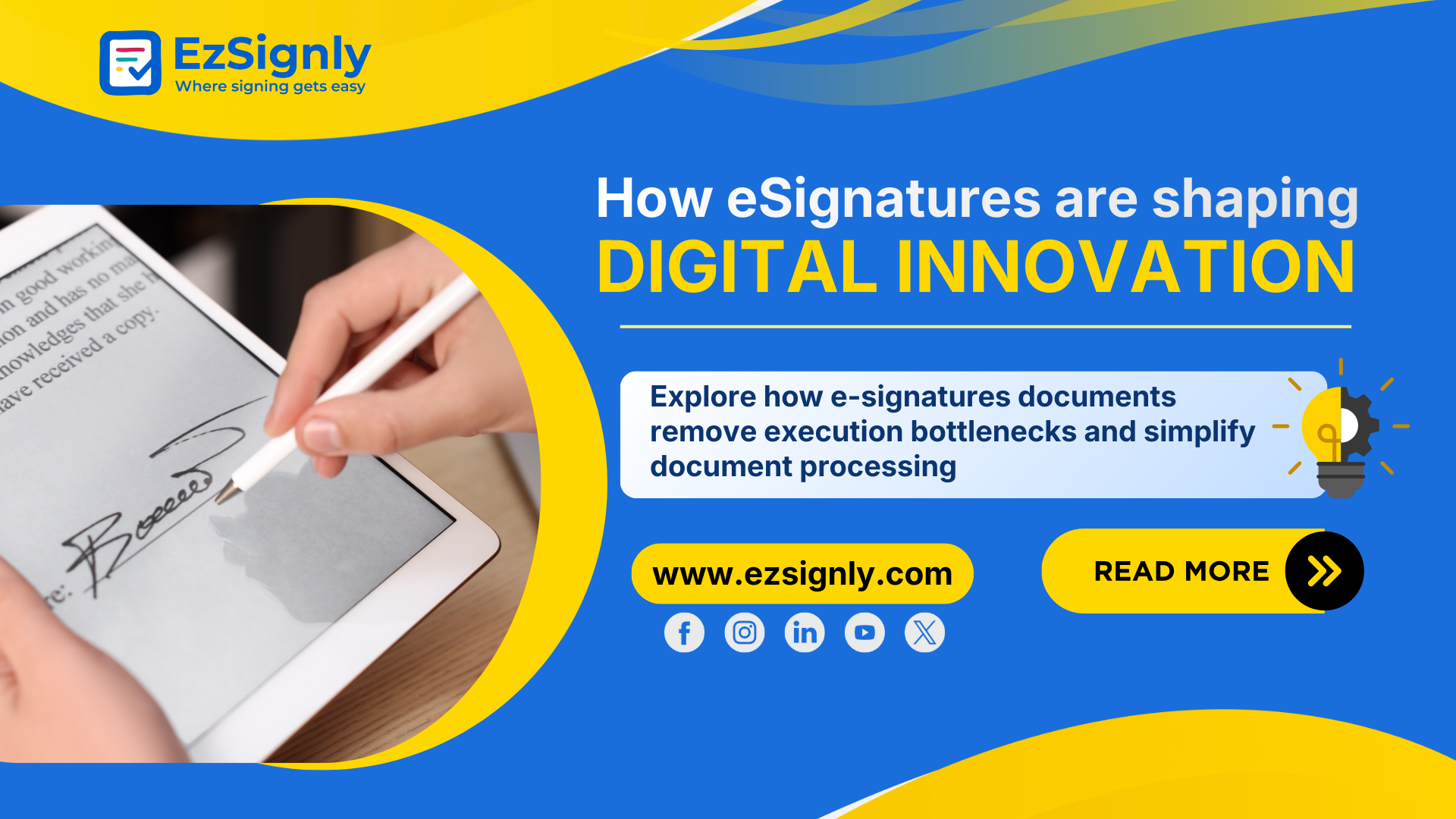
Digital Signature Software
eSignatures documents are now a core part of digital business execution, allowing organizations to create, approve, and finalize agreements securely without paper-based workflows.
Much of the debate around digital innovation centers on themes such as artificial intelligence, automation, analytics, and cloud platforms. However, one of the most crucial aspects of business execution is very often left unevaluated. Yes, we are talking about eSignatures!
Organizations that continue to rely on manual signing introduce friction into the very last step of every digital workflow. Organizations that adopt eSignatures documents remove that friction and turn execution itself into a digital asset.
Key Takeaways
- eSignatures are essential for completing digital workflows from creation to execution.
- Manual approvals remain a primary bottleneck in many digital processes.
- Using e-signatures documents enables secure, traceable, end-to-end execution.
- Modern e-signature pricing for Small Business has made digital execution accessible at scale.
- Organizations standardize execution with platforms such as EzSignly to support governance and compliance.
Where Digital Innovation Often Breaks Down
Most companies now generate documents digitally. Contracts are formed in the CRM tool, offers are dispatched from HR technologies, and agreements are stored in a cloud repository.
The last step, i.e., approval, once again requires paper.
Hence, a systemic inconsistency is created. A digital sequence of processes leading to a human activity is not digital, it is hybrid. Hybrid processes have problems: errors, delays, and risks occur.
When organizations adopt e-signatures documents as part of their core workflow, execution becomes natively digital from creation to completion.
This is the point at which innovation becomes operational.
Why Execution Is the Real Bottleneck in Digital Transformation
Most digital transformation initiatives focus on building systems. Very few focus on how decisions are finalized.
For example, in a real-world context, speed is typically driven by whatever is the slowest in a process chain. What this translates to in many organizations throughout the globe is approval being a slow part of a process chain.
There is latency involved in the sales cycles, recruitment cycles, procurement cycles, as well as the compliance cycles when paper has to be signed. No matter how sophisticated the previous steps have been executed, the actual execution is hampered due to the involvement of the paper-signing phase.
This is why eSignatures are not an add-on to digital transformation. They are what removes the final bottleneck.
Digitizing Decisions with eSignatures Documents
There is an important distinction between digitizing documents and digitizing decisions.
Digitizing means holding digital files, while digitzing is an approval decision.
With eSignatures, Approvals are now Events! All Approvals are tracked, versions are saved, signers are authenticated, and results are audited!
This converts execution into data.
And once execution is represented as data, it can be optimized.
This is the deeper reason e-signatures documents matter in digital innovation.
How Pricing Models Accelerated Adoption
One reason adoption accelerated so quickly is economics.
In the past, digital signing tools were expensive and limited to large enterprises. Today, eSignature pricing for Small Business follows modern SaaS models that are accessible, scalable, and predictable.This altered the adoption curve.
Small businesses may have to go for digitizing execution sooner, while mid-sized organizations may have to focus on standardization, and larger organizations may have to focus on
Cost became no longer a barrier. Execution became infrastructure.
Advantages of Signing Documents Electronically
- Time and Efficiency: Documents will be approved and prepared much sooner if you sign them electronically.
- Cost Savings: Lower costs associated with printing, postage, and storage through electronic signature functionality.
- Enhanced Security: Improve document protection by using document encryption and electronic signature audit trails.
- Improved Accessibility: Sign documents electronically on any device to accommodate remote or hybrid teams.
- Save Time and Money: Reduce operational overheads with electronic signatures.
- Grow Your Business through eSign: Close your deals faster and scale your business without any hassle.
The Link Between Automation and eSignatures
Automation initiatives often stall during handoffs.
Systems produce documents. Manually, individuals endorse them. Manually, individuals endorse the documents, and eSignatures bridge this gap.
They enable the automation process to extend into the execution system. For instance, the contract may be automatically created, approvals routed automatically, as well as the documents finalized.
This is, in effect, how eSignatures fit into the automation stack, rather than a purely document-related tool.
How Businesses Automate Contracts and Agreements with EzSignly
Businesses use electronic signatures to automate how contracts and agreements are created, approved, and completed.
With EzSignly, documents can be generated from templates, sent automatically for signing, and finalized without manual follow-up. Approval workflows are standardized, which reduces delays, errors, and version confusion.
This allows organizations to automate execution while maintaining control and consistency.
Real Estate: Where Digital Innovation Became Mandatory
No industry shows the power and importance of eSignatures as clearly as the real estate industry.
Real estate processes involve documents, are time-dependent, and occur across physically dispersed environments throughout the process, where any delay has a direct impact.
This explains the shift from eSignature for Real Estate documents from merely optional to a necessity within a brief period.
Offers may be signed online. Disclosures may be acknowledged online. Closings happen online.
Moreover, it helps organizations that have adopted the use of Real Estate Documents Digitally to negate their geographical dependency.
eSignatures documents have structurally modernized the industry of real estate.
Electronic Signatures in Healthcare
In healthcare, electronic signatures are used to digitize patient and administrative forms.
eSignatures help organizations collect consent forms, intake documents, and internal approvals digitally. This reduces paperwork and improves record accuracy.
Automated signing workflows also support compliance and secure storage of sensitive documents.
Electronic Signatures in Finance
In finance, electronic signatures help automate routine and compliance-driven processes.
eSignatures are used for account opening forms, loan documents, and internal approvals. This reduces manual processing and speeds up transactions.
Authentication and audit trails support identity verification and regulatory requirements.
Electronic Signatures in Human Resources
In HR, electronic signatures are used to automate hiring and employee documentation.
EzSignly allows teams to send and collect offer letters, contracts, and policy acknowledgements digitally. This reduces administrative work and simplifies onboarding.
Employee records are created and stored securely from the start.
Have any other questions? EzSignly's team is here to help!
Conclusion
Digital innovation does not succeed in design labs. It succeeds in execution.
Every automated workflow, every digital process, every AI-driven system ultimately depends on one thing: how decisions are finalized.
Organizations adopt e-signatures documents not to modernize paperwork, but to modernize execution.
They evaluate eSignature for Small Business to make digital execution accessible. They deploy eSignature for Real Estate documents to remove geographic limitations on transactions. They eSign Real Estate Documents Digitally to make time, not location, the deciding factor.
And they choose our affordable eSignature software because digital innovation is not only about digital tooling; digital eSignatures come with a plethora of features like cloud security, faster turnaround time, audit trails etc. that businesses benefit from. Want to get started with eSignatures? Try EzSignly for free.
FAQs about eSignatures Documents
1. What are e-signatures documents?
e-Signatures documents are digital files that are signed electronically with identity verification, audit trails, and legal validity, replacing traditional paper-based agreements.
2. Are e-signatures legally valid for business contracts?
Yes. In most countries, e-signatures documents are legally valid under laws such as ESIGN, eIDAS, and the Information Technology Act, provided identity and intent are verified.
3. Which industries benefit most from e-signatures documents?
Industries such as real estate, healthcare, finance, and human resources benefit most due to high document volume, compliance needs, and time-sensitive approvals.
Take a look at the latest blog
Smart HR Management: Using eSignature Software for Contracts and Policies in USA
Smart HR teams in the USA use eSignature tools to simplify contract signing and policy approvals.
March 23, 2026
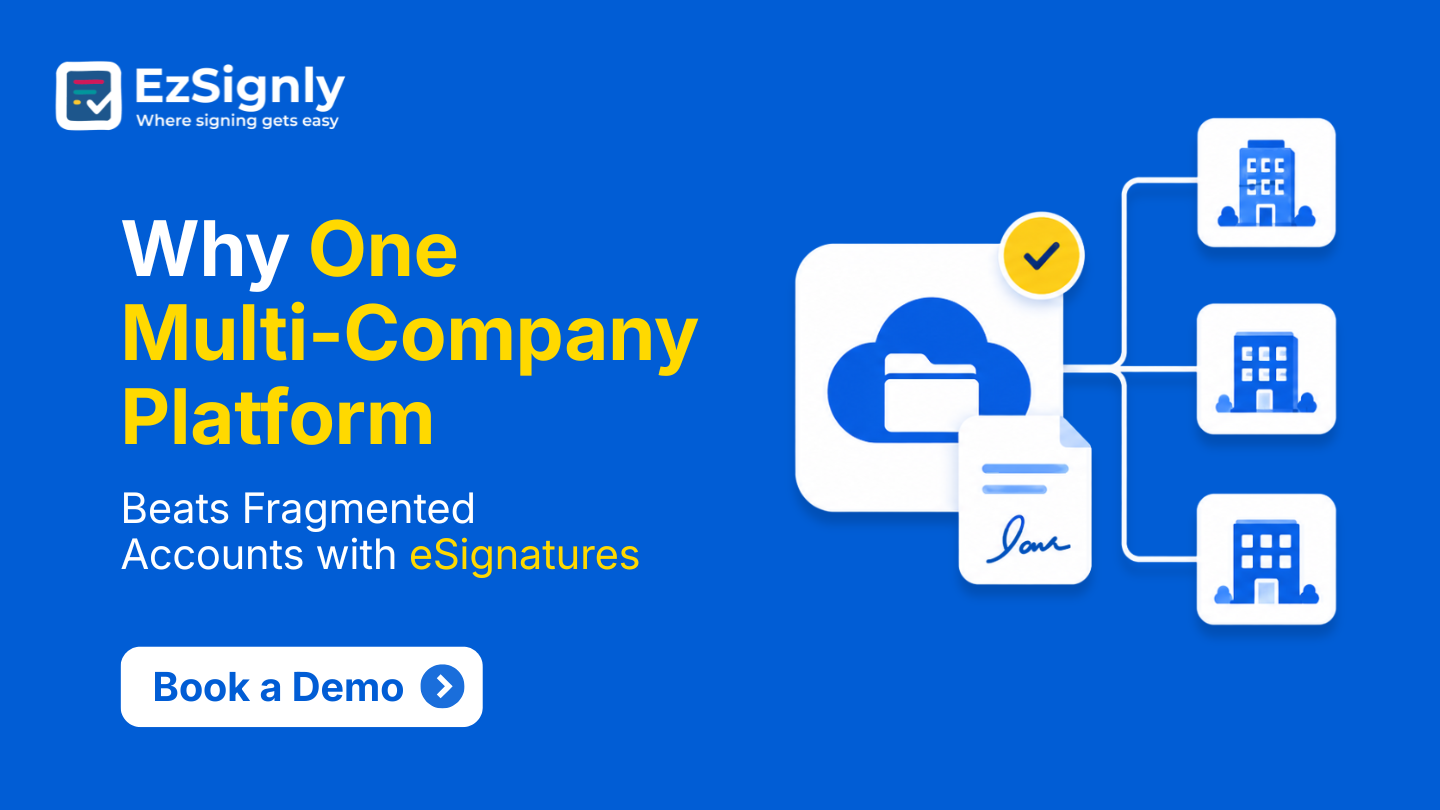
Why One Multi-Company Platform Beats Fragmented Accounts with eSignatures: Book a Demo
Manage eSignatures more easily, quickly, and securely across several businesses using a single platform. Schedule a demo right now.
September 4, 2026
Adobe vs EzSignly: The Ultimate Bulk eSignature Workflow Comparison for Businesses: Book a Demo
Compare Adobe and EzSignly for bulk eSignature workflows. See which solution streamlines document signing, automation, and team productivity. Book a d...
June 16, 2026
Secure Your Business Deals: eSignature Legal & Security Made Simple-Sign Up Now
Sign documents with confidence using secure, legally compliant eSignatures designed to protect every business deal.
April 28, 2026
Have any other questions? EzSignly's team is here to help!
© 2026 Copyright EzSignly. All Rights Reserved