


From Wet Signatures to eSignatures: Transition of Illinois Legal Documents in 2026: Signup Now
July 3, 2026 | Posted By Admin
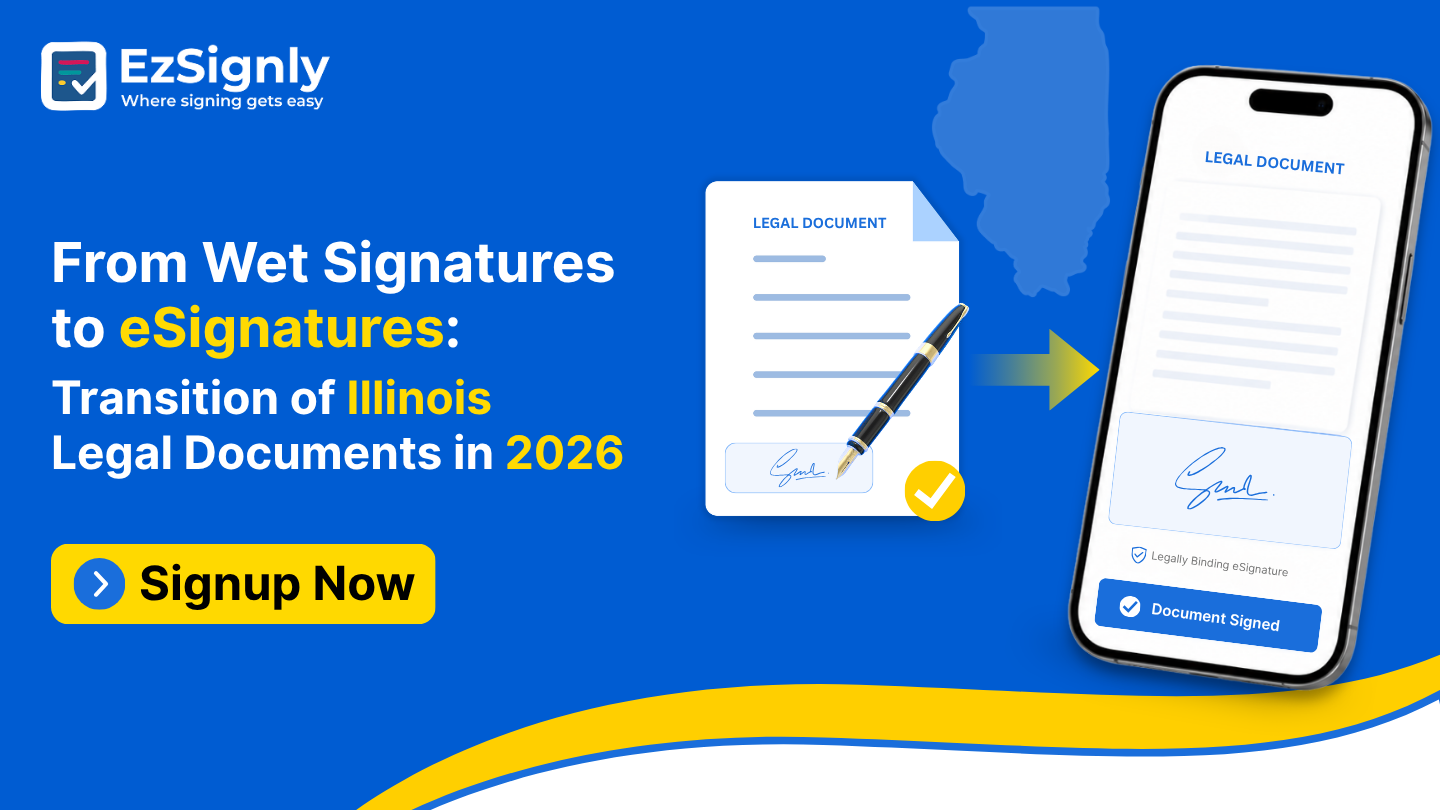
Electronic Signature for Legal Documents
Summary
It seems that digital transformation in the legal
industry in Illinois is not only gaining momentum but also accelerating, and
the digital signature is likely to take the lead. When courts, businesses, law
firms, and clients all demand speed, accuracy, security, and adherence to law,
electronic signatures become more appealing than wet ink signatures. We take a
look at how the legal documents in Illinois are changing in 2026, the demand
for the digital signature, and what it takes for law firms and attorneys to
stay competitive.
Introduction
Illinois legal firms are rapidly digitalizing as
attorneys move from manual paper procedures to digital, secure processes.
Whether it's a client service agreement or a corporate contract, eSignatures
are assisting lawyers with legal work processes that become more efficient and
compliant and provide the best client experience possible. Any business seeking
to implement an eSign legal doc in Chicago will be able to
automate document workflows, reducing the amount of administrative work and
lost time. As the industry shifts toward digital legal operations in 2026,
businesses of all sizes should take advantage of eSignature technology.
How Legal Documentation is Evolving in Illinois
Documentation is essential to the legal field. We all know that contracts, affidavits, client agreements, real estate documents, litigation cases, wills, and other corporate paperwork are just a few of the documents that, until now, always necessitated handwritten signatures, hard copies, and in-person validation.
But 2026 marks a major shift in Illinois's digital
legal landscape. Firms are no longer seeing e-signatures as a matter of
convenience - they're becoming a necessity. The rising client demand, client
requirements, and client security have brought this technology to the
limelight. This has led to greater adoption, in the legislature and on the
clients' demand side, by various companies around the globe. Firms that are
seeking to transform their digital workflows by integrating an e-signature
platform can empower attorneys and legal staff to process documents with
greater efficiency and in adherence to federal and Illinois statutes.
The Limitations of Traditional Wet Signatures
For ages, wet signatures were associated with legitimacy and legal purpose. They may still be required in some highly specialized legal documentation, but they no longer meet the demands of today's increasingly efficient legal world.
But there are all kinds of operational bottlenecks in the paper-and-ink world of signatures for lawyers. Think about slow turnaround times, a need for physical presence, the cost of printing and mailing documents, misplaced papers, storage and archiving headaches, and manually keeping track of approvals. For a law firm with dozens of clients and case files at once, it doesn't take long for hours to add up just waiting on the signatures.
Electronic signatures help firms get around these
barriers, allowing them to sign documents from just about anywhere. This not
only speeds up the service firms offer clients but also enhances their internal
operations.
Illinois eSignature Compliance: What You Need to Know
The electronic signature is by no means a new concept within the law. These signatures have been legally acceptable over the years on both the state and federal levels. Major legislative structures are as follows:
- ESIGN (Electronic Signatures in Global and National Commerce Act).
- Illinois had recently accepted UETA (Uniform Electronic Transactions Act)
This means that these acts and regulations collectively state that, for almost all legal and commercial contracts, electronic signatures can legally be used to sign a binding document. This is true as long as certain rules are observed.
Lawyers should always ensure that all parties consent
to the electronic transaction, that the document is tamper-proof, and that they
verify their identity appropriately. And an audit trail should be stored for
the records in a secure place. Since regulations for digital compliance change
every day, law firms are also investing in eSignature solutions, which include
such provisions within the signature workflow.
Boosting Law Firm Productivity with eSignatures
Law firms are adapting to customer demands and finding ways to utilize technology to run their firms effectively and streamline documentation processes as demands continue to skyrocket. Shifting to digital signatures offers benefits across all legal practice areas.
| Key Benefits | How It Helps the Law Firms |
| Faster Client Onboarding | Remote review and signing of your engagement, fee, and disclosure agreements eliminates the need for new clients to make it into your office and shortens the time to get started. |
| Improved Workflow Efficiency | No more spending your precious time in the office printing out, mailing off, scanning in, and filing away all the signed paperwork. Attorneys and legal staff get to enjoy their work a bit more. |
| Better Client Experience | Signing the legal documents digitally on laptops, phones, or tablets makes it extremely convenient for the clients to work anyplace, anytime. No more disturbing your work schedule. |
| Enhanced Document Tracking | Electronic signature systems can provide legal teams with live, visual status updates. You can tell exactly when a recipient has received a document, viewed it, signed it, and finalized it |
| Strong Security | The more modern options secure document integrity and provide extra protection beyond just signing a paper version, using high-level encryption, user authentication, and in-depth audit trails. |
Now, businesses that are already undergoing this
transformation are using their eSignature software for HR operations in
Chicago. It means that paperless efficiency is capable of spanning
many other areas of business.
Protecting Legal Documents with Secure eSignatures
For any legal firm, client confidentiality remains the ultimate objective. When it comes to digital documents and business workflows, security remains front and center. Luckily, there are many e-signature solutions that can give you peace of mind with the help of their built-in security features like multifactor authentication, end-to-end encryption, cloud storage, audit trails, role-based permissions, and more.
Such functionalities empower legal professionals in
verifying the integrity of their documents, limiting potential acts of fraud or
unauthorized alterations. Given the escalating cybersecurity landscape, it is
no longer a bonus but an absolute requirement for law firms to securely manage
their digital documents.
Legal Documents You Can Sign Electronically in 2026
In fact, most legal documents today use e-signatures, which help law practices streamline compliance and contract approval workflows. From client intake forms to the most complicated business contract, digitally signing any legal document simply saves so much time Some of the top legal documents we see signed are:
- Client engagement agreements
- Non-disclosure agreements (NDAs)
- Employment contracts
- Settlement agreements
- Real estate disclosures
- Lease agreements
- Corporate resolutions
- Vendor contracts
- Intellectual property agreements
- Consent forms
- Arbitration agreements
- Business partnership contracts
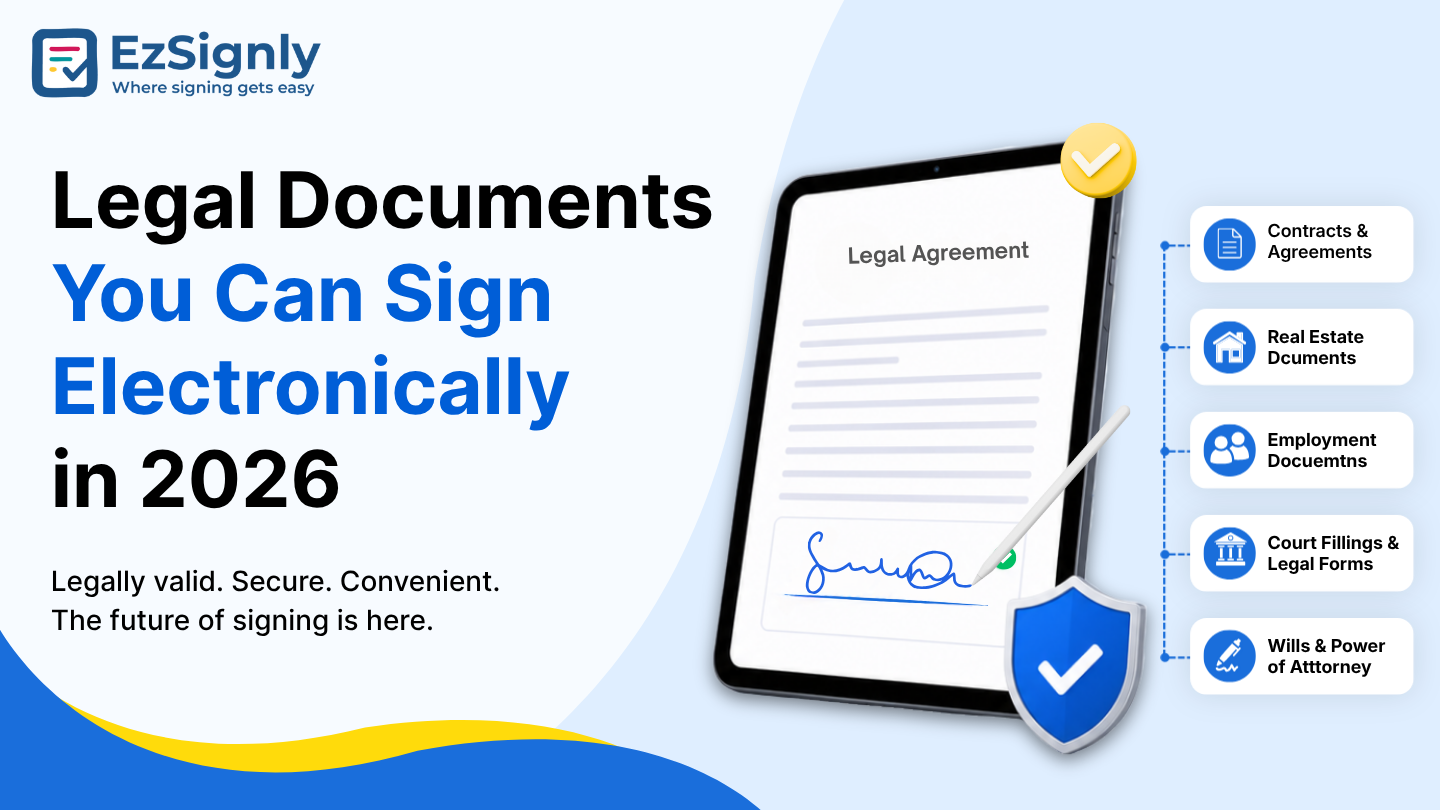
Digital Signature For Legal Documents
Legal departments can now reduce paper and expedite processes when they digitize these commonplace legal documents. It will cut down the turnaround time, accelerate the client signing process while maintaining legal compliance, and add an extra layer of security. Of course, some legal documents may still require signatures due to court-specific requirements, estate planning, and notary purposes, but most legal paperwork can be digitized.
Digitizing these types of repetitive documents
commonly results in huge administrative time and cost savings along with faster
turnarounds. As law firms increasingly focus on automating work to drive
efficiencies, efforts to reduce eSignature cost in Chicago are
picking up momentum.
Unlocking the Benefits of Paperless Legal Processes
E-signing is more than just easy – it's effective and impacts your bottom line. Law firms can think of e-signatures as the sticky glue for daily processes - removing points of friction to keep things running as seamlessly as possible. Beyond these benefits, you'll also save your firm paper and give your lawyers more time for face time with clients and ensure that they're compliant with any regulations.
1. Lower Operational Expenses: Reduced spending on paper, ink, printers, mailing services, and storage contributes to long-term savings.
2. Greater Productivity: Administrative teams spend less time handling repetitive manual processes and more time supporting higher-value legal work.
3. Improved Collaboration: Attorneys, clients, experts, and external stakeholders can review and sign documents regardless of location.
4. Better Document Organization: Digital repositories simplify document retrieval, version control, and long-term retention.
5. Environmental Responsibility: Reducing paper consumption aligns with sustainability initiatives that many firms now include within their broader operational goals.
The modern-day customer expects digital-first
approaches, and businesses that are able to evolve will reap the rewards
long-term.
Smart Tips for Choosing an eSignature Platform in 2026
As electronic signature platforms become more common for lawyers seeking efficient and secure document processes, legal practices must identify tools that comply with ESIGN and UETA, have strong authentication, provide thorough audit trails, use secure cloud systems, and offer state-of-the-art document encryption. Further options to consider that can improve document processes for your firm are document sharing for team collaboration, automation of signing processes, integration with your document management system, accessibility on any mobile device, user-friendly interfaces, and strong customer service.
You need to be able to serve one law firm as easily as a multinational law firm. No administrative burden.
Likewise, countless organizations put providers
side-by-side, searching for the best eSign service for small business
in Chicago, one that won't break the bank while offering all the
robust security and compliance of an enterprise-level platform. Solutions such
as EzSignly are transforming the way law practices manage workflows with
efficient e-signature technology, automated status tracking, and a single
source of truth for all documents. EzSignly enhances cross-firm collaboration
as legal entities move to a fully digitized environment that meets today's
legal requirements. In addition, its user-friendly interface makes it much easier
for lawyers, staff, and clients to get started.
Take Your Legal Practice into the Digital Era
While technology hasn't historically been adopted quickly by the legal industry, it is now changing much faster than ever to meet clients' digital needs. They want to get services at a distance, access documents online, have things happen faster, get quicker replies from their legal counsel, and sign documents in an electronic and secure manner. In such circumstances, any firm that wants to keep a competitive edge and ensure their clients are given the best service will need to begin integrating some new technologies. However, any firm lagging in their digital adaptation will face lengthy process times, rising overhead costs, and dissatisfaction from their clients.
Legal professionals can begin to accelerate their workflow and meet the demands of clients for speed, security, and convenience with trusted electronic signature solutions already available. EzSignly empowers firms to transform their document execution processes without sacrificing legal efficacy or compliance. With more firms in Illinois adopting e-signatures daily, a trusted platform like EzSignly sets them up for continued success.
Have any other questions? EzSignly's team is here to help!
Conclusion
Moving away from wet signatures towards digital signing isn't just a technical update - it signifies a shift in what clients, courts, and attorneys in Illinois expect. The ease and security of electronic signatures improve workflows, enforce compliance, and minimize overhead, all while improving the client experience. With law firms across the state continuing to adopt digital tools in 2026, tools like EzSignly can empower them to serve their clients with the speed and security of electronic signature capabilities in a connected environment.
👍 Accelerate
your legal document processes with confidence—Sign Up Now.
FAQs
1. How do e-signatures improve a client experience for lawyers?
A. Because clients can review and sign documents electronically from their computer or mobile device wherever they are. The days when a client must visit the law firm for an in-person appointment are numbered. It also reduces processing time, increases client satisfaction, and streamlines the entire document workflow for law firms.
2. Are electronic signatures capable of minimizing operational costs for your firm?
A: Yes. By saving money on printing, mailing, scanning, and filing documents, electronic signatures reduce overhead costs for law practices and speed up the turnaround time for legal documents.
3. What steps should law firms take to transition smoothly to eSignatures from paper signatures?
A: The key steps include identifying a secure and trusted eSignature platform, educating legal staff, refining the legal workflow, communicating the changes to clients, and creating comprehensive security and document management protocols.
Take a look at the latest blog
AI eSignature Automation: Advantages in Real Estate Workflow Efficiency- Book a Demo
Speed up real estate deals with AI eSignature automation. Reduce paperwork and close faster. Book a demo.
June 16, 2026
All-in-One eSignature Solution for Multi-Company Access – Signup & Cost Guide
All-in-one eSignature platform with multi-company access, easy signup, and flexible pricing.
April 8, 2026
EzSignly vs Dropbox Sign: Enhanced Protection and Compliance for USA Businesses
Choose EzSignly for enhanced document protection and compliance beyond Dropbox Sign.
June 4, 2026
From Paper to Digital: Why Businesses Choose EzSignly eSignatures
EzSignly eSignatures help businesses go digital, saving time, costs, and securely managing documents.
January 27, 2026
Have any other questions? EzSignly's team is here to help!
© 2026 Copyright EzSignly. All Rights Reserved