


Know How eSignature Tools Really Cut Legal Department Costs by 80% : Book a Demo
August 14, 2026 | Posted By Admin
Sign Documents Online for Free
Summary
Legal departments across the USA face high costs from paperwork, printing, and slow approval cycles. This blog breaks down exactly how digital signing platforms reduce operational expenses, speed up contract turnaround, and eliminate manual errors. Understand exactly how much you stand to save, beyond all the fluff and spin. You'll know definitively at the end if making the move is a worthwhile investment.
Introduction
American legal professionals often spend countless hours and dollars on paper-based processes that just don't fit in 2026. Printouts, courier services, storage fees, and the back-and-forth process of physically signing contracts. For a single contract, it can take weeks to get it signed. That's why using electronic signature for legal departments is so much more than just a convenient perk. Instead of the labor-intensive processes your team currently relies upon, electronic signature technology allows you to sign deals in a matter of minutes, not weeks. Both corporate legal departments and law firms, along with compliance teams, are leveraging technology to drive costs down, limit risks, and enable employees to focus on higher-value tasks. This blog explains exactly where those savings come from and why the 80% cost reduction claim actually holds up.
The Business Impact of Paper-Based Legal Workflows
Let's discuss the money being saved, but to fully appreciate where those savings come from, let's think about what legal departments are spending dollars on today. The cost of ink, paper, courier services, office storage, and labor time, just to obtain a signature, can quickly stack up. A mid-sized legal department can rack up several thousand dollars per month in costs solely related to their paper workflows. Add in the cost of document errors, missed deadlines, and compliance risks from lost paperwork. and the numbers climb even higher. Few legal departments ever understand how money is leaking from repetitive, minor inefficiencies until someone actually starts to measure it.
And there's the 'hidden time cost': Attorneys and paralegals can spend hours - on and on - in pursuit of the perfect signature from their client, vendor, or internal team. They're not paid for their time, and they're not doing much with it either. It's simply lost to logistics.
How Digital Signing Platforms Actually Reduce Expenses
Digital signing tools attack these costs from multiple angles at once. So, first, they remove paper and the physical supply chain - no printers, copies, or couriers. Second, they dramatically shrink contract turnaround time from days to minutes (making agreements closer and revenues realized sooner). And third, they reduce the administrative cost of storing and chasing paper.Companies looking to implement eSignature software for HR operations in Illinois invariably realize that these efficiency improvements can be applied far beyond HR, extending into vendor and contract management.Beyond reducing legal risk through automated reminders, audit trails, and compliance features, a time-stamped signature removes any doubt and ambiguity and will go a long way to helping your legal team avoid future litigation in the event of a discrepancy.
Understanding the Potential for 80% Cost Savings
The 80% is more than just a catchy metric; it is rooted in practical math from our operational use. The cost of copying the documents, additional contract clauses, processing fees, and missed compliance fines can quickly turn a simple legal contract process into an expense. If a law firm is spending a substantial amount each month on paper-based contracts, that amount could be lowered - if not entirely eliminated - once the proper tools and processes are adopted.
For those teams juggling reams of NDAs, vendor contracts, employee contracts, and client onboarding agreements, that's especially the case. The more documents a team processes, the more dramatic the savings become. Smaller teams see meaningful savings too, just at a smaller scale relative to their overall budget.
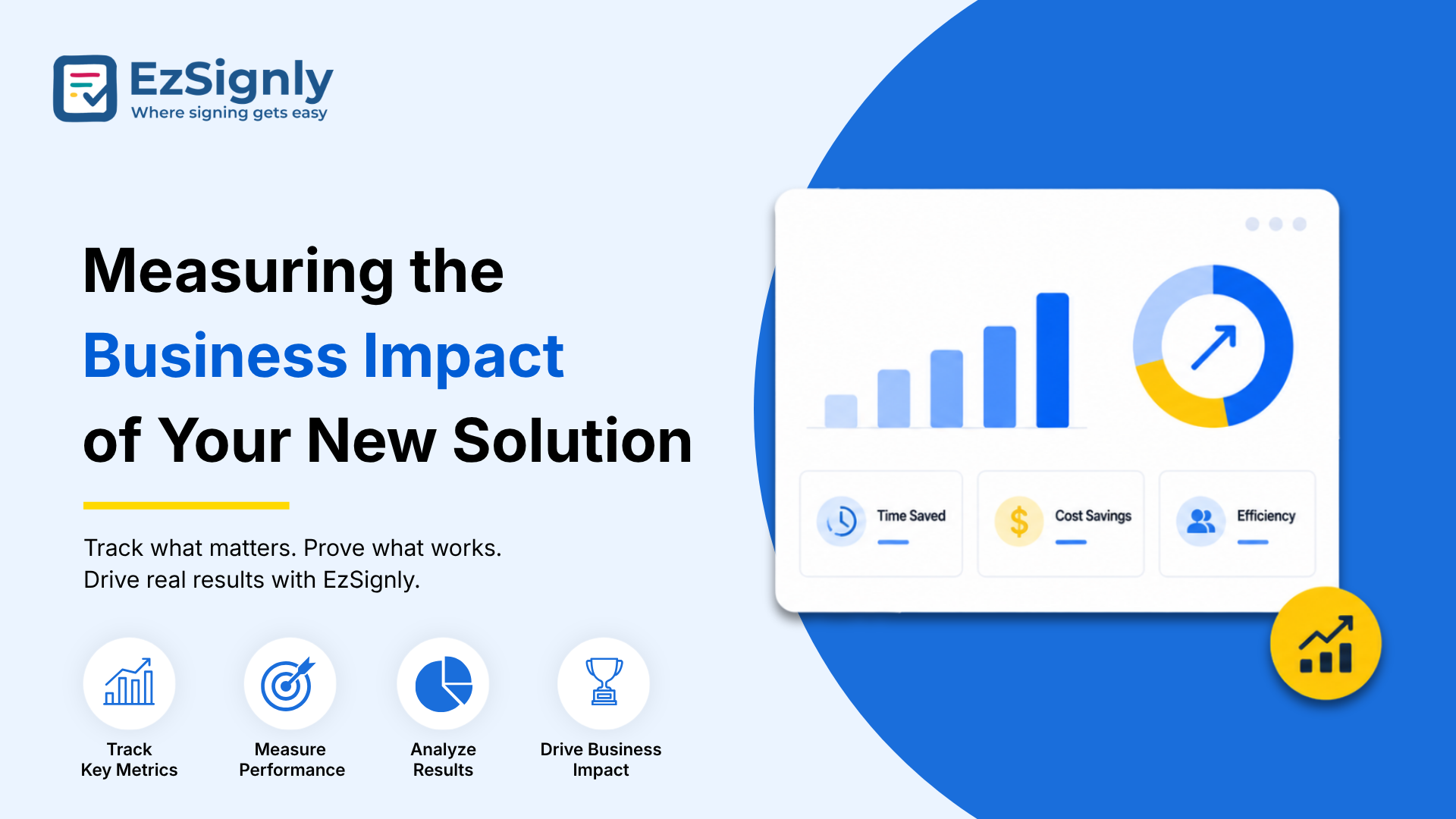
Measuring the Business Impact of Your New Solution
Once a legal department has digital signing software, it is crucial to make sure you're not just assuming it's making an impact. You should look at average contract turnaround time, monthly costs associated with printing, courier and postage costs, and man-hours spent on document administration. Measuring and comparing pre- and post- adoption data will give you a tangible idea of what digital signing ROI looks like.
While for most teams the positive changes will begin in as little as 30–60 days, platforms like EzSignly usually have integrated dashboards, making it easy for teams to track their progress without needing to design additional reporting dashboards.
Sign Documents Online for Free
Why US Legal Departments Are Switching Faster Than Ever
This, and how stringent the legal systems are in the United States, is exactly why digital signing tools are taking the market by storm. For use cases that are of a legal nature, the tool comes with an audit trail, tampering record, and authentication that fit most courts' requirements as well as those of regulatory bodies, thus giving legal teams more confidence in switching away from paper, at least without concern over enforceability.
Small and mid-sized firms are seeing particularly strong results. Businesses looking to reduce e-signature cost in Illinois are discovering that switching platforms doesn't require a massive budget or a long implementation process. Most tools can be set up within days, not months Another recent change has been increased remote and hybrid work, which is making physical signatures impossible now that team members live in different states and work from home. Digital tools solve that logistical problem while also cutting costs, which makes the decision an easy one for most departments.
How Legal Teams Can Choose the Right eSignature Software
The reality is not all solutions are created equal, and legal has its own requirements that a one-size-fits-all software just can't always accomplish. Consider a solution with capabilities such as role-based access control, deep-diving audit trail capability, the ability to integrate with your document management system, and higher standards of encryption. Compliance with US regulations, including ESIGN and UETA, is non-negotiable for legal use.
Pricing structure matters too.
Smaller legal practices and solo attorneys often assume digital signing platforms are only built for large enterprises, but that's no longer true. The encouraging news is that plenty of e-sign services come with simplified, small-team-friendly plans. If you're still exploring the best esign service for small businesses in Illinois, take your time and evaluate a few e-signing platforms before making a commitment to an annual contract.One common cost factor is signature-based pricing: signing one or two documents is often a small sum, but a team needing hundreds of signatures can rack up bills rapidly. Flat rates offer more predictable costs as your volume increases, and tools like EzSignly balance legal security and price point to resolve these issues. For firms just getting started, checking reviews from other legal teams and requesting a trial run is the smartest first step before committing.
Conclusion
Cutting legal department costs by 80% isn't an exaggerated claim when you factor in printing, labor, compliance risk, and lost time from paper-based workflows. Digital signing tools address all of these pain points at once, making them one of the highest-impact investments a legal team can make. Even for small legal departments based in the United States, faster contract lifecycles are not only desirable but realistic. And, thanks to the maturity, compliance, and ease of implementation of legal technology, there's no real reason to procrastinate on making the switch. If your team is still in the stone age of signing contracts, change it - now.
See EzSignly in Action — Book a Demo Today.
Have any other questions? EzSignly's team is here to help!
FAQs
1. How quickly can a legal department get up and running with an eSignature tool?
A: Most solutions can go from setup to user-ready in a matter of days. It often takes minimal IT to configure the basic settings, onboard your users, and integrate it with other systems.
2. What do you do when a client or vendor doesn't want to sign digitally?
A: It doesn't happen often, but every so often a client or vendor just doesn't feel like signing a document digitally. Fortunately, many platforms permit hybrid signatures, enabling your legal department to provide both options and not fall subject to deal roadblocks. Nearly all hold-out signatures end up converting when their participants witness firsthand how straightforward and protected the process is.
3. How secure is a digital signature compared to a handwritten one on paper?
A: Digital signatures are often more secure than handwritten ones. They come with encryption, identity verification, and tamper-evident audit trails that record every action taken on a document. A physical signature, by contrast, offers no built-in way to detect forgery or unauthorized changes after the fact.
Take a look at the latest blog
From Hours to Minutes: How eSign Transforms Law Firm Client Signing Workflows
eSignatures cut signing time from hours to minutes, enabling faster, seamless client approvals.
March 27, 2026
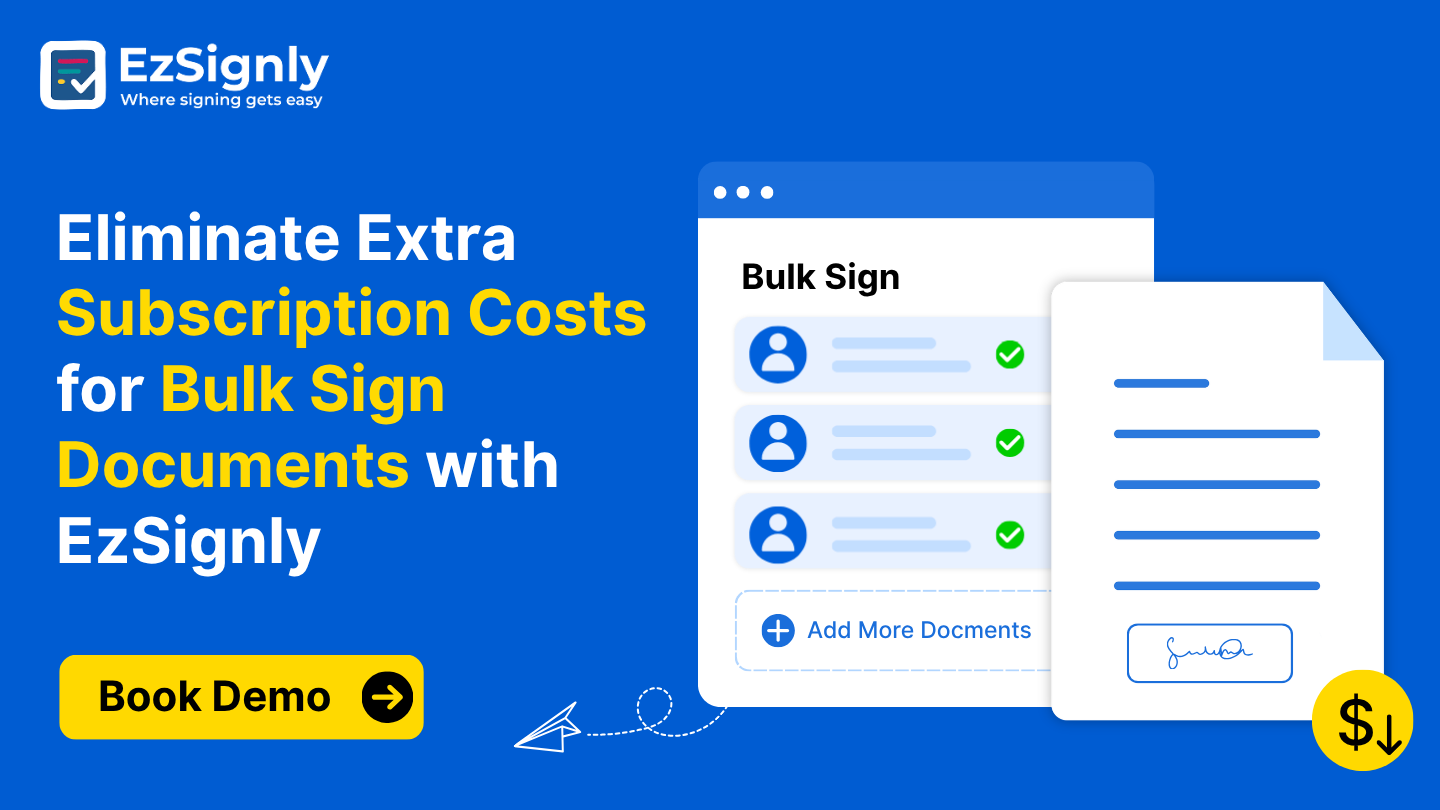
Eliminate Extra Subscription Costs for Bulk Sign Documents with EzSignly: Book a Demo
Eliminate extra subscription costs for bulk document signing with EzSignly. Book a demo today!
July 8, 2026

Pros and Cons of Real Estate eSignature Solutions in Chicago – Book a Demo
Discover the pros and cons of real estate eSignature solutions in Chicago and see how digital signing simplifies property transactions. Book a demo to...
May 28, 2026
No More Document Chaos: Smarter eSign Solutions for Faster Workflows — Book a Demo
Eliminate document chaos with smarter eSign solutions designed for faster, seamless workflows. Book a demo and see automation in action.
June 3, 2026
Have any other questions? EzSignly's team is here to help!
© 2026 Copyright EzSignly. All Rights Reserved