


Sale & Purchase Agreement Guidance With eSignatures in Real Estate: Get Free Trail
August 7, 2026 | Posted By Admin
eSign for Real Estate
Summary
It has now become easy and legally secure to finalize
real estate transactions remotely throughout the US using electronic
signatures. However, the Sale and Purchase Agreement remains king in all
transactions, and switching to e-signatures for this document can quickly
reduce closing times, lower the cost of paper, and give you an indisputable
audit trail of activities. Utilize an application with multihandler
functionality and compliance like EzSignly to simplify the whole closing
process for sellers, buyers, and agents.
Introduction
Buying or selling real estate in the US has always
involved tons of paperwork, ink on paper, and long waiting times as documents
make their way back and forth between brokers, lenders, title companies, and
customers. But in the past decade, the industry has radically transformed.
Today, closing a deal without leaving your office (or your couch) is now par
for the course – in large part thanks to the widespread adoption of eSignature
for real estate in USA by brokers, law firms, and title companies.
With Sale and Purchase Agreement (SPA) documents at the center of every
property deal, timely, secure, and legally binding signature delivery has
become more important than ever. This article will break down the contents of
an SPA, the impact of digital signatures on real estate deal closing, and how
compliance-focused, rapid platforms are empowering both brokers and buyers.
Building Trust With Clear Purchase Agreements
A purchase and sale agreement is really nothing more than an agreement in which both parties set the terms for how they'll buy or sell a property. A purchase agreement usually contains information such as the purchase price, closing date, all contingencies (appraisal, financing, and inspection), what stays behind after the sale, and who's responsible for what until closing. In the United States, this type of document may differ somewhat by state since the laws related to real estate are on the local level, not on the federal level. But above all, it is meant to protect against possible conflicts between the seller and the buyer by clearly writing down their expectations.
An SPA almost always requires multiple rounds of
negotiation. There will be addendums, counteroffers, and repair negotiations.
The deal likely won't close after the first conversation - and the back and
forth in paperwork is what will bog down a sale (and add days or even weeks to
the closing process.)
Why Real Estate Deals Are Moving to Digital Signing
Real estate might have once had a reputation for being sleepy and paperwork-intensive, but that is rapidly changing. With agents managing many deals at once and many buyers living in another state or abroad and mortgage lenders putting them on a timer to lock in rates, dragging 20 pages around in triplicate seems a relic of a less-connected era.
This digital signature solution addresses several of the core issues facing the brokerage industry right now. Firstly, it helps you bypass the need to physically sit with people for meetups to deliver and collect signatures, drastically cutting the delivery and signature time from a few days to a few minutes. Secondly, it creates an excellent paper trail that can be logged for audit purposes. For instance, if you are a brokerage house with dozens of trades, it will save you time in verifying signatures and compliance by having a clear audit log.
However, with tools and apps such as EzSignly, it is
possible to overcome these issues: Agents can now send the SPAs to clients
quickly and safely and sign them digitally, as well as track them. All the
paperwork is safely stored electronically.
Legal Validity of Property eSignatures Explained
The most frequent question from buyers' agents is the legality of eSignatures. ESIGN (Electronic Signatures in Global and National Commerce Act) in the U.S., coupled with the Uniform Electronic Transactions Act (UETA), or UETA's widely adopted variations (in all states but three), renders electronic signatures as legally binding as handwritten signatures. You have a valid contract, provided that the contract does not prohibit signing an electronic form and that there is a verifiable identity, timestamp, and signature log.
With the exception of a few situations (like some
notarized documents, deeds, or wills depending on where you are), a transaction
might still have a paper-based component. That said, any transaction including
an SPA will almost always have an e-signature option available regardless of
where you're buying a home in the country.
Digital Innovation Across Multiple Industries
Although this post is specifically about property
deals, it is important to note that electronic signatures apply to more than
just the real estate sector. The Human Resources department can use electronic
signatures for employee onboarding documents, offer letters, and policy
acknowledgments; legal firms can use electronic signatures to manage client
agreements, and closing documents, healthcare services for informed consent,
etc. Most businesses that seek eSignature software for HR in Illinois are
often not aware that the very software they have integrated for their employee
documents can similarly manage lease documents, vendor contracts, or even
property disclosure documents with just one login, a single trail, and one
single piece of software.
Real Estate eSignatures That Work Smarter
It's impossible to pick the perfect electronic signature software for your business. However, real estate agents and brokers can keep an eye out for certain functionalities that might be particularly useful.
- Multi-party signatures and a customizable signing order are essential features to look for. Set up your signing flow so buyers sign, followed by sellers, agents, and witnesses.
- Audit trails and timestamps - All the actions you do on a file are recorded along with the timestamp.
- Template libraries forPre-generated forms for repeatable elements (Disclosure Form, Addenda, SPA, etc.)
- Mobile-friendly signing since many clients sign from their phones between showings or meetings
EzSignly was built specifically with these
considerations in mind: to make the signature process incredibly simple without
needing agents to undertake training for yet another software product. For
agencies already using an e-signature tool for legal documentation
in USA, integrating real estate agreements into an existing workflow is a
much more frictionless and centralizing process.
How the Signing Workflow Actually Works
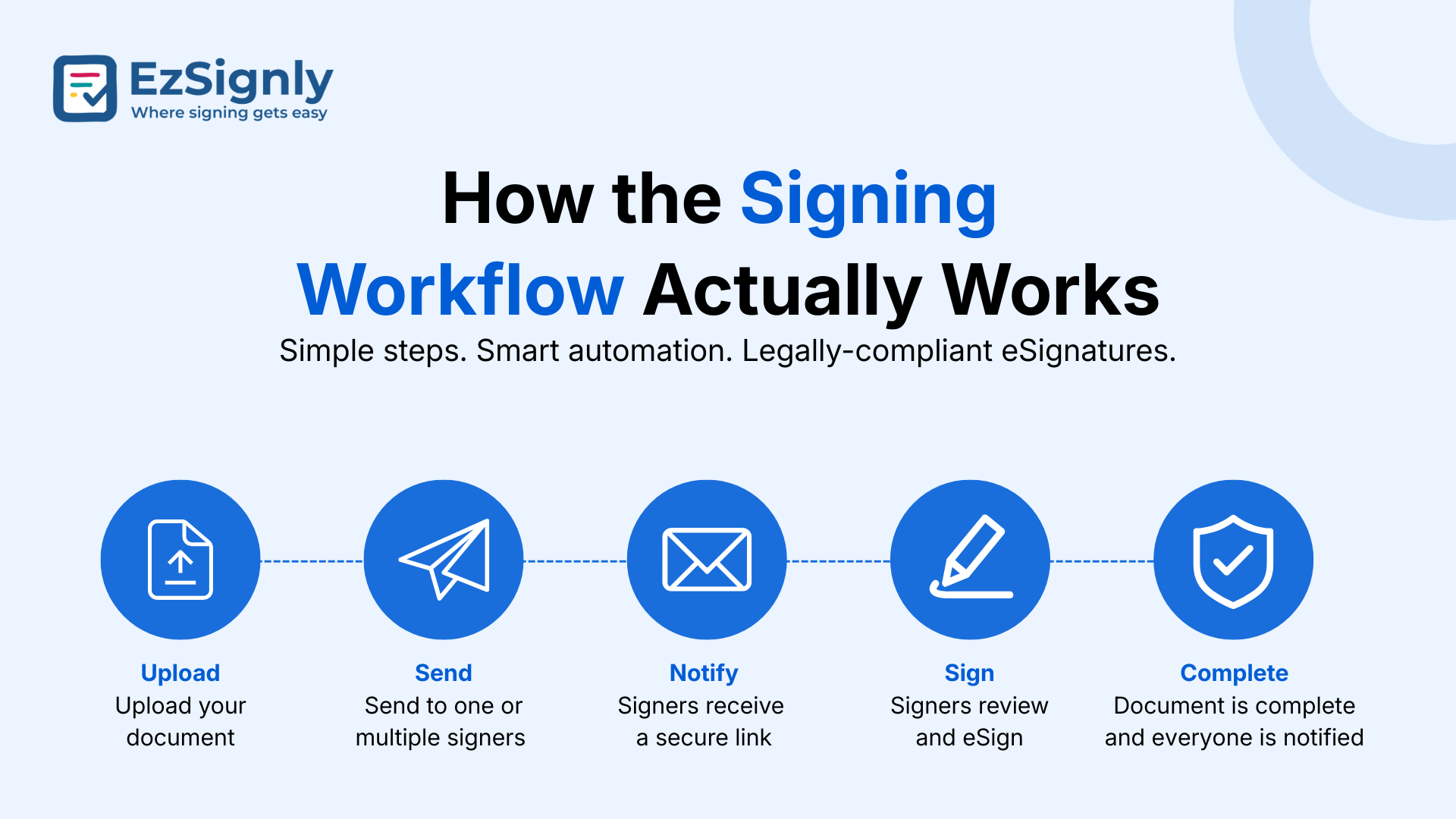
It may sound complicated, but if you're still getting familiar with digital closing, it's quite straightforward. The agent or title company uploads the finalized SPA to the platform, adds the names and email addresses of every signer, and places signature fields exactly where they're needed. Any signing party will get a safe link. Then they'll review the document on a screen, click the 'sign' box, and sign with their mouse, pen, or finger. All without a printer in sight.
As soon as all parties have put their name on paper, an automated certificate is created, and the contract is locked. Everyone gets their copy, and the original is stored away on safe, secure servers. Deals can be closed over the course of just one business day, whereas, just a short time ago, it would have been a week-long process.
EzSignly also puts agents' dashboards on autopilot.
Any agent using the service can find out exactly at a glance who on the deal
hasn't yet provided signatures, saving hours of wondering if the hold-up is
with the seller's partner or with their attorney.
Electronic Signing Software
Compliance, Security, and Cost Considerations for Brokerages
Security is naturally a bigger concern in real estate than in most other industries, given the dollar amounts involved. A trustworthy platform should offer bank-level encryption, two-factor authentication, and tamper-evident seals on completed documents. It should also comply with state-specific real estate regulations, which can differ when it comes to disclosure requirements or notarization rules.
Cost is another practical factor, especially for
smaller brokerages or independent agents managing their transaction volume.
Subscription-based eSignature tools tend to be far more economical than the
combined expense of printing, courier services, and in-person notarization
appointments. Companies trying to reduce e-signature cost in Illinois and
other highly frequent markets are realizing consolidation of signing, storing,
and compliance activities into a single platform significantly saves on time
and cost.
Common Signing Mistakes That Slow Business Down
Even with a reliable platform, a few missteps can
cause headaches later. Sending a document before all contingencies and figures
are finalized is one of the most frequent errors — once a signature field is
placed and sent, corrections mean voiding and resending, which can confuse
signers. We can make the mistake of skipping identity verification where
identity fraud is an issue (such as for large transactions), and there will
occasionally be times that the process is slightly rushed, so it's easy to forget
to cross-reference specific requirements of the state the document originates
in, such as notarization or witnessing. A quick review of local rules before
sending an SPA out for signature avoids most of these problems entirely.
Have any other questions? EzSignly's team is here to help!
Conclusion
Transactions in the real estate space happen quickly, so the tools of the trade used by professionals to handle documentation have to be agile. Today, electronic signatures are considered a safe, compliant, and far more convenient solution than signing in ink, especially where a critical document like a sale and purchase agreement is concerned. And as you see more and more brokerages, buyers, and lawyers going digital, solutions like EzSignly are becoming the norm in American real estate.
Get a free trial today and simplify
signing.
FAQs
1. How do I log in to sign a Sale and Purchase Agreement sent to me?
A: You'll receive an email with a secure signing link. Click it, verify your identity if prompted, and you'll be taken directly to the document — no separate account or password is usually required for one-time signers.
2. What if I miss the signing deadline on my agreement?
A: Most platforms allow the sender to resend the request or extend the deadline. Contact your agent or the document sender promptly, as real estate contracts often have contingency dates linked to the signing timeline.
3. Can all parties sign from different states or countries?
A: Yes. Electronic signatures are recognized across all U.S. states under the ESIGN Act, and most platforms support remote signing from anywhere with internet access, making cross-state and international transactions much simpler.
Take a look at the latest blog
One Platform, Endless eSignature Features for Businesses: Try 3 Months Free Trail
One platform that has every eSignature capability your company requires. Take advantage of a free three-month trial.
July 22, 2026
How Businesses Are Closing Deals 80% Faster With Mobile eSignatures: Book Your Demo
Close deals up to 80% faster with secure mobile eSignatures. Sign anytime, anywhere. Book your demo today!
June 29, 2026
Why Businesses Are Choosing EzSignly Over Traditional eSignature Tools: Book a Demo
Discover why modern businesses are switching to EzSignly for faster, smarter, and more secure digital signing workflows. Book a demo today and transfo...
May 25, 2026

Multi-company feature: Scale Businesses With Hassle-free Workflow: Signup Now
Manage multiple companies with a hassle-free workflow. Centralize operations, improve efficiency, and scale your business with ease.
June 15, 2026
Have any other questions? EzSignly's team is here to help!
© 2026 Copyright EzSignly. All Rights Reserved