


The eSignature Pricing Trap in US: Know More About Enterprise-Level Features in 2026
August 27, 2026 | Posted By Admin
Digital Signature Pricing
Summary
As of 2026, Illinois eSignature costs no longer align
with just the price of signing documents securely. Instead, they are now based
upon the number of users and monthly documents, as well as other associated
pricing for security, privacy compliance, and integrations. Different
e-signature packages are structured from simple per-user, per-document plans to
tiered subscriptions to complex enterprise agreements. As many companies now
look for integrations with SalesForce, consider your total ownership costs, as
well as ROI and efficiency improvements for your business workflow.
Introduction
Right now digital signatures have become almost inescapable as part of our regular day-to-day operations. Securely signed documents are critical for onboarding and employee paperwork, processing vendor forms, closing deals on contracts, and ensuring full legal compliance. But as adoption grows, one question continues to dominate buyer decisions across the country, including among businesses evaluating the cost structure of digital document signing software in the USA market: How much does eSignature software actually cost in 2026?
Companies researching eSignature software
pricing in Illinois often find that costs can vary significantly
depending on business size, industry regulations, and the level of automation
required. Our ultimate 2026 guide to eSignature costs explores every nuance
your business needs to understand before transitioning eSignatures, including
cost structures, hidden fees, pricing by feature, calculating ROI, and deciding
on the eSignature solution for you. We'll also take a closer look at electronic
document signing costs in the USA specifically, since regional compliance requirements
and local business needs can influence which plan makes the most financial
sense.
eSignature Pricing Trends Businesses Should Know in 2026
The e-signature market today is so much more than just collecting signatures online. Organizations are looking for workflows that can be automated, with compliance and audit trail features. We're looking for vendors who can handle seamless and tight integrations, auditable logging and reporting, and AI for document handling, along with enterprise-ready security protocols. In light of all these factors, there's a layered and feature-dependent pricing model, which is a palpable pattern when examining the plans and prices of e-signature apps available in the market.
In 2026, companies aren't simply buying a digital signature tool. They're investing in a platform that directly shapes the following:
- Contract turnaround time
- Customer experience
- Compliance and audit readiness
- Operational efficiency
- Sales productivity
- Remote collaboration
This trend is the exact same reason why we consider
the examination of eSignatures for small businesses no longer
a part of boring finance—instead, it is a part of business growth and long-term
sustainability.
5 Ways eSignature Software Pricing Works in 2026
Before we start comparing pricing, we need to know how the different eSignature solutions set their prices. Not all plans work the same way — some charge based on usage, others on features, and some on team size. Understanding these models is the first step toward making sense of eSignature options available for USA businesses and avoiding plans that look affordable upfront but become expensive as your business scales. Here are the top five pricing strategies to consider in 2026.
1. Flexible Per-User Pricing for Teams
The system charges on the basis of the number of employees who require singing access, and this fee can be a recurring fixed cost. Hence, the business can easily budget. This model would suit the HR department, Sales, and Procurement, as these departments can continuously access signing services. Many providers offering HR online signature software in Illinois use this structure since it aligns naturally with onboarding volume and headcount changes. But even then, the price can quickly go through the roof for a bigger organization, and it's perhaps not obvious to question if you really want everybody in every seat to have the "full-time experience."
2. Per Envelope / Per Document (Usage-based)
In this kind of plan, companies are charged per document or "envelope" sent for signing rather than number of users. This is useful for companies with variable signing volumes and seasonal demand, as the pricing increases according to their business needs, while allowing startups and small companies with lower send volume to pay a reduced price. Be aware: higher-volume users will see this quickly becoming more costly than flat-per-seat pricing plans.
3. Subscription Plans to Match Your Business Needs
If you have multiple options in tiered plans to choose from, which bundle gets you a higher stack of functionalities, a greater amount of data, or integrability? Starting plans are mostly focused on a set number of basic digital signature functionalities; pro versions and enterprise versions offer broader functionality, higher authentication, and automation in your e-signing workflows. The problem for businesses comes down to planning in advance, identifying the tiers that are relevant right now but also a year from now so you don't have to overpay for an offer you have access to right now but probably won't be using in the near future.
4. Embedded Signing Pricing
You can directly embed signing features within your own website, app, or customer portal. It results in a completely branded experience, and the pricing here usually relies on things like API calls, transaction counts, or access to developer functions (instead of pricing on a per-user basis like more traditional options). This is often beneficial for SaaS companies and marketplaces that are looking for truly native signing features in their product, but it usually necessitates some technical lift to incorporate.
5. Enterprise Custom Pricing (Security + governance heavy)
Enterprise plans are designed for giant organizations
that often have complex compliance and security regulations that they need to
be in compliance with. These plans come with advanced authentication,
customized security controls, detailed audit logs, industry-specific compliance
certification, etc. Pricing for these enterprise plans also varies wildly
between companies and depends on factors like organizational size and
customized functionalities required. This pricing model usually is the case in
finance, healthcare, and other legal firms because of all security compliances.
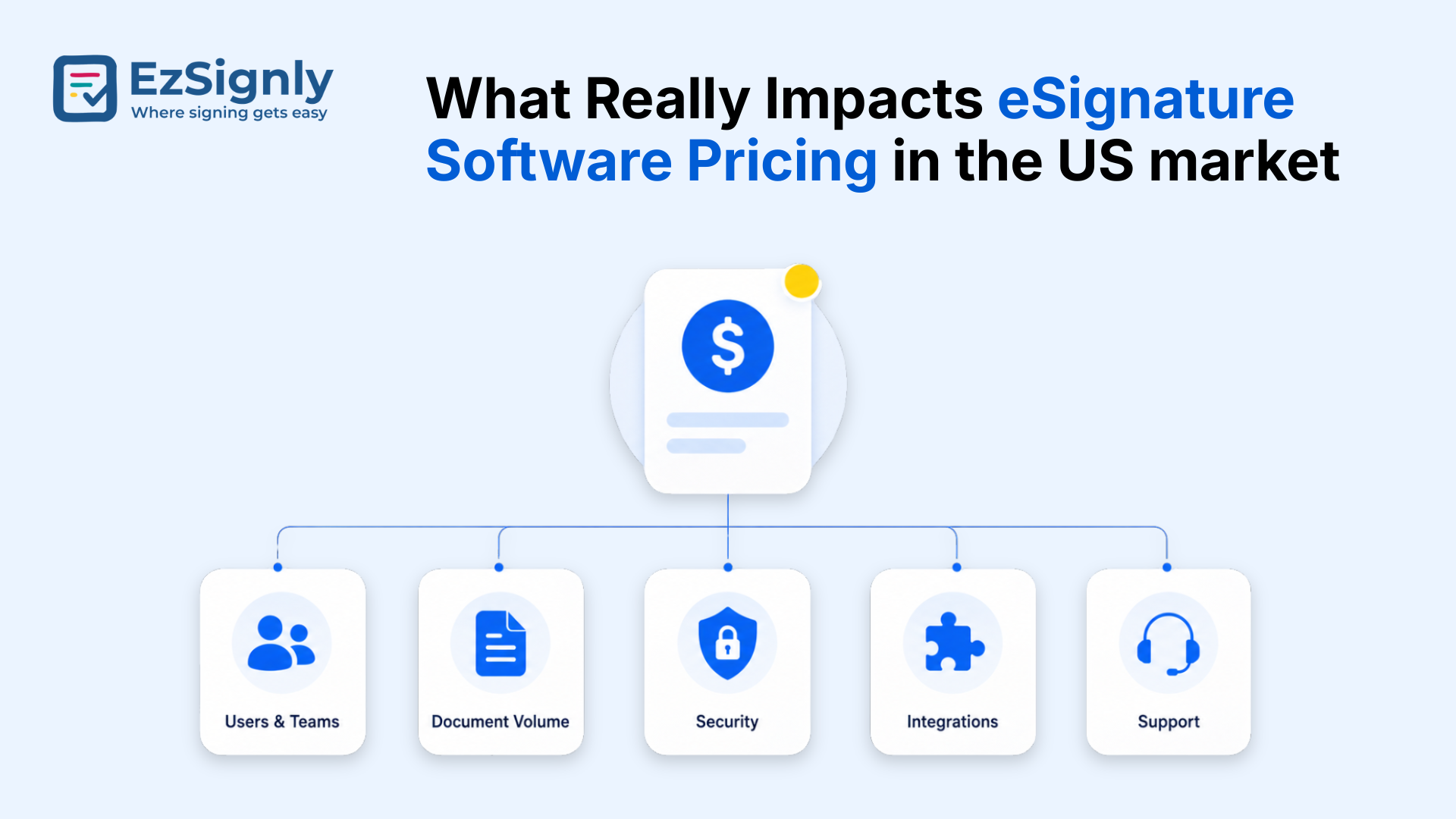
What Really Impacts eSignature Software Pricing in the US market
Beyond the base subscription price, several hidden
costs can increase the overall expense of an e-signature solution. These may
include user limits, document or envelope caps, and advanced authentication
options such as ID verification or biometrics. For regulated industries,
enhanced audit trails and local data residency can further raise costs. Storage
limits, premium customer support, custom branding, and bulk sending can also
affect the overall value of e-Signature detailed features in Illinois and
their pricing.
Digital Signature Pricing
The Essential Checklist for Choosing an eSignature Plan
Don't just skim for the price when reading e-signature
spec sheets—really examine what's in each level. Smart shoppers always consider
the cost per user versus per document models and look for potential upsells
like limitations on storage, custom authentication measures, or even premium,
24/7 customer service. Ultimately consider what this pricing will mean relative
to your document flow: what might seem an economical choice for sporadic users
can end up a costly contract as your document needs rise. The real comparison
happens when you calculate the total cost of ownership, not just the monthly
subscription fee.
Understanding EzSignly’s Pricing Tiers at a Glance
EzSignly works with a subscription-based, tiered
pricing system, so there's a package for everyone from single users up to giant
corporations. Different plans generally offer variations in users, document and
envelope volume per month, and additional advanced features, such as
multi-access signing, bulk sending, and custom branding. Basic plans generally
include the basic e-signature functionality, which has legally binding
signatures and built-in trails, while premium tiers are needed for complex
compliance, automation, and business security features. So businesses can start
small and scale with EzraSignly if your document volume and overall workflows
increase in complexity.
Have any other questions? EzSignly's team is here to help!
Conclusion
It's not just the tag price that needs your attention
anymore when choosing your e-signature solution in 2026. Businesses should
focus more on what's at play long-term. A business evaluating eSignature
software costs in the 2026 market should ensure it selects an eSignature tool
that offers the adequate features needed to simplify business processes while
remaining within budget. Compliance features, feature completeness, and
e-signature solution integration to your system come at a value for the long run,
with your efficiency and an audit-ready business process coming in the final
deal.
FAQs
1) What is the average eSignature software cost in 2026?
A: It depends on your pricing model (per user vs. per document), your volume, and whether you need workflows, admin controls, and compliance features. Most teams fall into SMB or Pro tiers unless they require enterprise governance.
2) Is free eSignature software good enough for business contracts?
A: Sometimes, for low-risk, low-volume signing. But free plans often lack templates, routing, deeper audit trails, and admin controls, which are the features that prevent delays and disputes.
3) What pricing model is best: per user or per document?
A: Per user is usually better for consistent internal sending. Each document can work for a variable volume. The best choice of electronic signature software depends on your monthly send volume and how many people need sending permissions.
Take a look at the latest blog
eSignature for Remote Hiring: Speedup Your Productivity in HR Industry: Signup Now
Secure eSignatures can facilitate remote recruiting. Send HR paperwork, promptly get signatures, and enroll new employees without the paperwork. Enrol...
July 30, 2026
Paperwork Slowing Your Property Sales? Switch to e-signatures. Now: Book a Demo
Close property deals faster with eSignatures. Skip paperwork delays. Book a demo now.
April 17, 2026
Why HR Teams Need AI-Powered eSignature Software for Compliance and Data Protection
AI-powered eSignature software helps HR teams ensure compliance and protect sensitive data with secure, automated document signing.
March 23, 2026
Is eSignature Legal and Secure? What Businesses Must Know
eSignatures carry the same legal validity as handwritten signatures under laws like the ESIGN Act and UETA, as long as there is clear intent, consent,...
April 7, 2026
Have any other questions? EzSignly's team is here to help!
© 2026 Copyright EzSignly. All Rights Reserved