


Enhancing Efficiency to Handle in Real Estate Documentation with eSignatures – Sign Up Now
July 14, 2026 | Posted By Admin
Digital Signature For Real Estate
Summary
US real estate still involves stacks and stacks of
paperwork, including offer documents, disclosures, and closing papers. But now
eSignatures are turning all that around - saving days, slashing error rates,
and allowing agents to sign and seal deals wherever they are. This post dives
into the rise of eSignature in the real estate market, the key features to look
for in an eSignature platform, and where the future of digital signing will
take the industry.
Introduction
In the US, when it comes to selling and buying houses,
paperwork never goes away. A lot of the time, closing a real estate deal in
time is reliant on how fast everyone can obtain their signatures on paper. In
addition to more and more real estate firms opting for a remote-friendly,
mobile-first working culture, digital signatures are quickly moving from a
premium offering to a basic requirement. This is the main reason why most real
estate agents and companies are already looking for the best real
estate eSignature software in Chicago to avoid unnecessary delays
when it comes to digital signatures and papers. This article talks about
how eSignature has begun to revolutionize real estate transactions.
The Paperwork Problem in Modern Real Estate Transactions
For those of you who have bought, sold, or even leased even a single property in the U.S., you're already thinking of the mounds of paperwork, the stacks of initial pages, endless pages being sent by fax back and forth between buyer and seller (and buyer's and seller's agents, and buyer's and seller's lender, etc.). Historically, you had to scan, fax, or mail all these documents to get a deal moving forward.
This is where things get expensive. Missed signatures
from deal-closing bottlenecks mean a lost customer - particularly in markets
with strong competition and active buyers making multiple offers to motivated
sellers. These delays can also be exacerbated by errors on the buyer's side,
such as unsigned agreements or document versioning issues as the PDF is
circulated back and forth between email addresses. Neither is particularly
convenient, especially given how much rides on the outcome of an agreement that
is as much a legal document as it is a commercial deal.
The Right eSignature Platform for Every Brokerage
Every eSignature platform out there is not the same. If you work in real estate, you want to be looking for specific features that align with property transactions. Pre-set templates for listing contracts, purchase agreements, lease renewals, and more can save time. Integration with existing and transaction management systems is also essential, as re-entering data across platforms wastes the time that eSignatures are supposed to save.
For small brokerages and independent agents with wafer-thin margins, costs are always a key consideration. Research how much eSignature pricing online in Chicago costs by comparing plans and finding out what different vendors charge for how many documents an average office goes through every month before you decide. While some will bill by document, others do have flat monthly fees for the document-heavy teams out there.
You have to look for security certifications, mobile
app quality, and responsive customer support to make a decision. A
cheap-looking platform without reliable support can cost you far more in lost
time if something goes wrong at a time-sensitive closing.
How eSignatures Are Reshaping Real Estate Deals
Using eSignature software, all parties in a transaction can access and sign documents on a desktop computer, tablet, or smartphone. For buyers out of town, sellers relocating across the country, and investors with holdings throughout the nation, eSignatures are a welcome solution.
Automated e-signature services go beyond speed. Imagine sending a listing agreement to your seller in seconds, sending an offer contract to the buyer's agent and lender at once, and having all your disclosures pre-filled with property information to free you from tedious data entry. Using this method can relieve agents' administrative burden, allowing them to focus on nurturing clients rather than chasing signatures.
Paper-based methods have another major upgrade in
audit trails. All eSignature platforms track when users view, open, and sign
the document, as well as the IP address and device. This creates a clear record
to protect all parties if there is ever a dispute about proper execution of
documents.
What Realtor or Broker Stands to Gain By Digitizing
In addition to saving trees, e-signatures have come a long way. When you reduce the time it takes to process contracts, you can close deals faster before a buyer's situation changes or before a new deal comes in at a higher rate. Every saved printing, scanning, and shipping cost amounts to real dollars at the end of the year, especially for brokers who close dozens of deals every month.
But eSignatures are much more than paperless transactions. You can flip deals around quicker, which helps you lose fewer deals when a buyer or seller backs out due to changes or when another investor makes a better offer. Add up the savings in print, scan, and delivery costs from month to month, and especially over the course of the year if you're handling a dozen deals a month.
The customer experience also becomes a lot better. First-time buyers and out-of-state investors have appreciated the ability to review and sign documents from their phone instead of driving to an office or dealing with a fax machine. Agents providing this convenience will be noticed in client reviews and referrals, and that counts in a business so dependent on reputation and word of mouth.
And for brokerages managing remote teams, it
simplifies oversight: managers can check status across their entire operation
from one dashboard and easily spot which deals are delayed - and where.
Beyond Real Estate: How Brokerages Use eSignatures Company-Wide
While property transactions receive the majority of the attention, brokerages are also implementing eSignature tools for internal operations. Employment agreements, commission splits, and compliance acknowledgments are all part of the onboarding process for new agents, which brokerages can sign digitally rather than manually printing and filing. Many businesses now use dedicated eSignature software for HR in Chicago to streamline onboarding paperwork alongside client-facing document workflows.
This dual use case also makes financial sense. If a brokerage already pays for an eSignature subscription for closings, they can use the same tool across departments instead of buying and running separate software for HR, accounting, and vendor agreements.
Property management firms have seen similar benefits
using electronic signing for lease renewals, maintenance authorizations, and
vendor service agreements. It also makes training new employees easier, since
they only have to learn one system used throughout the organization.
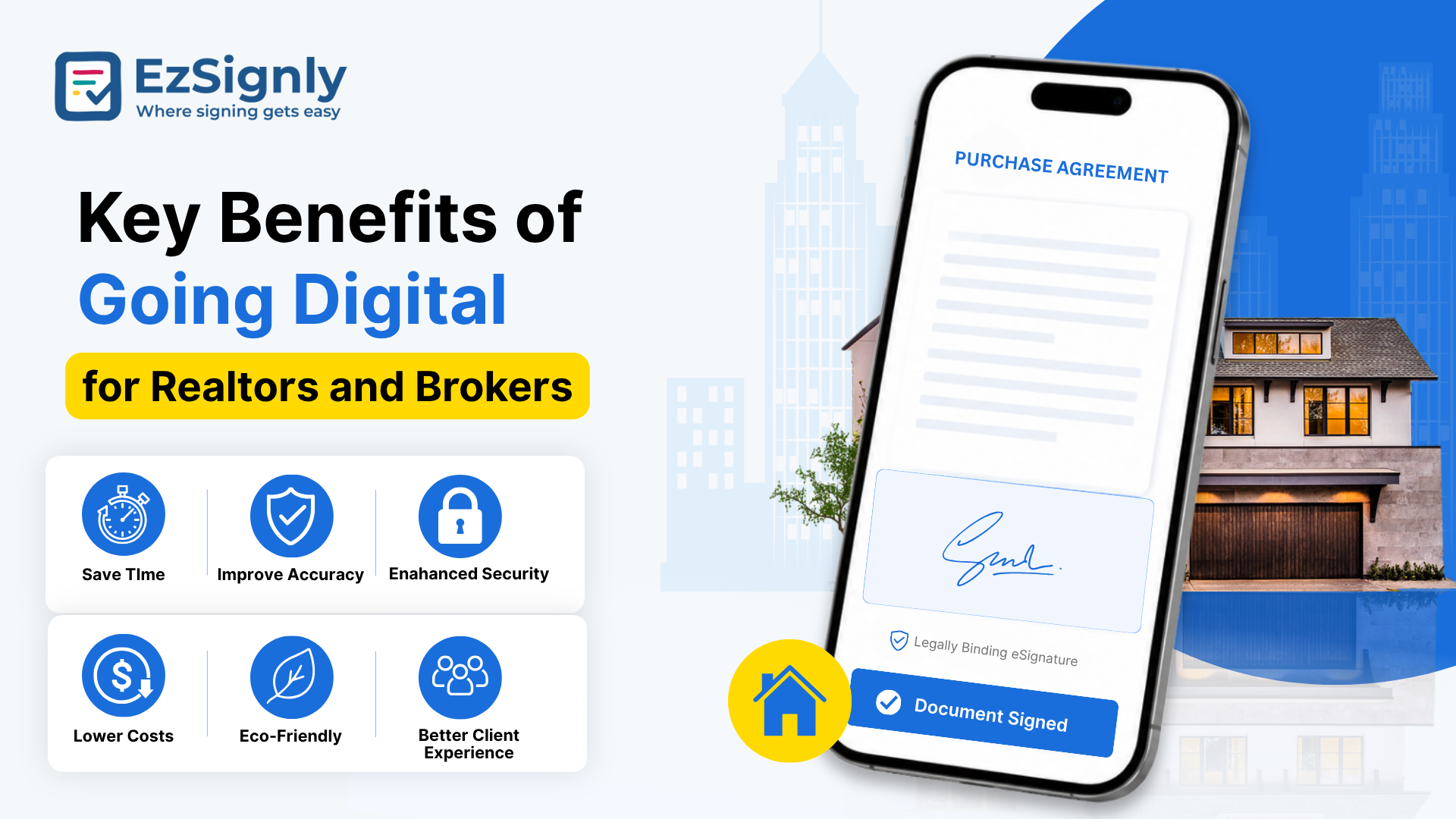
Key Benefits of Going Digital for Realtors and Brokers
Contracts, disclosures, agreements, and client documentation are virtually daily tasks for real estate agents. Managing everything on paper might easily become too much to handle as a firm expands. Simple tasks begin to take longer than they should, documents become harder to locate, and approvals are delayed. By putting everything in one location, switching to digital tools greatly simplifies daily tasks. The entire process becomes quicker and far less stressful, whether it is exchanging contracts, monitoring the status of documents, or gathering signatures.
The primary benefit of going digital is that it
enables brokers and realtors to spend more time with their clients and less
time on paperwork. Deals can go without needless back and forth when all
parties—buyers, sellers, lenders, and legal teams—remain in agreement.
Additionally, clients value the ease with which they may review and sign
documents from any location. Digital workflows ultimately make every
transaction easier for both professionals and their clients, but they do not
take the place of the personal aspect of real estate.
Online eSignature For Real Estate
The Future of Real Estate Documentation
Looking ahead, we expect eSignature technology in real estate to become even more integrated with other aspects of the transaction process. Expect more seamless integration of signing companies, title and escrow officers, and lenders so documents automatically transfer from one platform to another with no manual uploads. AI also began being implemented, identifying incomplete signature sets and mismatched data before a document is ever sent out for signing.
As clients and agents increasingly choose hybrid and
remote work options, digital-first, mobile-centric transaction workflows are
now a permanent fixture. Brokerages investing in comprehensive eSignature
capabilities will be equipped to accommodate transaction volume without
incurring an administrative cost increase.
Security, Compliance, and Trust in Digital Signing
With all the financial data and sensitive personal information handled in a real estate deal, you can imagine security for both real estate agents and clients alike is paramount. Secure e-signature platforms will typically include document encryption (while being sent or stored) and strong identity verification and authentication of every person who needs to sign.
Also consider legal implications: In the U.S., both the ESIGN Act and the Uniform Electronic Transactions Act (UETA) grant e-signatures the same standing as a wet-ink signature for nearly all transaction types, even real estate contracts, as long as the proper consent and documentation standards are followed. Real estate licensed agents who handle contracts, leases, and disclosures must ensure that the service they choose meets these standards, including using a compliant legal e-signature solution in Chicago that can gather consent, intent, and an immutable audit trail for each e-signature captured.
Compliance does not end at signing. Document retention
policies, secure storage, and straightforward retrieval for audits or disputes
are all part of a reliable eSignature setup, especially for brokerages
operating in multiple states with different regulatory requirements.
Have any other questions? EzSignly's team is here to help!
Conclusion
Paper-based processes cannot keep up with the rapid pace of today's real estate market. eSignatures address the core pain points of speed, accuracy, and client convenience while also providing brokerages with a clear audit trail and legal protection. As adoption grows in transactions, HR, and vendor management, digital signing is becoming a must-have rather than a luxury. Firms that implement the appropriate platform now will spend less time chasing paperwork and more time closing deals.
🚀Ready
to speed up your closings? Sign up today and simplify every signature.
FAQs
1. Are eSignatures legitimate in real estate transactions in the US?
A: Yes, most real estate documents with electronic signatures are legal as if they were signed by hand due to the ESIGN Act (federal) and UETA (state)—but the software must obtain consent and the audit trail must be sound.
2. What should I look for in a real estate e-signature platform?
A: Choose a platform that offers strong security, legal compliance, audit trails, document tracking, cloud storage, and integrations with your existing real estate.
3. How can I determine whether an eSignature platform is secure enough for sensitive real estate data?
A: Before selecting a brokerage provider, look for encryption standards, identity verification steps, detailed audit trails, and compliance with data protection regulations.
Take a look at the latest blog
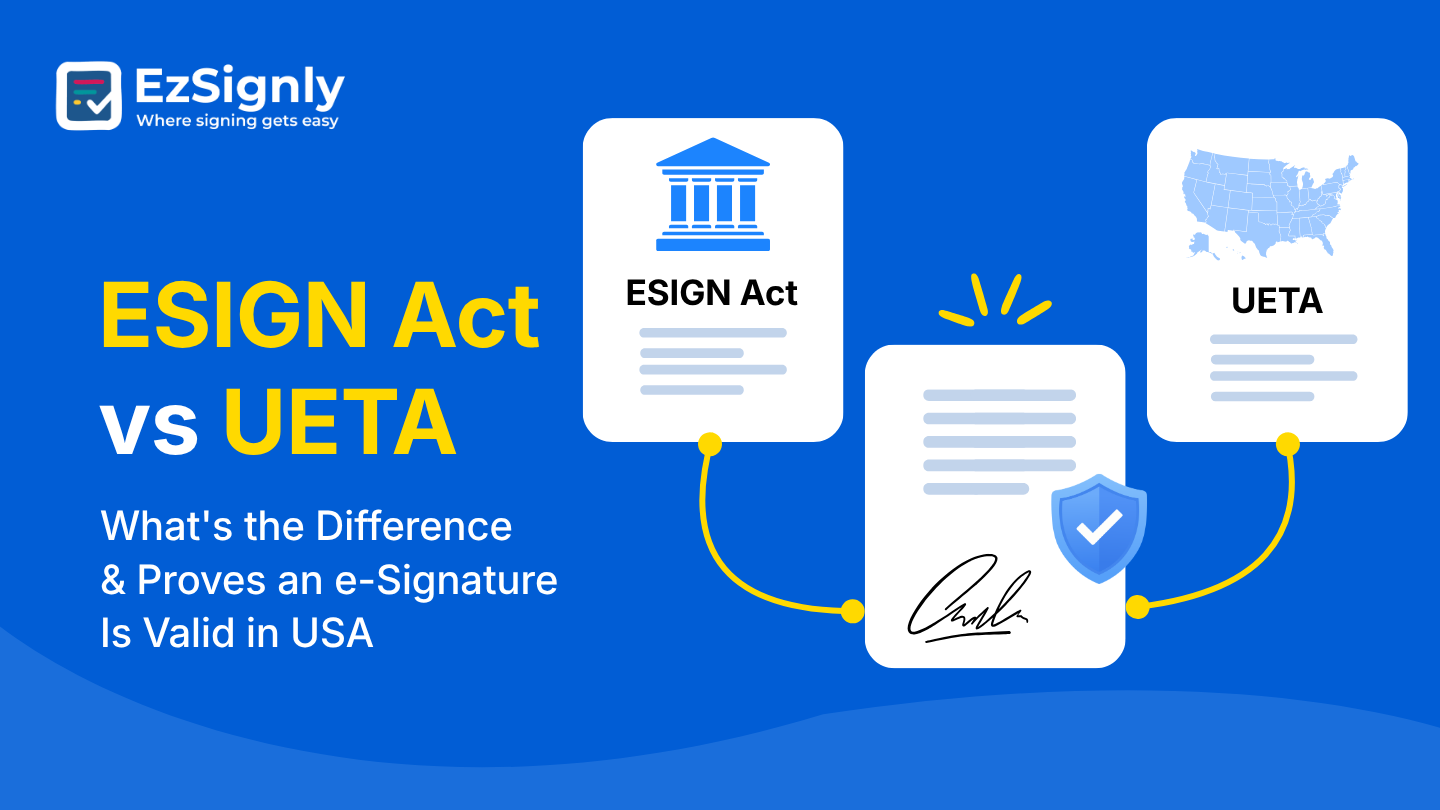
ESIGN Act vs UETA: What's the Difference & Proves an e-Signature Is Valid in USA
ESIGN Act vs UETA: Learn the key differences and what makes an e-signature legally valid and enforceable in the USA.
September 8, 2026
From Paper to Digital: Why Your Business Needs E-Signatures for Legal Documents
Go digital with eSignatures for legal documents. Save time, reduce costs, and speed up approvals.
April 15, 2026
The Definitive Guide to the Best eSign Service for Small Businesses in Chicago
It means you can avoid waiting and speed up your document signing process using EzSignly’s e-signature service—making approvals faster, easier, and mo...
May 5, 2026
eSignatures for Law Firms: Swifter Case Approval Without Delays: Start Free Trail Today
Accelerate case approvals with secure eSignatures for law firms. Sign documents faster, reduce delays, and start your free trial today.
June 8, 2026
Have any other questions? EzSignly's team is here to help!
© 2026 Copyright EzSignly. All Rights Reserved