


The Role of eSignature Software in Digital Business Transformation: Here's a Better Way
July 10, 2026 | Posted By Admin
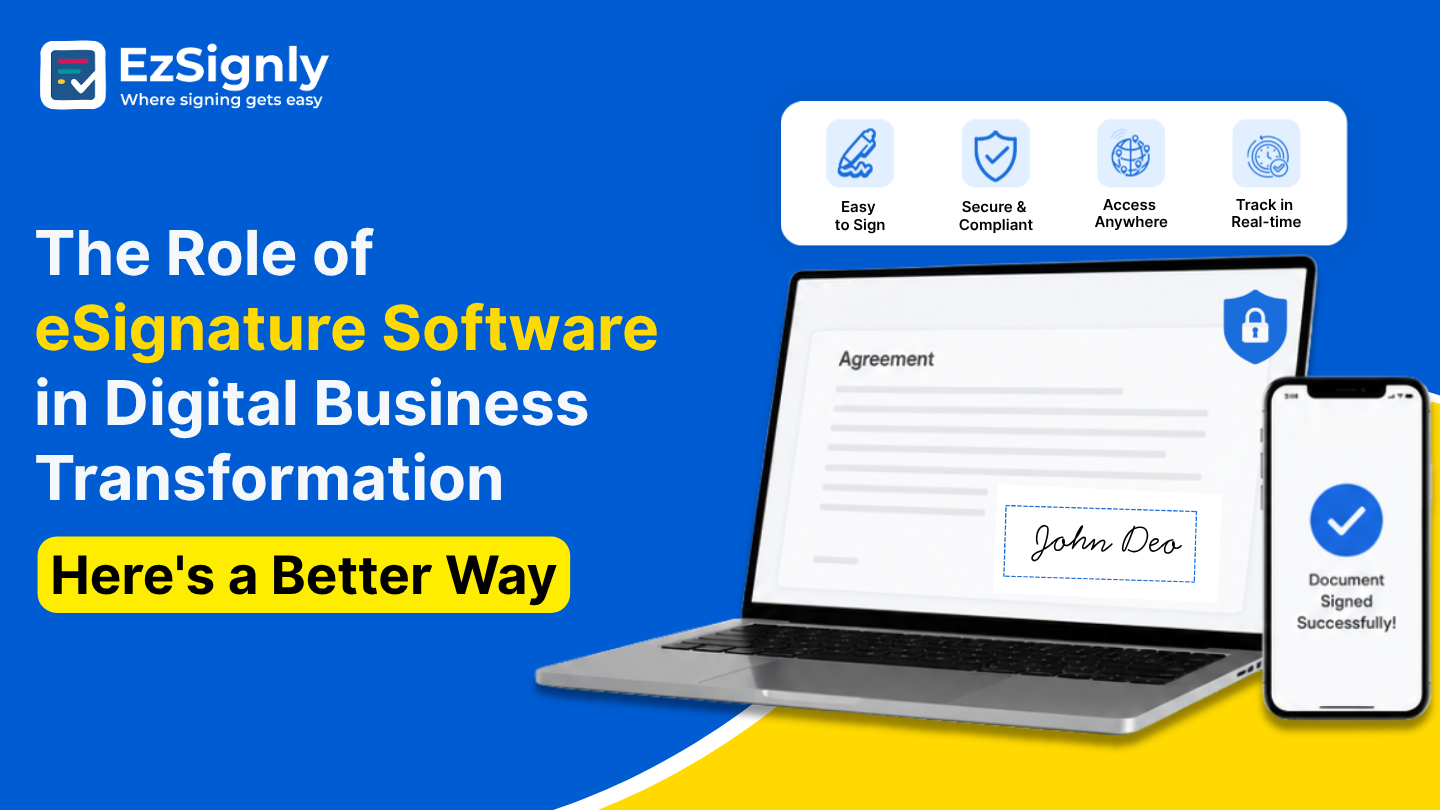
Digital Signature For Small Business
Summary
For businesses small to medium in the US, how they
tackle their paperwork, payments, and approvals is all undergoing a bit of a
revision. One of the simplest entry points into a business's digital
transformation for an SMB? ESignature software. Not only does it speed up
business processes and reduce errors, but it also requires minimal IT
assistance. Discover why these SMBs are turning to eSignature tools, the places
it offers the most value, and how teams large and small can take advantage
without breaking the bank.
Introduction
Across America, startups are altering the routine
practices for document handling, with the use of electronic signatures being a
top driver. An electronic signing tool allows small businesses and
companies to discard all manual printing, scanning, and mailing for contracts,
HR forms, and client forms, which are accessible anywhere on earth. It may seem
like an incremental improvement, but in reality, the technology saves approval
times and other roadblocks in the process. eSignature solution for
small businesses is your fastest way to digital transformation
without the costly upfront software and IT infrastructure.
Digital Transformation Challenges for SMBs: What’s Now?
Ask a small business owner - or ten of them, for that matter - what "digital transformation" looks like, and you'd be likely to get some strange looks or some uneasy laughter. For enterprise corporations, digital transformation likely means things like migrating to the cloud, machine learning, or five-year plans for the IT department. But is that how a 15-person accounting practice in Ohio or a boutique advertising firm in Texas would typically envision transforming itself? Is it realistic and desirable for them?
However, digital transformation doesn't necessarily mean dropping a six-figure software package on an entire organization. For most companies, it starts with solving the day-to-day pain points that keep it from moving fast – and very little causes pain like paper back-and-forth approvals. Contracts in someone's inbox for a week. Contracts were sent to a vendor and mailed back after weeks. New hires have to print out, sign, scan, and reupload forms to become employees. This is the area where e-signature is less a 'nice to have' tool for businesses and more a logical first step.
At its heart, digital transformation is simply the
practice of eliminating unnecessary steps between you and a desired outcome.
With eSignature technology, this principle applies to one of the most pervasive
friction points in business: the process of getting sign-off in writing. It's a
high-reward, low-risk addition that requires no new hardware, minimal employee
training, and no dedicated IT team to oversee the program.
From Manual to Automated: Smarter Document Workflows
It all comes down to math. Imagine the traditional printing, signing, scanning, emailing, and filing that's part of signing a paper document. What should take a few hours to get an approval can end up dragging on into a full-day ordeal. E-signature platforms reduce it all to just a couple of clicks that take mere minutes.
For the SMB, this solution isn't just a "nice to have"; it actually has a bottom-line impact. Faster deal closure means faster revenue. When you're dealing with contracts signed and executed the same day, the flow of goods and services into the business is smoother. With HR docs digitally signed, HR teams can stop hunting down signatures and focus on people's work.
Especially in documentation-heavy industries. Much
like the eSignature software for HR in Chicago, which
is slowly gaining traction around the city. Providing a company in this part of
the U.S. The ability to recruit and get new hires off the ground fast enough to
meet compliance and relieve some of the burden on their 2-person HR staff in
their day-to-day job.
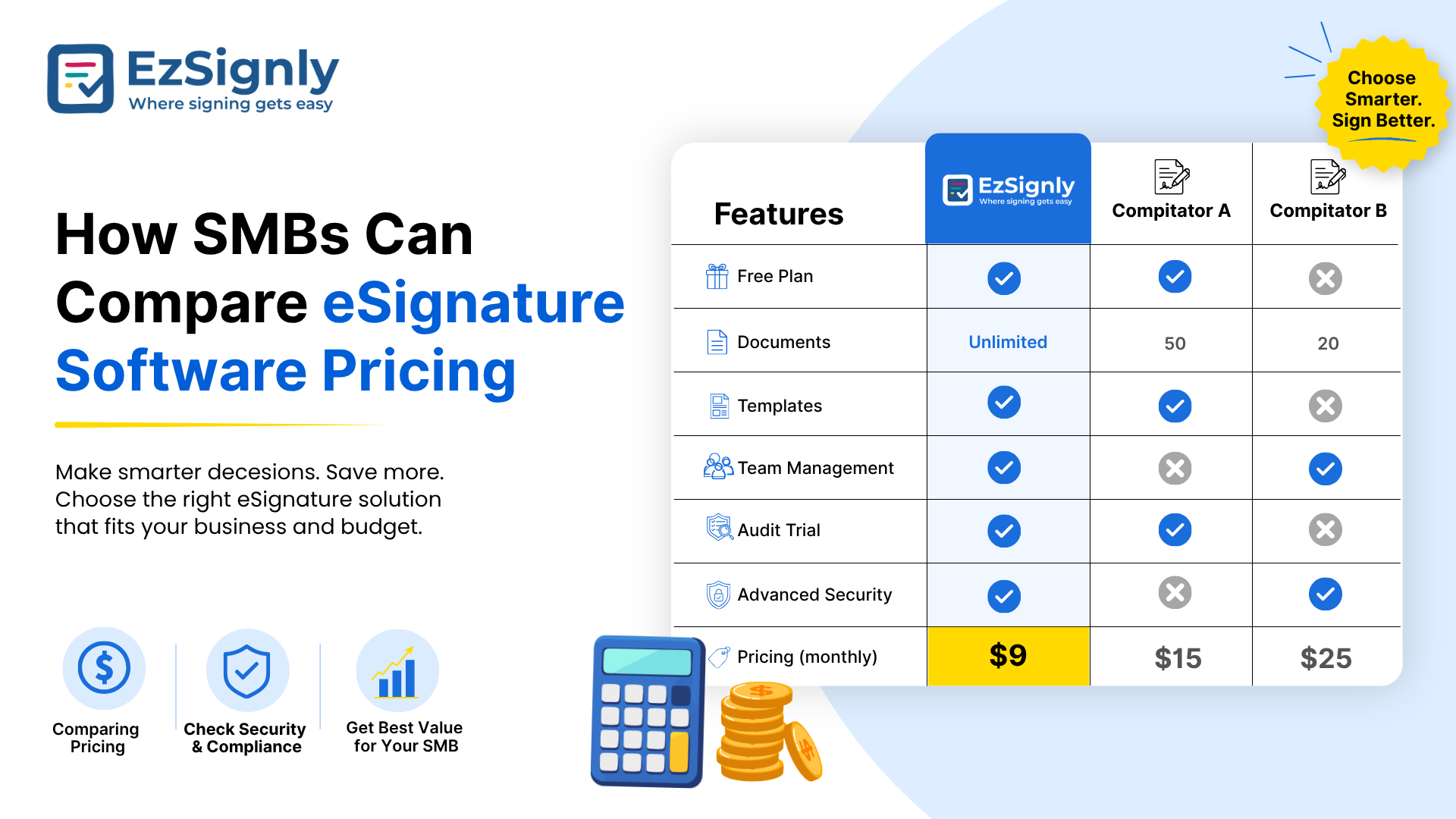
How SMBs Can Compare eSignature Software Pricing
For many SMBs, it’s not the technology, but the cost that may make them back away from using e-signature software. Most think e-signature platforms have an enterprise price tag. In other words, these solutions have tiered pricing structures, with per-user costs that can add up quickly. Well, this assumption is just not true.
But what makes up the price in the first place? The number of users, how many documents you plan to send a month, integration capabilities, and whether you'll need specialized features like bulk sending or API access. Look into the eSignature software pricing for your business in US markets, and you'll quickly discover many SMB priced plans at the mid-tier include all of the bells and whistles the small business owner will require (mobile signing, audit trails, basic integrations, and templates) but don't contain the overpriced "enterprise" features.
In short, there's no point in paying for software to
manage 500 people if you only have 8 employees. One facet of digital
transformation is to make sure that you have the correct software in place for
the size of your company. It's one small thing, but it still makes a small
difference.
Electronic Signature For Business
Why Property, Insurance, and Other Industries Choose Electronic Signatures
E-signature is nearly universally used by SMB across every industry; however, we've had some outsized wins in specific industries because their operations are heavily document-driven. Property transactions have become a particularly strong use case. Real estate agents and brokers in residential sales, leases, and rentals are sometimes wrangling dozens of documents for each transaction. This includes disclosure documents, offer documents, inspection acknowledgements, closing documents, and many more.
Platforms designed for eSignature real estate software in the US have enabled professionals and realtors to expedite deals when sellers and buyers live in entirely different countries or time zones. Rather than waiting for a physical signature to complete a transaction, agents can send documents remotely and get real-time updates on who opened and signed which document, maintaining a clear digital trail of every deal.
You see the same pattern in insurance, financial
services, legal practice, and healthcare administration – any field where a
signature has traditionally been a physical bottleneck now has a digital
alternative that keeps deals, claims, and approvals moving along without
unnecessary delay.
Protect Business Documents with Trusted eSignature Security
Everyone's always talking about saving time and money, but if you work with clients and sensitive data, then security and legal binding are going to be equally important to you. A prevalent myth is that electronic signatures are not as legally binding as physical signatures. However, under the ESIGN Act and UETA, all electronic signatures in the United States are legally binding if your signature platform adheres to the necessary consent, identity verification, and auditing procedures.
That's where having the right software makes a big difference. eSignature software you can count on will give you tamper-evident audit logs, encrypted document storage, multi-factor authentication, and simple consent management - features that both protect your company and your customers in case of disputes. If you don't have a legal and compliance department to build them yourself as an SMB, those features provide an additional security blanket.
Beyond these things, trust also comes into the
customer experience. Your customers, your partners, are increasingly going to
expect a very seamless, professional experience in a digital space. Having an
awkward, paper-signing process can signal that your company isn't up-to-date,
and having a streamlined digital process really builds you credibility.
Especially as an SMB fighting for resources against bigger, more established
players, that type of polish can actually tip the scales of whether someone goes
ahead and puts ink on the dotted line - quite literally.
Choosing the Right Platform Without Overspending
While the e-signature tool of your dreams might not always cater to the SMB world, it's important to pay attention. It turns out that boring features like affordability are oftentimes far more impactful than all of the flashy extras.
- Ease of use — Signing a document should be intuitive. Your employees and customers should be able to sign off on a document without you needing to show them how. If it takes longer to learn how to use the product than to actually sign a document, it’s not right.
- Integration compatibility — Connecting with the tools that an SMB currently uses will make the platform more useful. Think CRM systems, accounting packages, or even file storage solutions.
- Scalability — Don't pick a software solution that you outgrow within a year or two, only to make a headache-inducing switch when your company grows.
- Support quality — Small teams often lack the time to address software bugs; in other words, good customer service is more than just a nice-to-have.
That's precisely the space in which products such as
EzSignly exist. This online signing tool has narrowed the playing field down to
what small teams actually want - reasonable pricing, fast implementation, and
just enough flexibility to manage everything from HR documents to sales
contracts to vendor agreements and even real estate forms, all without
enterprise software add-ons. For SMBs making their first real move toward
digital transformation, this tool shows that they can begin with a small step.
Digital transformation is not necessarily an "all-or-nothing"
operation, and software like EzSignly proves that it can be.
Have any other questions? EzSignly's team is here to help!
Conclusion
Okay, e-signature software isn't exactly a major headline when you consider the broader context of digital transformation. But I think this tool might be the single most practical solution you can deploy as an SMB. This eliminates turnaround time, reduces the administrative burden on your teams, boosts compliance, and enhances the employee & client experience all at the same time. And platforms like EzSignly prove that digital transformation doesn't need to be complex and expensive. Occasionally, the pen just gets swapped with a click.
Sign up with EzSignly today and start
signing smarter, not slower.
FAQs
1. How much time does it usually take an SMB to go from paper-based signing to an eSignature tool?
A: Usually, a small business can be set up in one or two days. eSignature services are cloud-based and don't need any new equipment. Typically all it entails is making an account, loading up a couple of the document templates you usually work with, such as contracts and offer letters, and adding your staff - all with no time for complex IT deployment.
2. How much does e-signature software for small business cost?
A: Pricing differs by provider, but most vendors offer tiered pricing based on user count and document volume. Small business-friendly options tend to be a lot less expensive than enterprise-level packages that come with features most SMBs don’t need.
3. Does the eSignature software integrate with other tools an SMB already uses like a CRM or accounting platform?
A: The most popular eSignature solutions, such as EzSignly, have integrations between common business software like CRMs, cloud storage, and accounting systems so that documents can flow seamlessly between existing workflows without needing to be manually re-entered.
Take a look at the latest blog
Why Secure eSignatures Are the Backbone of Digital Business in 2026
Secure eSignatures power digital business in 2026 by enabling fast, secure, and legally valid online document signing.
February 27, 2026
Start Signing Documents in Minutes: The Easiest Way to Go Paperless
Start signing documents in minutes with simple, digital workflows that eliminate paperwork and delays.
April 9, 2026
Why Businesses Are Choosing EzSignly Over Traditional eSignature Tools: Book a Demo
Discover why modern businesses are switching to EzSignly for faster, smarter, and more secure digital signing workflows. Book a demo today and transfo...
May 25, 2026
Smart HR Management: Using eSignature Software for Contracts and Policies in USA
Smart HR teams in the USA use eSignature tools to simplify contract signing and policy approvals.
March 23, 2026
Have any other questions? EzSignly's team is here to help!
© 2026 Copyright EzSignly. All Rights Reserved